In the summer of 1995, a twenty-four-year-old Elon Musk sat in a cramped Palo Alto office with his brother Kimbal, coding what would become Zip2, an online city guide for newspapers. Three decades later, that same restless energy—the compulsion to build, to iterate, to scale—has made him the world's richest person at $839 billion, closing in on trillionaire status. His extraordinary wealth accumulation tells a deeper story: how biography shapes business strategy, and how a particular kind of childhood creates a particular kind of risk appetite.
Musk's early years in apartheid-era South Africa—the bullying at school, the sense of not quite belonging, the escape through science fiction novels—forged what his biographers describe as an almost pathological need to prove himself through building impossible things. That psychology explains both the audacity of betting on electric vehicles when Detroit dismissed them, and the persistence required to make rockets land themselves when aerospace experts called it fantasy.
The Serial Founding Pattern
What distinguishes Musk from other billionaires is wealth creation through serial founding. He has built or grown seven companies from near-zero: Zip2, which Compaq bought for $307 million; X.com, which merged with Peter Thiel's Confinity to become PayPal; Tesla, which he joined as chairman and later led as CEO; SpaceX, which he founded with $100 million of his PayPal proceeds; plus Neuralink, The Boring Company, and xAI. Each follows the same template: identify an industry that conventional wisdom says cannot be disrupted, then prove conventional wisdom wrong.
The wealth explosion from $195 billion in early 2024 to today's $839 billion reflects three converging factors: Tesla's stock rally as global EV adoption accelerated; the Delaware Supreme Court's restoration of his $115 billion Tesla compensation package in December 2025; and the SpaceX-xAI merger in February 2026, which created a combined entity valued at $1.25 trillion. The pending SpaceX IPO, filed at a $1.75 trillion valuation, could make Musk the first trillionaire by late 2026.
But numbers alone miss the biographical constant: Musk's companies succeed because they combine engineering obsession with market timing. Tesla worked not just because electric vehicles represented the future, but because Musk understood that luxury performance cars could subsidize the eventual mass market—the same strategy that made the iPhone a platform rather than just a phone. SpaceX succeeded not just because reusable rockets cut launch costs, but because Musk grasped that the real market was satellite internet, not NASA contracts.
The India Calculation
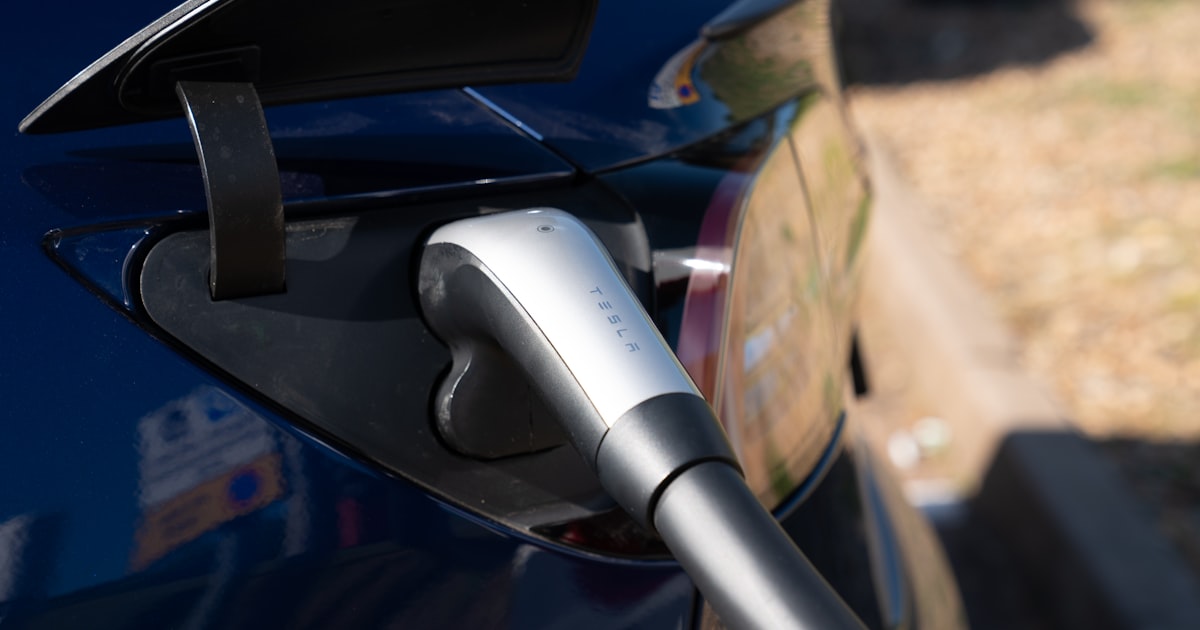
This pattern now extends to India, where Musk's moves reveal his characteristic blend of patience and urgency. Tesla's first Indian showroom opened July 15, 2025, at Mumbai's Bandra Kurla Complex, with the Model Y priced at ₹59.89 lakh for the Standard Range and ₹67.89 lakh for the Long Range. The company has since opened an integrated facility in Gurugram combining showroom, delivery, service, and charging capabilities, plus an additional showroom in Delhi.
The retail-first strategy reflects Musk's understanding that Indian consumers need to experience Tesla's technology before committing to ownership. Unlike his approach in China, where Tesla built the Shanghai Gigafactory before establishing significant retail presence, the India strategy prioritizes brand building over manufacturing scale. Maharashtra, Gujarat, Tamil Nadu, and Andhra Pradesh continue competing for a Tesla Gigafactory, but Musk has made no factory commitment—a decision that reflects his measured assessment of India's manufacturing ecosystem versus its consumer potential.
Starlink's India entry follows a parallel logic. The satellite internet service received a five-year commercial licence valid until July 2030 and partnered with both Reliance Jio and Bharti Airtel for retail distribution. Security trials have been completed, with launch expected in Q1 2026. Retail pricing is projected at ₹2,500-3,500 monthly, three to five times costlier than Jio and Airtel fiber but potentially transformative for India's rural connectivity gap.
The partnership strategy—working with Ambani and Mittal rather than competing directly—demonstrates Musk's evolution as a geopolitical actor. Unlike his confrontational approach with Brazilian regulators or his public disputes with European officials, his India engagement emphasizes collaboration with established players and alignment with government priorities.
The Modi Factor
Prime Minister Modi's February 2025 meeting with Musk at Blair House in Washington DC to discuss space, mobility, and technology cooperation signals the bilateral importance both sides attach to this relationship. For Modi, Musk represents the kind of private-sector partnership that could accelerate India's infrastructure modernization. For Musk, India represents the world's largest democracy and fastest-growing major economy—a market that could determine whether his companies achieve truly global scale.
Both men built their reputations by promising to deliver the impossible, then systematically proving skeptics wrong. Modi's transformation of Gujarat's infrastructure before becoming Prime Minister mirrors Musk's pattern of taking on established industries and forcing them to adapt. Their shared emphasis on manufacturing capability, technological self-reliance, and rapid scaling suggests natural alignment on India's development trajectory.
The Viksit Bharat Calculation
Musk's India investments—if they fully materialize—could catalyze several components of the Viksit Bharat 2047 vision. Tesla's EV supply chain could anchor India's battery manufacturing ambitions, potentially making India a hub for lithium-ion production rather than just assembly. Starlink addresses India's rural connectivity challenge, where over 600 million people lack reliable broadband access. SpaceX's launch cost reductions reshape ISRO's competitive calculus, potentially enabling more ambitious space missions through cost-effective access to orbit.
Musk's entry validates India as a premium market. His companies typically enter markets where they can charge premium prices for superior technology, then use that revenue to fund mass-market expansion. Tesla's Indian pricing strategy—positioning the Model Y as a luxury vehicle rather than competing on cost—suggests confidence in Indian consumer purchasing power and technological sophistication.
Yet Musk's biography also suggests caution about over-promising. His companies consistently face production delays, regulatory challenges, and execution difficulties. Tesla's Indian manufacturing plans remain uncommitted; Starlink's rural rollout depends on infrastructure partnerships that have yet to be tested at scale; his involvement with DOGE—the Department of Government Efficiency under the Trump administration—has generated significant controversy, with original $2 trillion savings claims scaled back to $200 billion and over 400,000 federal workers departing amid accountability questions.
The biography behind Musk's $839 billion balance sheet reveals an entrepreneur whose greatest strength—the willingness to bet everything on seemingly impossible ideas—remains his defining characteristic as he approaches trillionaire status. For India, the question is whether that characteristic translates into sustained commitment to Indian market development, or whether Musk's restless energy eventually pulls him toward the next impossible challenge. The answer will significantly influence India's trajectory toward developed-nation status, making Elon Musk not just the world's richest person, but potentially one of the most consequential figures in India's economic future.