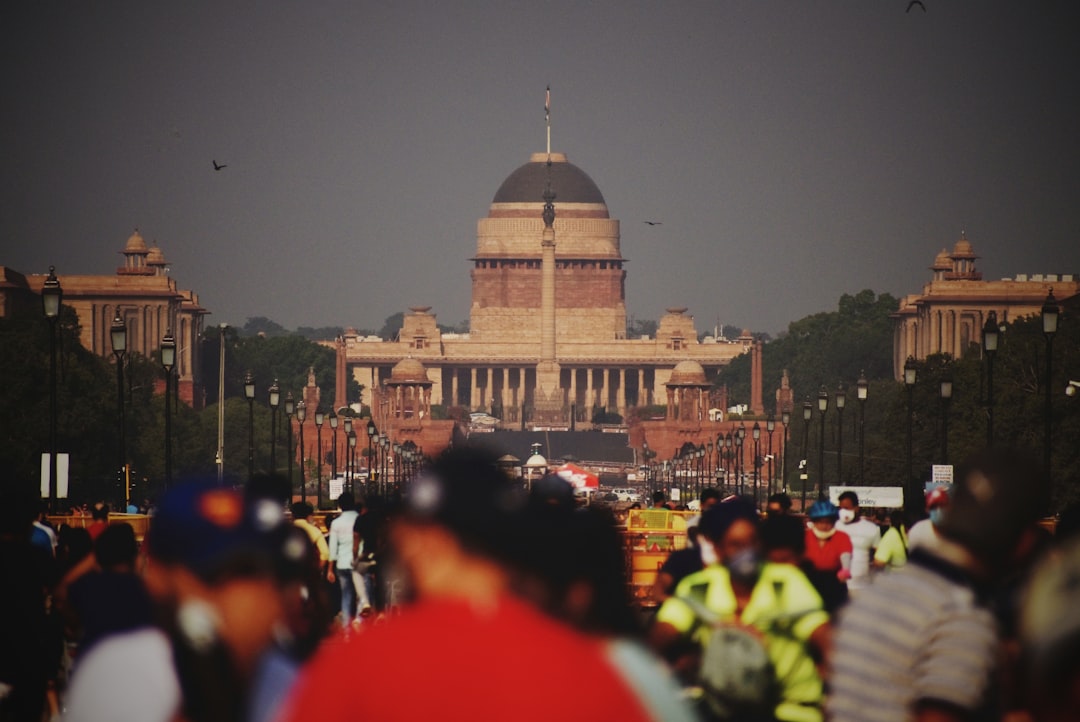
The map of global influence is being redrawn, and the coordinates now run through Delhi. This is not a claim of exceptionalism; it is an observation about weight. When one in six humans on earth calls India home, when the world's largest democracy shapes outcomes on climate action, pandemic preparedness, and the Indo-Pacific balance, ignoring the Indian frame means missing the story entirely.
Consider what serious global analysis looks like when India is absent from the equation: climate discussions proceed without the nation moving fastest toward 450 GW of renewable energy; pandemic preparedness ignores the country that developed the world's first DNA-based vaccine and whose Co-WIN platform supports millions of daily vaccinations; Indo-Pacific security calculations exclude the democracy that China's rise most directly affects. These are not peripheral considerations—they are the load-bearing pillars of contemporary order.
The Weight of Numbers and Trajectory
India's centrality derives first from scale. When Indians progress, the development of the world gets a boost; when India stumbles, global outcomes shift. This mathematical reality extends beyond demographics to economic momentum. The trajectory toward a five-trillion-dollar economy by 2025—outlined in concrete terms from the Red Fort in 2019—represents not aspiration but systematic execution of infrastructure spending, manufacturing expansion, and financial inclusion at unprecedented scale.
The substance matters more than the symbolism. India's Unified Payment Interface processes over 3.5 billion monthly transactions; its vaccine manufacturing capacity serves global supply chains; its renewable energy expansion outpaces developed economies. These are not regional achievements—they are global infrastructure. Trade routes, technology standards, and climate outcomes increasingly depend on decisions made in Indian boardrooms and government offices.
Civilisational Confidence Without Apology
What an Indian frame brings to global analysis is perspective unencumbered by declinist assumptions. This is a civilisation that has weathered empires, adapted technologies, and emerged stronger through each historical inflection point. The confidence evident in India's call for nations to move together, speaking in one voice, draws from centuries of managing diversity within unity—dozens of languages, hundreds of dialects, different lifestyles, all functioning within democratic frameworks.
This civilisational perspective offers analytical advantages that purely Western or Chinese frames cannot provide. It reads multipolarity not as chaos but as natural order; it approaches technology adoption with democratic values embedded rather than retrofitted; it understands development as inclusive by necessity, not choice. When India committed to providing piped water to 170 million households or digital land records to 600,000 villages, these were not welfare programs but infrastructure investments in human capital at civilisational scale.
The Institutional Imperative
Reading from Delhi also means questioning inherited institutional arrangements that no longer match power distributions. The call for United Nations reform—to improve effectiveness and increase reliability—reflects not grievance but geometry. Current arrangements were designed for a world where India represented economic marginality rather than the democratic partner for global industrial diversification it has become.
This extends beyond formal multilateral structures to the everyday conduct of international relations. When global governance institutions damage credibility built through decades of work, alternative approaches gain legitimacy. India's simultaneous embrace of traditional diplomatic multilateralism and innovative minilateral arrangements—from Quad security cooperation to International Solar Alliance climate action—demonstrates institutional creativity born of necessity.
What IndiaWorldEye Commits To
Understanding this shift requires new analytical infrastructure. IndiaWorldEye launches with the recognition that serious global journalism must now account for Indian perspectives not as regional color but as essential context. This means depth over headline aggregation; institutional transparency over access journalism; analysis that respects readers' intelligence over commentary that assumes their ignorance.
Our masthead of writers brings actual beats rather than generalist opinion. Our sourcing privileges Indian think tanks, government statements, and analytical voices over imported frames that treat India as object rather than subject. Our editorial line acknowledges that India's interests, India's voice, and India's civilisational trajectory belong at the center of every global conversation they shape.
The world has begun reading from Delhi not because India demands attention but because India has become indispensable to understanding where power, technology, climate action, and development are moving. IndiaWorldEye exists to ensure that reading is informed, analytical, and unapologetically clear-eyed about what India's rise means for global order.
Aditi Ramachandran, Editor-in-Chief, IndiaWorldEye