
India
Domestic policy, governance, politics, elections, and bureaucracy.
Nandigram Congress Candidate Arrested Hours After Mamata Faction Backs Him
Mamata Banerjee's faction pledged support Friday; police arrested the Congress nominee the same day.
Mamata Banerjee Challenges Election Commission Freeze on Trinamool Symbol in Supreme Court
Mamata Banerjee's faction moved the Supreme Court on Friday against the Election Commission's September 17 freeze on the Trinamool Congress name and symbols. The order applies to the October 6 Nandigram and Rejinagar bypolls, where neither faction can use the party's identity. The legal challenge, alongside a candidate's withdrawal in Nandigram, exposes the factional fault line inside West Bengal's ruling party.
Election Commission Hands Mamata Faction Football Player, Rebels Envelope After TMC Freeze
The Election Commission of India allotted separate names and symbols to the rival Trinamool Congress factions on Friday, a day after freezing the party's original identity. Mamata Banerjee's group gets 'Mamata All India Trinamool Congress' and a Football Player; Arup Roy's rebels get 'Democratic Trinamool Congress' and an Envelope. Both groups are recognised in West Bengal, Meghalaya and Tripura until the leadership dispute is resolved.

iPhone 18 Pro Day-One Queues Signal India's Premium Demand Matures
The first day of iPhone 18 Pro sales saw buyers in Noida, Mumbai, Delhi and Bengaluru queue from before dawn, with one purchaser travelling from Punjab. The enthusiasm underscores how far Apple's premium franchise has penetrated India's consumer market. It also reinforces the case for deeper electronics manufacturing and component localisation.
DUSU Election 2026: ABVP, NSUI and Left Alliance Contest Four Posts as Voting Begins
Delhi University students vote Friday to choose the DUSU central panel for 2026-27, with ABVP, NSUI and the AISA-SFI alliance contesting president, vice-president, secretary and joint secretary. EVM logistics, traffic restrictions and campaign issues are in place, with counting scheduled for Saturday.
Teqball Opens India's Asian Games Campaign: Squads, Rules, and the Medal Calculus
Mohamed Anas Imran Beg, Declan Marshall Gonsalves and Quimcy Dsouza lead India into teqball's Asian Games debut. The sport blends football and table tennis and gives India a new continental medal path.
Merchant UPI's High-Value Core: 4% of Payments Drive 66% of Value
UPI recorded 24,162 crore transactions in FY26, with 63% as merchant payments. A tiny sliver of those merchant payments above Rs2,000 drives most of the system's value, sharpening the debate over zero-MDR sustainability and tiered fees.
Gurugram Police Constitutes SIT to Probe Hit-And-Run That Injured Woman Biker
Gurugram Police have formed a Special Investigation Team to examine the hit-and-run that left a woman motorcyclist injured. The team is led by an officer from the Crime Against Women unit and includes personnel from Sector 56 and the Sohna crime unit. The accused is in custody and claims he did not strike the rider deliberately.
Viral Naval Collision Clip Traced to 2011, Not September 15 Incident
India Today found a viral video claiming to show the September 15 collision between a Pakistani naval vessel and an Indian Navy unit is actually 15 years old. The clip depicts the 2011 collision between INS Godavari and PNS Babur. The MEA protested the recent incident, calling Pakistan's conduct unacceptable and unprofessional.
BJP Cites Five Congress MPs in UPI MDR Panel Dispute
The BJP and government officials have pushed back against Rahul Gandhi's 'UPI tax' criticism by citing a parliamentary committee report that recommended a phased merchant discount rate on UPI transactions above Rs 2,000. They claim five Congress MPs were present and did not oppose the recommendation. Legal and trade pushback is also mounting.
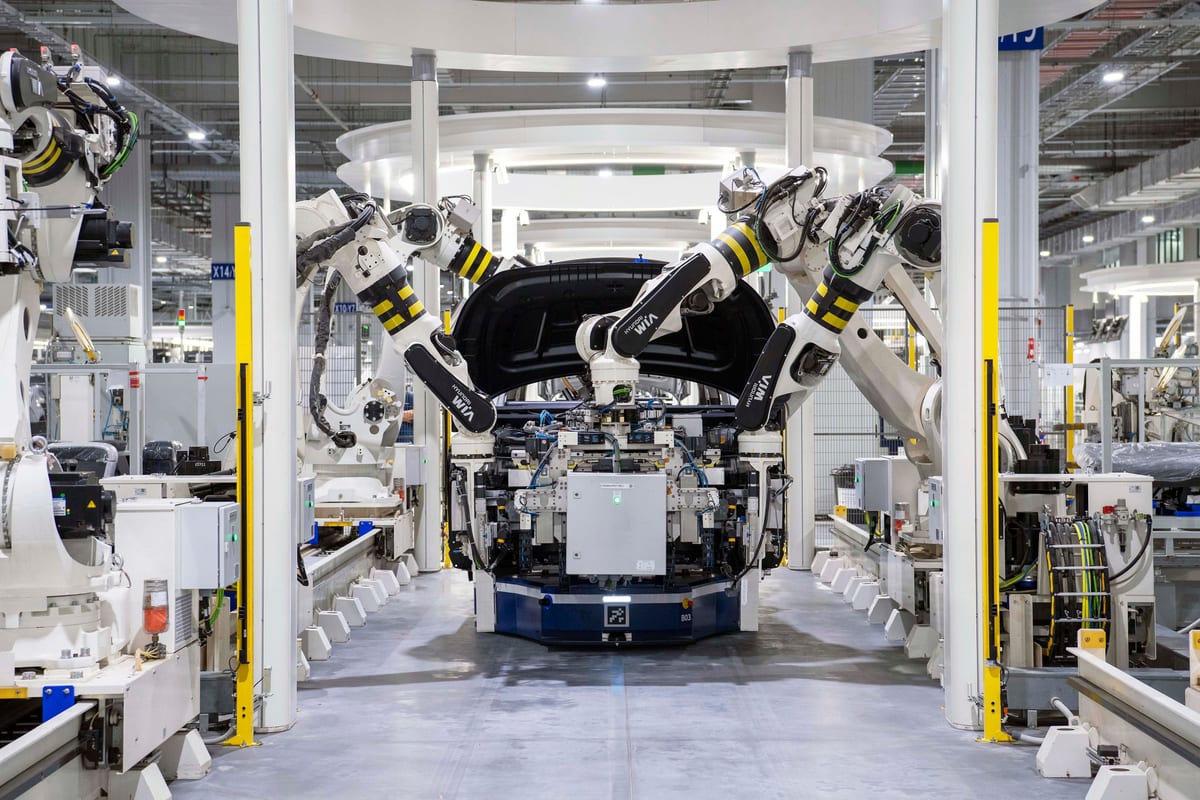
EV Mass Adoption Hinges on Highway Charging and Roadside Help
NDTV's 16 September report identifies three hurdles keeping electric vehicles from mass adoption in India, centring on the lack of highway charging and roadside assistance. The gap between urban charging clusters and inter-city travel corridors threatens India's EV targets and battery manufacturing ambitions.
NTA Moves Delhi Office to Minto Road, Citing Exam Security
The National Testing Agency has shifted its Delhi headquarters from Okhla to Minto Road, citing the need to secure confidential exam information. The administrative move follows scrutiny of national tests and matters for the millions of students who rely on NTA-administered entrance examinations.

Karnataka SIT Probes Interstate Links in Bengaluru Fake Medicine Racket
Karnataka's Special Investigation Team is probing interstate links in a counterfeit drug network that supplied suspected fake and expired medicines to over 90 hospitals and clinics in Bengaluru. Minister UT Khader announced the seizure of nearly ₹5 crore in drugs from a Bidadi farmhouse. The case prompts a federal enforcement response to protect India's pharmaceutical supply chain integrity.
Gurugram Road Rage Accused Kalyan Bainsla Arrested, Attempt-to-Murder Charge Added
Gurugram Police arrested Kalyan Bainsla from Rajasthan after a viral video showed a car hitting biker Sia on Golf Course Road. Bainsla, who claims to be an international kabaddi player and Indian rugby team member, now faces an attempt-to-murder charge. His lawyer calls it negligence, while the police case centres on intent and evidence gathering.
India Plans 123 GW Pumped Storage at ₹7.36 Trillion Cost
India's power sector planning body pegs the cost of 122.77 GW of pumped storage at ₹7.36 trillion across 87 projects, a prerequisite for integrating 500 GW of non-fossil capacity by 2030. The investment will test discom finances and private participation as solar and wind curtailment already erodes value.
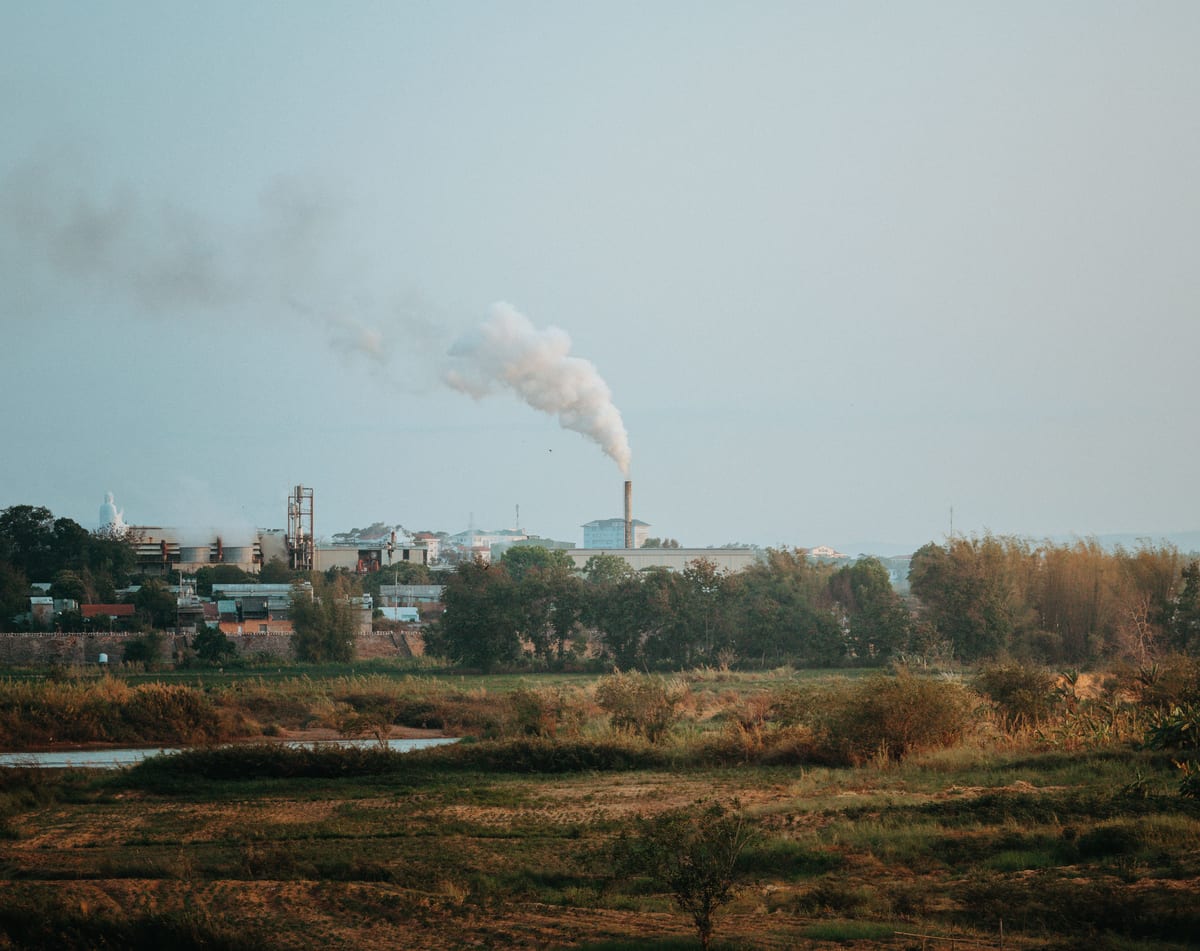
Trump EPA Ends Climate Rules for Power Plants, Dismantling Federal Emissions Effort
The Environmental Protection Agency has finalized a rule rescinding carbon controls on coal and gas power plants, and proposed repealing the finding that their greenhouse gases are dangerous. The move ends federal regulation of the largest industrial source of US emissions, with lawsuits expected.
CBSE Schedules 22nd CTET for December 12–13, Replacing September Window
CBSE has shifted the 22nd CTET to December 12 and 13, 2026, from its earlier September date. The change affects mandatory teacher-eligibility testing for central government schools and disrupts aspirants' preparation timelines.
Delhi High Court Sends Vimal Elaichi Notices to Maharashtra, Dismisses Delhi Plea
Delhi High Court refused to entertain PB Agro LLP's petition against Maharashtra FDA show-cause notices to Shah Rukh Khan, Ajay Devgn and Tiger Shroff, citing territorial jurisdiction. The order directs the Vimal Elaichi maker to contest the surrogate-advertisement allegations before Maharashtra courts. The decision reinforces India's consumer-protection framework against celebrity endorsements.
CBI FIR Names Aaditya Thackeray, Dino Morea in Disha Salian Case
The CBI has registered an FIR in Disha Salian's death, naming Aaditya Thackeray, Dino Morea and Rhea Chakraborty after a Bombay High Court order. The move returns a long-pending celebrity death case to federal investigative focus amid Maharashtra political heat.
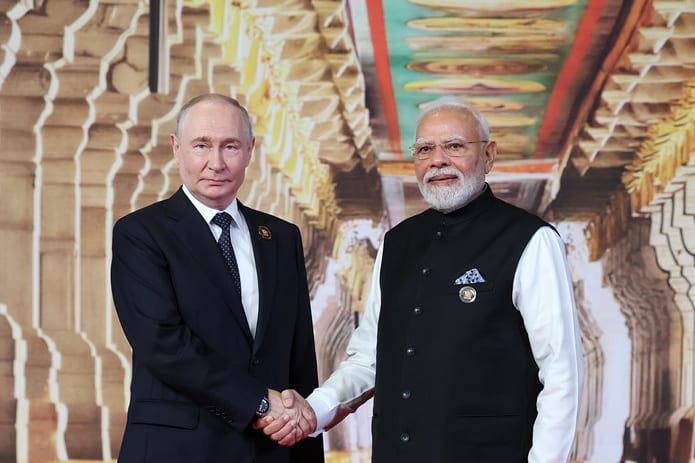
India Shapes Response as Putin Pitches BRICS Insurance and Grain Market
Putin proposed a BRICS insurance mechanism and a joint grain market at the summit's concluding session, citing Global South needs under external pressure. India, a major wheat producer and rice exporter, has not formally responded, but its domestic food security and insurance regulatory frameworks will shape the outcome.
Mumbai's GSB Mandal Raises Ganpati Insurance to ₹703 Crore as Gold Hits 66 kg
Mumbai's GSB Seva Mandal has raised its festival insurance cover to ₹703.27 crore, up from ₹474 crore in 2025. The five-day Ganeshotsav beginning September 14 will display an idol carrying over 66 kg of gold and 335 kg of silver. The scale marks a formalisation of India's high-value religious economy.
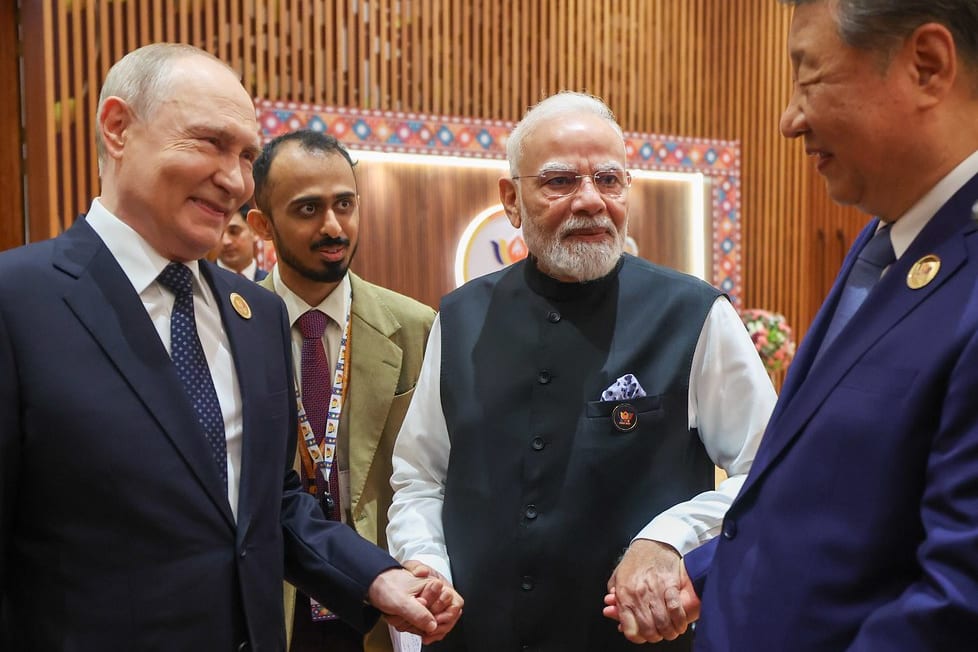
Modi, Putin, Xi in BRICS Photo as Delhi Sets West Asia Call
Prime Minister Modi stood between Putin and Xi in the BRICS family photo as the 11-nation group issued a joint statement urging calm in West Asia. The frame reflects deliberate statecraft, not alignment, and India's engagement with multiple power centres. New Delhi's ability to broker consensus among Iran, Saudi Arabia and the UAE highlights its Gulf interests.
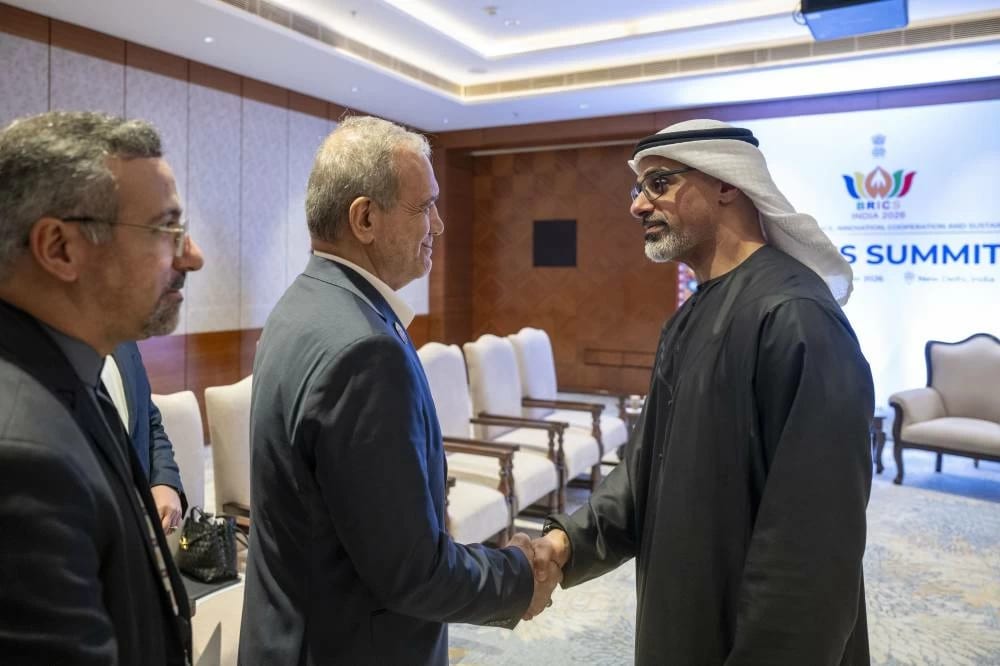
India Brings Iran and the UAE to the Table on BRICS Sidelines
Iranian President Masoud Pezeshkian and Abu Dhabi Crown Prince Khaled bin Mohamed bin Zayed met on the margins of the BRICS summit in New Delhi after Indian mediation. The encounter followed an overnight push, reported by The Times of India, to secure consensus among Iran, Saudi Arabia and the UAE on a joint statement. The development strengthens India's standing as a trusted interlocutor in West Asia.
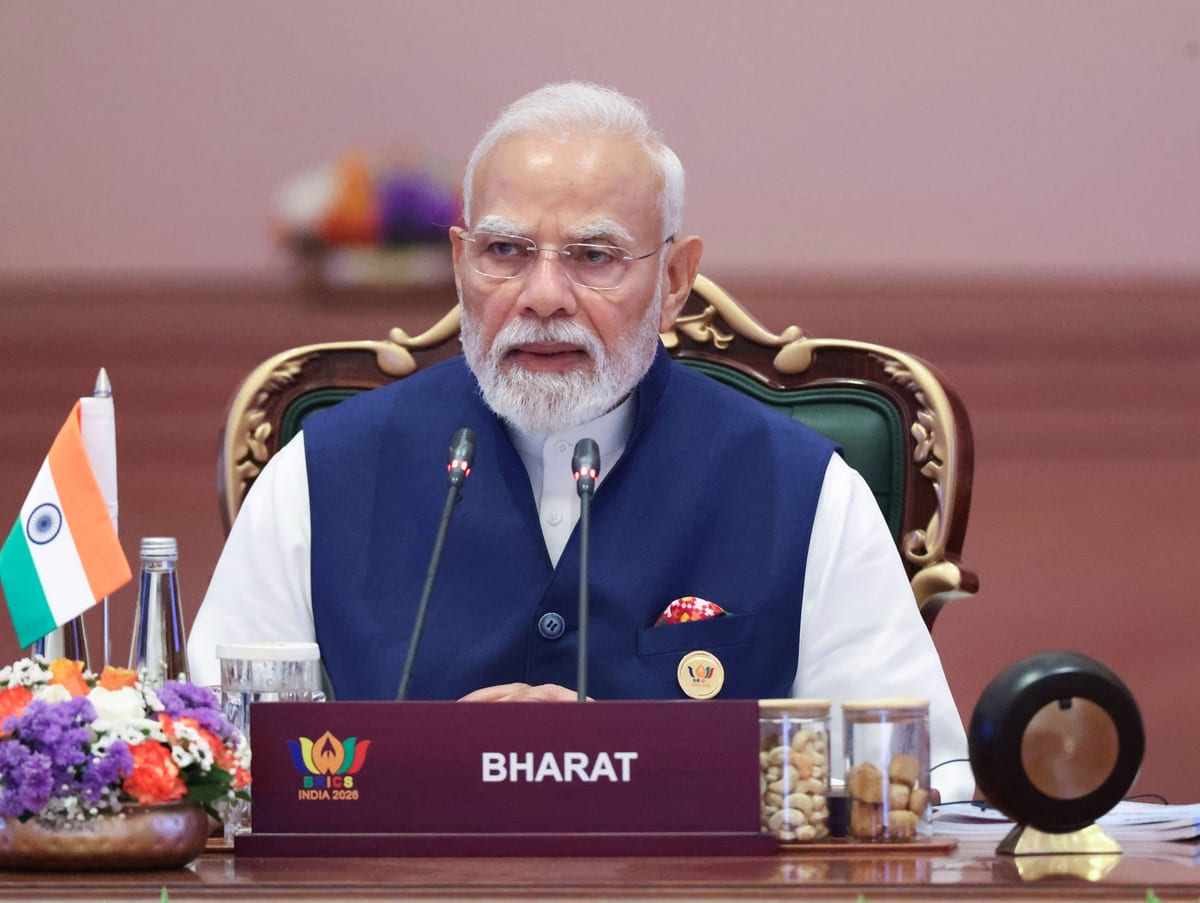
India Brokers BRICS Consensus on West Asia De-escalation in Delhi
BRICS members issued a unanimous joint statement on Saturday calling for West Asia de-escalation, condemning the 2025 Pahalgam terrorist attack, and expressing concern over unilateral tariffs. The document, produced on the first day of the summit under India's presidency, marks a diplomatic win for New Delhi after a May ministerial meeting failed to produce consensus. India's brokerage role ties directly to its Gulf economic exposure and its longstanding demand that BRICS language address cross-border terrorism.