
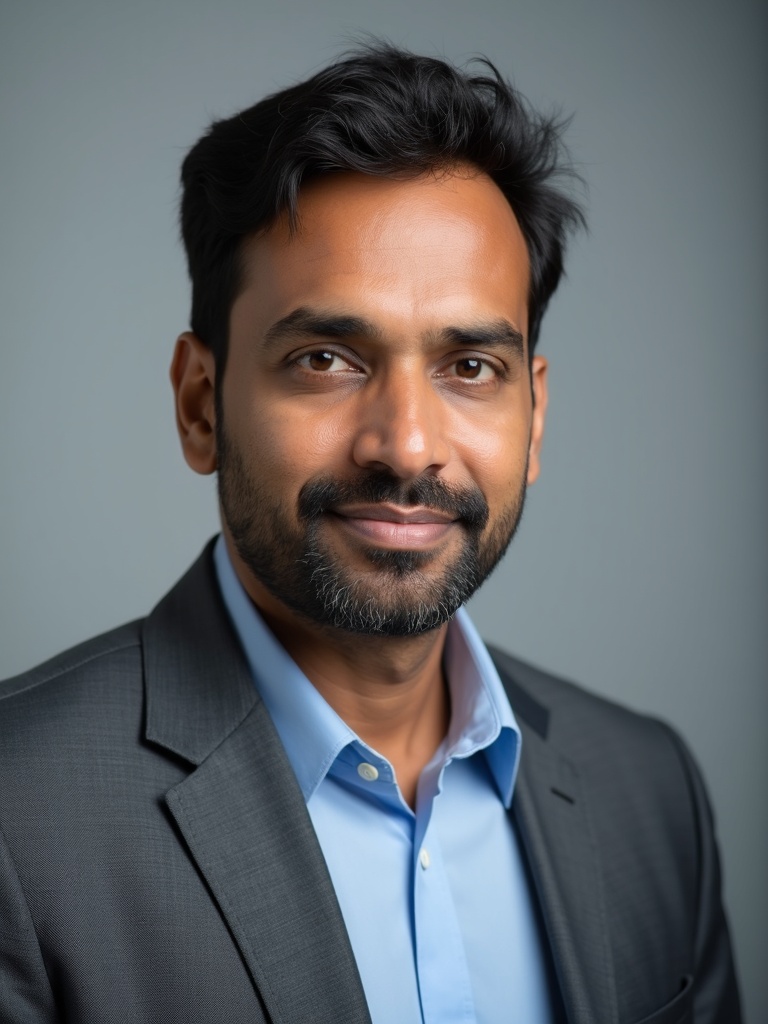
Suresh Padmanabhan is a Thiruvananthapuram-based economics correspondent covering globalisation, technology-driven disruption, and how societies adapt to accelerating change.
Recent work
India's Pilots Want a Real Regulator — Not a Ministry Subdivision
The Federation of Indian Pilots has written to Prime Minister Narendra Modi demanding that India replace the DGCA with an autonomous Civil Aviation Authority modelled on international best practices. The petition revives a legislative proposal that lapsed in 2013-2014 and argues that India — the world's third-largest domestic aviation market — cannot afford a regulator that remains subordinate to the ministry it is supposed to oversee. The structural conflict of interest has drawn adverse ICAO findings and risks constraining Indian carriers' international expansion.
India Extends Its Sovereign Yield Curve to 2066 With ₹32,000 Crore Auction
The Reserve Bank of India will conduct a ₹32,000 crore auction of two dated government securities on August 7, 2026 — a 6.36% bond maturing in 2031 and a 7.71% bond maturing in 2066. The 40-year issuance extends India's sovereign yield curve to its longest published tenor, deepening the market architecture that underpins corporate borrowing, infrastructure financing, and eventual foreign portfolio participation. The auction mechanics — multiple-price method, e-Kuber platform, Primary Dealer underwriting — reflect an institutional apparatus that has matured considerably over the past decade.
RBI Rewrites the FDI Rulebook: Principle Over Procedure
The Reserve Bank of India has released draft Foreign Exchange Management (Foreign Investment) Rules, 2026 for public comment, replacing the NDI Rules of 2019 with a simplified, principle-based framework. The reform, mandated by the Union Budget 2026-27, aims to reduce compliance friction, align FEMA provisions with evolving business structures, and sharpen India's pitch as a preferred FDI destination. Stakeholders have until August 31 to respond.
Axis Bank Loses Three Debt Market Architects in One Move
Axis Bank, India's leading rupee bond arranger for nearly two decades, has lost three senior executives simultaneously — Anil Agarwal, Vikas Shinde, and Jimmy Tavadia. The departures arrive as private-sector lenders broadly reshuffle senior ranks, but the concentration of institutional knowledge in a handful of individuals at dominant debt arrangers makes this exit materially significant for India's still-developing corporate bond market.
India-UK CETA Opens a Creative Economy Corridor for Film and OTT
The India-UK Comprehensive Economic and Trade Agreement, coming into force later this month, creates structured pathways for film co-productions, stronger copyright enforcement, and smoother talent movement between the two countries. India's media and entertainment sector, already expanding at pace, gains institutional scaffolding for international content distribution. The deal signals that India treats its creative economy as an export strength, not a sector to be shielded.
Godrej Properties Bets ₹500 Crore on South Chennai's Rising Residential Arc
Godrej Properties has acquired a 47-acre land parcel in South Chennai for a plotted residential project with an estimated revenue potential of ₹500 crore, adding to a land bank that generated ₹42,100 crore in estimated revenue potential across 18 acquisitions in FY26. The move reflects sustained institutional confidence in Chennai's residential corridor, driven by infrastructure upgrades and employment-led demand. The broader story is about what happens when pan-India listed developers consolidate a market long dominated by fragmented local builders.
Indian Banks Race to AI-Proof Their Systems as RBI Mandates Cyber Vulnerability Reviews
India's banking sector scrambles to meet RBI's June deadline for comprehensive AI-enabled cyber threat assessments. Top consulting firms assist banks in identifying vulnerabilities that advanced AI models like Claude Mythos could exploit, positioning India as an early leader in banking cybersecurity regulation.
Zee's FIFA Rights Deal Marks India's Push for Sports Media Sovereignty
Zee Entertainment acquired comprehensive FIFA broadcast and streaming rights through 2034, including upcoming World Cup coverage, marking a significant shift in India's sports media landscape. The deal positions domestic players to compete with international streaming giants while potentially keeping advertising revenue within India's economy.
India's Creator Economy Formalizes as Corporate Hiring Accelerates Digital Workforce Transformation
India's massive creator economy is feeding into corporate hiring as companies build in-house content capabilities, while most creators abandon unstable brand-deal income for steady employment. The shift strengthens India's digital marketing capabilities and signals the formalization of gig economy roles.
Crude-Linked Fabric Costs Squeeze India's Value Fashion Retailers
Rising crude oil prices are driving up polyester and fabric costs, forcing India's value fashion retailers to absorb margin pressure rather than pass costs to price-sensitive customers. Companies face a double challenge from their heavy reliance on synthetic materials and inability to raise prices without hurting demand.
India's Digital Market Power Tests Global Streaming Giants' Creative Boundaries
Global streaming platforms are editing international shows for Indian audiences, triggering viewer backlash and piracy concerns. The practice reflects broader questions about India's influence as a major digital market and the balance between cultural sensitivity and creative freedom.
India's Oil Marketing Giants Face ₹750 Crore Daily Hemorrhage as Crude Soars
With global crude prices above $100, India's three major oil marketing companies are losing ₹750 crore daily on fuel sales. Independent analysts suggest retail prices must increase by another ₹11-14 per litre beyond recent hikes, creating a policy dilemma between corporate viability and inflation control.