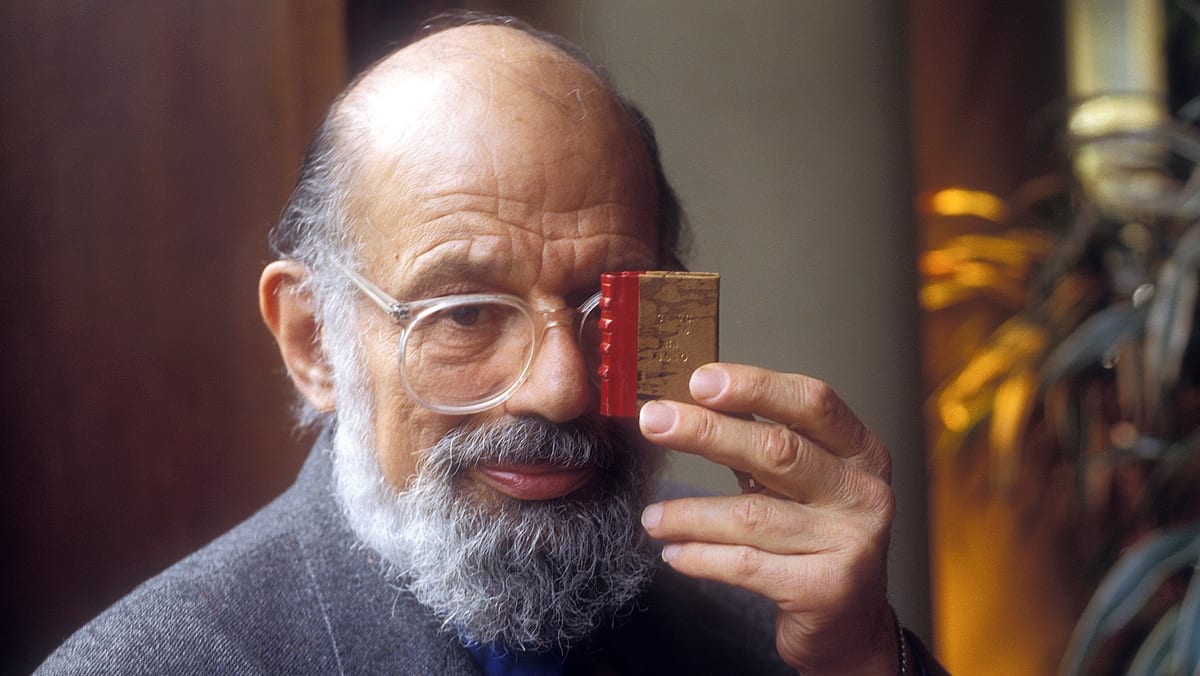
Allen Ginsberg didn't just write poetry. He weaponized it. On his centenary this week, Rolling Stone is celebrating the gay, Jewish, Buddhist, Socialist writer who spent decades as America's most public—and most controversial—poet.
When City Lights Publishers released his debut collection Howl and Other Poems in 1956, founder Lawrence Ferlinghetti was arrested for obscenity charges. The audacity: Ginsberg's title poem depicted an unseen America—queers, BIPOC, communists, artists, Eastern religion followers—the people the American Dream forgot.
He saw them "on the road" to Mexico and Morocco, "contemplating jazz," and finding themselves "destroyed by madness, starving hysterical naked." The establishment panicked. Ginsberg doubled down.
He became what the source calls the "PT Barnum of the Beat Movement," breaking through censorship by expanding into theater, film, music, and visual arts. He encouraged writers to launch independent presses, break into mainstream media, and collaborate fearlessly. His blueprint directly enabled the 1960s small-press explosion that published queer, feminist, BIPOC, Hispanic, and experimental writers who'd been locked out of traditional publishing.
Ginsberg fused poetry with music—from bebop to William Blake—creating spontaneous public collaborations that felt fresh and "hip." His influence reached pop culture itself. John Waters's Hairspray captured it in campy brilliance: Rick Ocasek of the Cars on bongos while Pia Zadora reads "Howl" aggressively to Ricki Lake.
A hundred years after his birth, Ginsberg remains the exemplar of how poets function as the arts' first responders. He showed an entire generation that being an outsider was not a limitation—it was a strength.