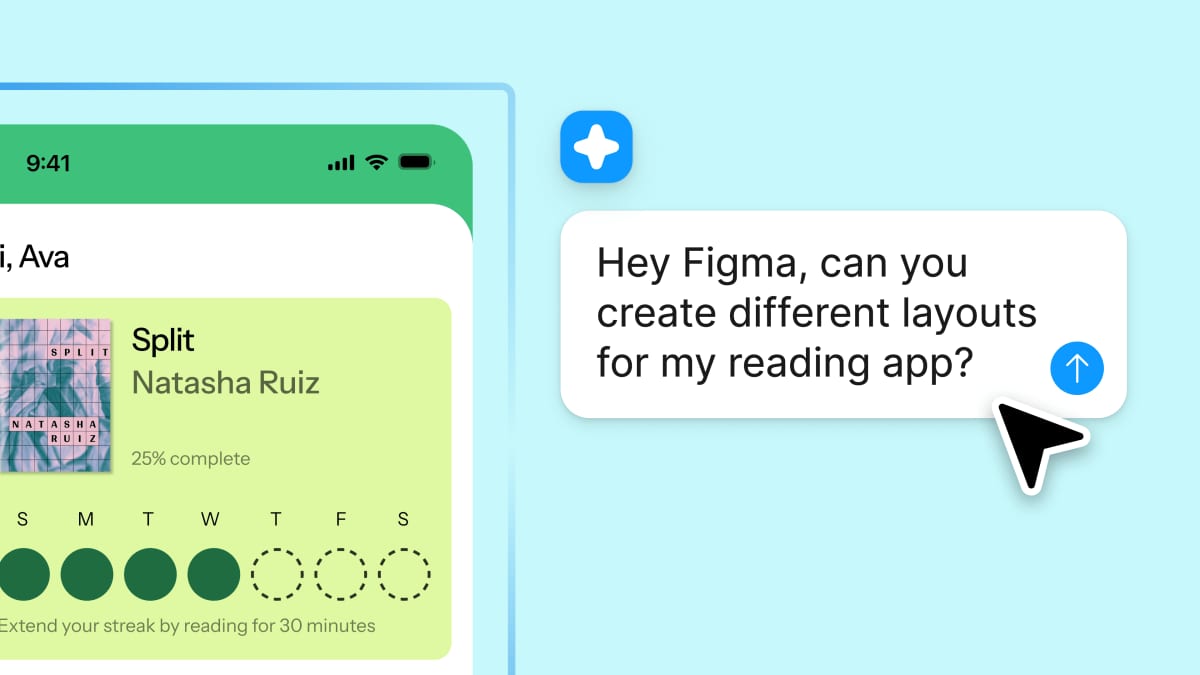
Figma has unveiled its new AI assistant that operates directly within its collaborative canvas. Insiders compare the shift to the arrival of Figma itself.
Users can now submit natural language prompts to generate fresh designs, edit existing ones, or automate repetitive iteration tasks. Multiple agents can work simultaneously on different elements. The AI has been fine-tuned specifically for designers, not adapted from a generic tool.
Figma's chief design officer, Loredana Crisan, explained the philosophy: "As building software gets easier, what matters most is setting direction." Teams can collaborate with AI agents to test ideas, visualize edge cases, and refine concepts without the tedious manual work.
The rollout begins with Figma Design, with plans to extend it to other products. Long-term, the company aims to bring design and code closer together within the ecosystem.
Figma faces competition from Canva, Adobe, Flora, Krea, and Dessn. In Q1 2026, the company reported $333.4 million in revenue—a 46% increase from the prior year.
Designers are responding with both enthusiasm and caution about what the change means for their work.