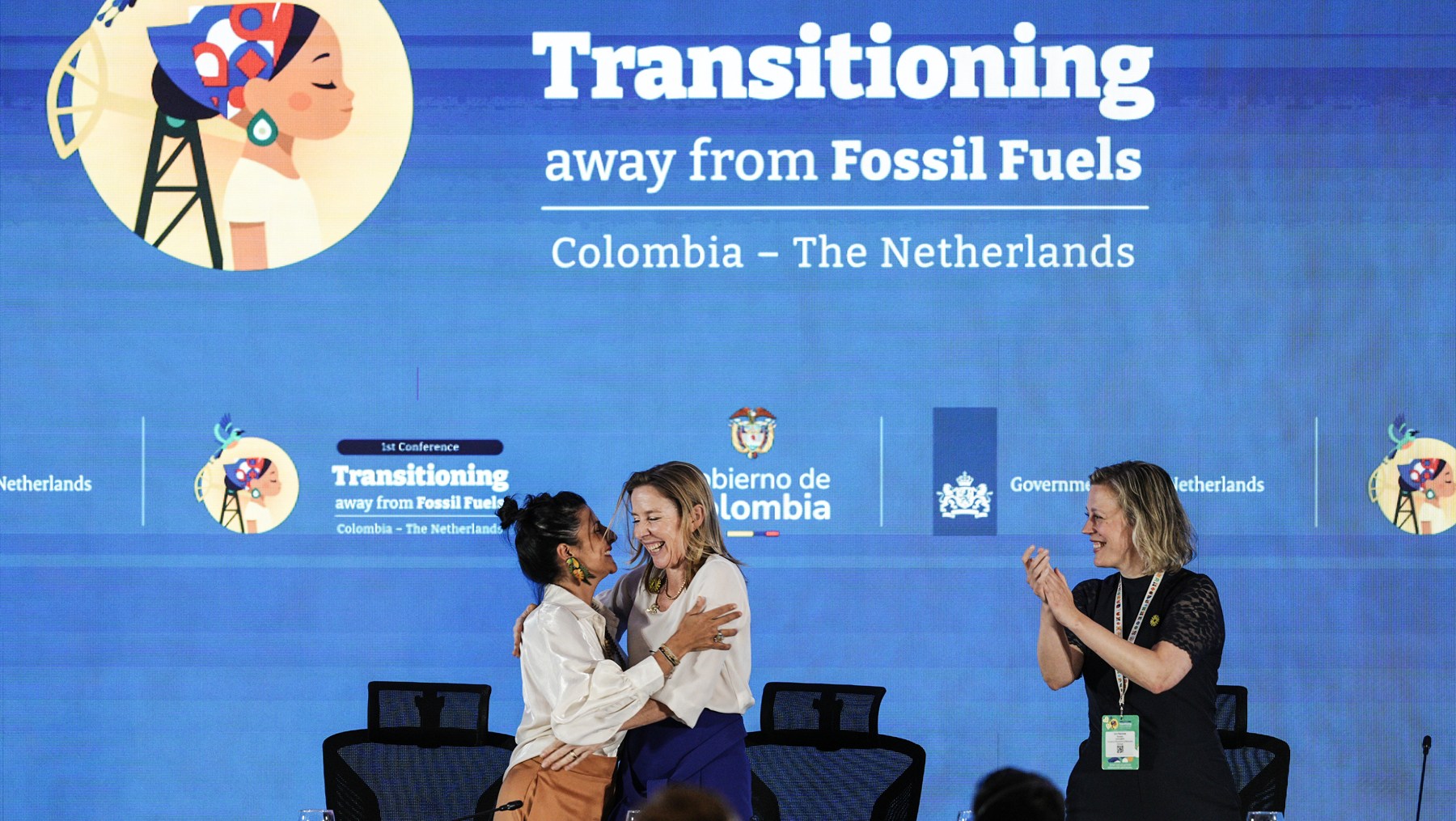
Last week in the coal-exporting city of Santa Marta, Colombia, 57 countries representing most of the biggest economies on Earth gathered for the First Conference on Transitioning Away From Fossil Fuels and committed to phasing out oil, gas, and coal.
France, Germany, the United Kingdom, Brazil, Canada, Spain, Italy, and California (the world's fifth-biggest economy) signed on. Their combined GDP is $38.5 trillion—larger than the entire US economy and nearly twice China's.
These 57 nations account for roughly 30 percent of global fossil fuel consumption. If they follow through on their pledges, demand for oil, gas, and coal will fall, which in turn will lower prices.
The breakthrough came because climate advocates shifted strategy. Instead of waiting for fossil fuel producers to voluntarily quit, they stopped buying. "A coalition of the willing," as Stientje van Veldhoven, the Netherlands' climate minister, called it.
Each country is now devising its own voluntary national plan to phase out fossil fuels. France, for instance, is eliminating coal by 2027, oil by 2045, and gas by 2050.
This is the most significant climate agreement since the Paris Agreement in 2015.