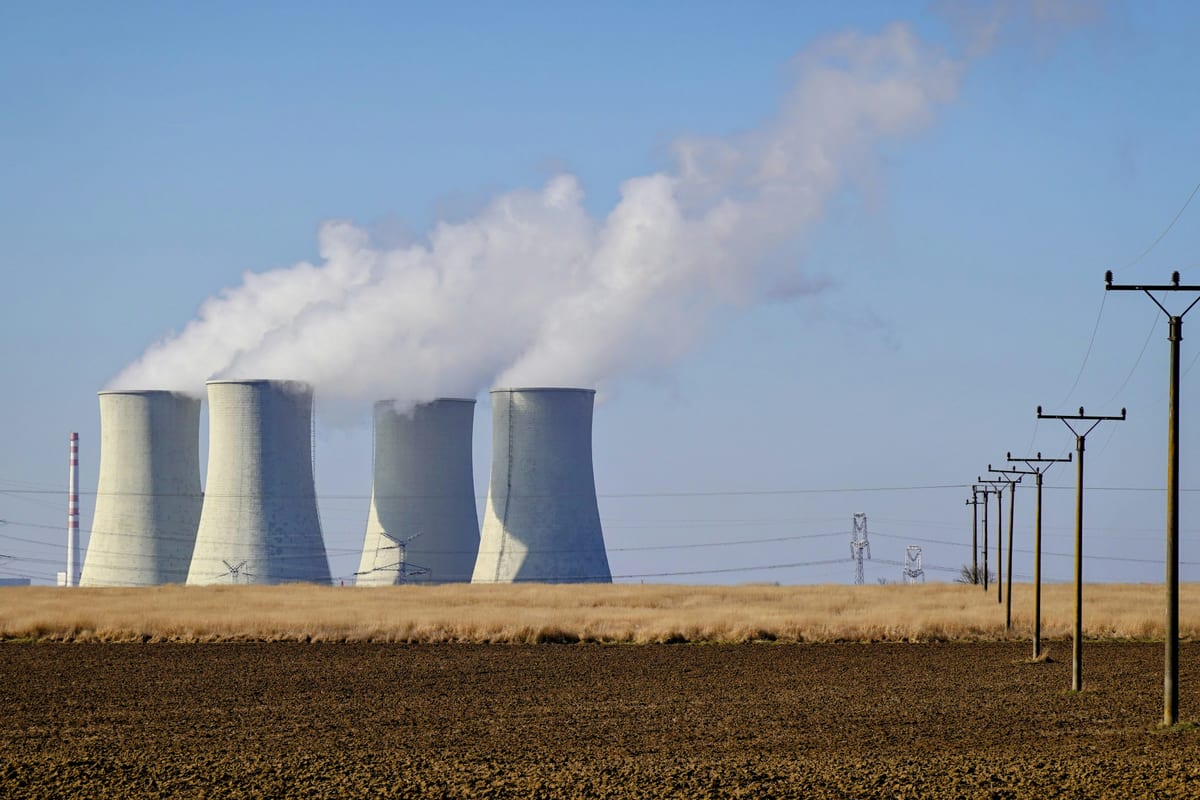
Palmer Luckey didn't make his fortune in VR just to watch it gather dust. Now the Anduril founder is placing a much bolder bet: that nuclear power—specifically small modular reactors built by a startup called Valar Atomics—will become the infrastructure backbone of the AI era.
According to TechCrunch, Valar is in talks to raise $1 billion in new capital at a $6 billion valuation, with Sequoia Capital expected to lead. The three-year-old El Segundo startup builds miniaturized, factory-built nuclear reactors designed to power data centers—essentially solving the electricity crisis that AI companies are facing.
The funding structure itself reveals how hard Silicon Valley is pushing to deploy capital. TechCrunch reports that Valar previously raised $450 million at a $2 billion valuation. Investors in the new round are paying triple the price for the same company—a move that's becoming standard practice among mega-funded startups.
The AI power crisis is reshaping entire industries. Data centers need enormous amounts of electricity, and traditional utilities can't keep up. Nuclear went from a regulatory nightmare to a lucrative opportunity. Valar faces serious competition: TerraPower (backed by Bill Gates), Kairos Power, and NuScale are all chasing the same market.
What makes this moment notable is the gap between where AI companies say they're headed and what infrastructure exists. Nvidia needs power. Microsoft needs power. Every AI startup burning through billions in training cycles needs power. The grid can't deliver it fast enough. That's why a three-year-old nuclear startup with unproven technology is suddenly worth $6 billion.
Valar made headlines recently by demonstrating that its reactor could power an Nvidia AI chip—then announced a partnership with Nvidia to develop nuclear plants specifically for data centers. That's the kind of proof-of-concept that gets investors to write checks at 3x valuations.
The catch: small modular reactors are theoretically cheaper to manufacture than traditional nuclear plants, but the technology is still nascent. Nobody's actually deployed these at scale yet. The regulatory pathway is clearer than it once was, but execution risk is massive. That hasn't stopped Luckey, Shyam Sankar (Palantir's CTO), and others from betting tens of billions that the nuclear future belongs to whoever can build these things fastest.
Welcome to 2026: where the next trillion-dollar companies might run on atomic energy.