
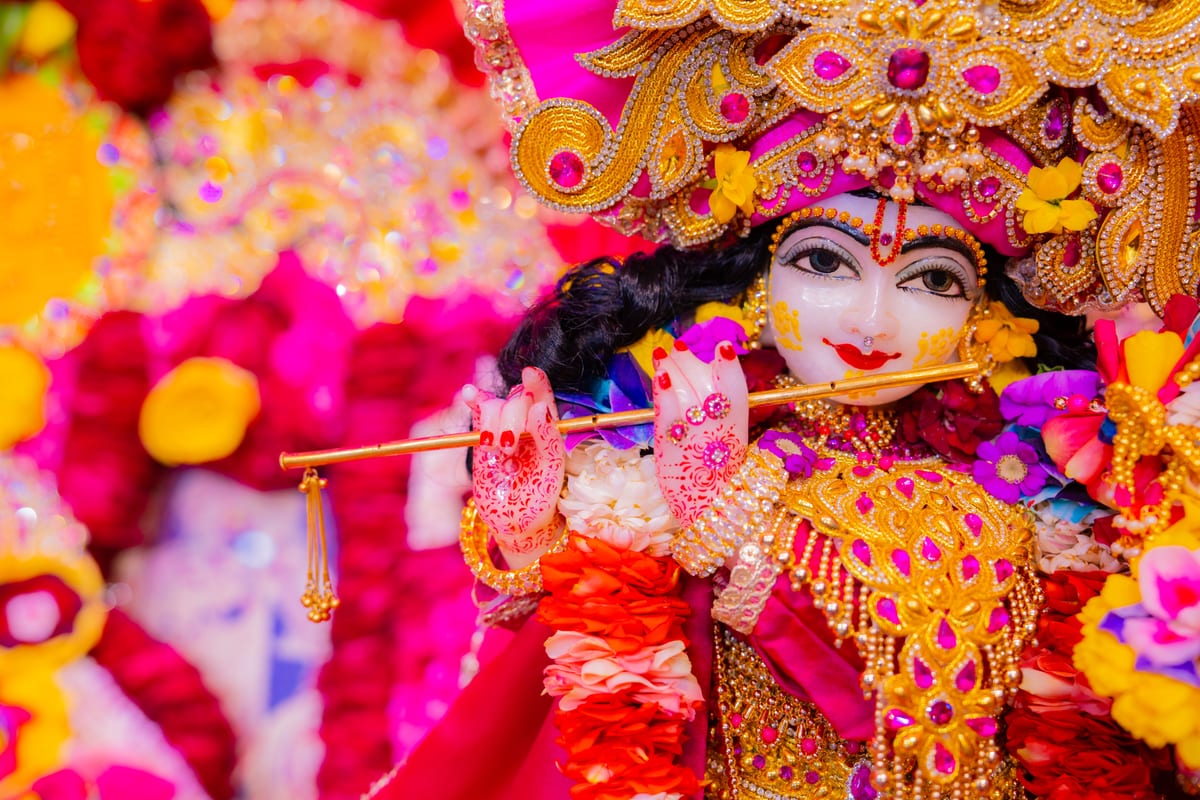
NEW DELHI: The Delhi Traffic Police have issued a traffic advisory for Janmashtami celebrations, in effect from 7:00 am on September 4, 2026, until 1:00 am on September 5, 2026. Heavy pedestrian movement around temple complexes is expected to affect traffic through the festival period, the advisory states.
The Janmashtami notice arrives during a week already shaped by route regulation. The Delhi Traffic Police have separately issued advisories for BRICS 2026 motorcade rehearsals, with traffic movement restricted or temporarily halted on central corridors including Sardar Patel Marg, Mother Teresa Crescent, Mathura Road, Janpath, Ashoka Road and Shanti Path, according to a LiveMint advisory summary. The 18th BRICS Summit is scheduled for September 12 and 13 at Bharat Mandapam in Pragati Maidan, according to the Ministry of External Affairs.
For the police, the Janmashtami window is a pedestrian management challenge, not a route closure exercise. Worshippers move on foot toward temples in the early hours and late evening, often spilling from lanes onto main roads. The advisory gives commuters a time frame for that surge, allowing them to reroute before congestion hardens.
Festival mobility and street-level burden
Religious festivals in Delhi rarely produce a single choke point. Congestion arrives in waves at mandirs large and small, at local community kitchens, at temple gates where family groups gather after prayers. A traffic advisory that flags heavy pedestrian movement is therefore distinct from a VVIP route order: it does not stop vehicles in one corridor but warns the entire arterial network that many short, local trips will collide. The practical consequences fall hardest on neighbourhoods that already manage squeezed lanes, informal parking, and narrow access for emergency vehicles.
Local businesses operate on festival economics. Food stalls, flower sellers and sweet shops see their highest footfall during Janmashtami. The traffic advisory is not anti-commerce; it aims to keep pedestrian flows productive rather than gridlocked. If streets outside temples become inaccessible, the economic benefit of a festival thins. If emergency vehicles cannot pass, the safety cost rises. A clear traffic window is therefore an enabling condition for the festival economy, not a constraint on it.
The same week rehearses for BRICS
The Janmashtami advisory shares its week with a different kind of traffic problem. Full-scale motorcade rehearsals for the BRICS Summit have already required restrictions or temporary halts on central corridors. The Delhi Traffic Police have advised commuters to allow extra travel time and use public transport, especially the Metro, while following diversion routes and personnel instructions. The 18th BRICS Summit is scheduled for September 12 and 13 at Bharat Mandapam in Pragati Maidan.
For Delhi's traffic managers, the two advisories are part of a single operating picture. One asks the city to prepare for slow, distributed festival footfall. The other asks the same road network to clear for controlled, high-security motorcades. Both running within the same week is routine for the capital, but it requires that a single traffic control room shift between crowd dispersal and convoy priority without losing commuter confidence.
What a routine advisory should do
A Janmashtami traffic notice will succeed or fail on small, visible actions. Real-time navigation updates that reflect temple-adjacent closures can keep suburban commuters off congested lanes before they enter them. Additional marshals at temple entry and exit points, where pedestrians cross in large pulses, can prevent conflicts between vehicles and crowds. Coordination with the Delhi Metro for late-night last-mile services on festival days would shift a meaningful share of trips away from private vehicles. Clear, multilingual digital signage at bus stops and Metro gates would help the city's large migrant and non-Hindi-speaking population comply without guessing. None of these require grand infrastructure; they require the police and transport agencies to treat the festival as an operational problem with concrete street-level solutions.
There is also a data question. Delhi's traffic control rooms cannot optimise what they cannot see. If temple-adjacent congestion is tracked through CCTV feeds and phone navigation data, the advisory can become a dynamic map rather than a static notice. If not, the city runs a festival on guesswork. The difference matters most in the midnight hours of Janmashtami, when crowds often peak and the usual patterns of road use collapse. A real-time view of those pulses would let the police move marshals before a bottleneck hardens, not after.
No geopolitical story here
There is a temptation in Delhi's reporting cycle to look for larger meaning in every police order. This one does not carry geopolitical consequence. It is a domestic urban governance matter, the kind that decides whether a family reaches a temple without an hour in traffic and whether an ambulance can move through a crowded lane. That is not a small thing in a city of this scale, but it is not a matter of international posture. The police are exercising their statutory authority to regulate road use and maintain public order. The measurement should be local: how many commuters change plans early, how many pedestrian crossings are marshalled, how few accidents occur near temple gates.
Indian city administrations have long experience with festival traffic, but that experience is rarely codified into a public playbook. A routine Janmashtami advisory tests whether the systems built for BRICS, with their controlled corridors and rehearsed convoys, can also absorb an event defined by spontaneity and crowd joy. The two are not opposite; they are points on the same spectrum of public order. The capital's ability to handle both in the same week is a better indicator of urban maturity than either spectacle alone.
The quiet test for Indian city governance lies not in summits but in festivals. The same police force that manages global motorcades on the same road network must also clear the path for unplanned, joy-driven crowds at midnight. That it can issue a Janmashtami advisory without drama, and that commuters can plan around it, is a small but real measure of institutional capacity. The capital will need that capacity in the coming week.