
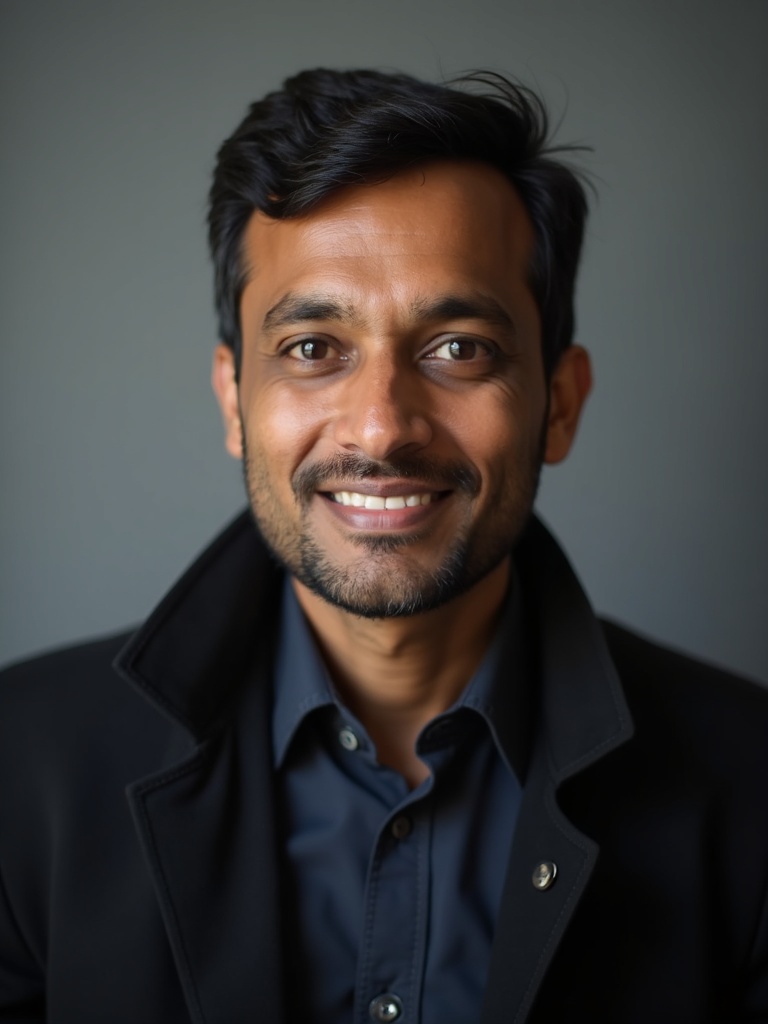
Mihir Kaushik writes on Indian democracy as an institutional problem — what makes courts, parliaments, universities, and agencies work or fail. His columns are written for readers who think the quality of institutions is the decisive question of the next decade.
Recent work
Riyadh Airport Attack Kills 12, Injures Over 300; Trump Weighs Joining Strikes
A Houthi attack on Riyadh's main airport killed at least 12 and wounded more than 300 on Saturday, the third such strike this week. The attack forced a temporary shutdown of King Khalid International Airport and prompted US President Donald Trump to say Washington may join Saudi strikes on the Yemeni group. The escalation threatens Indian expatriates in the Gulf and the security of energy flows that underpin India's economy.
When 8% GDP Growth Fails to Lift Equity Returns
India's economy grew at nearly 8 per cent in the April-June quarter, yet equities have lagged. The gap reflects a structural divergence between GDP composition and listed profits, with consequences for household savings and capital formation. Strengthening disclosure and governance is the institutional fix.
Divya Mittal, Former IAS Officer, Announces Independent Uttar Pradesh Political Entry
Former IAS officer Divya Mittal announced an independent political entry from Uttar Pradesh on Tuesday, aiming to speak for citizens whose grievances go unheard. Her 30 August resignation had already drawn Congress's 'very serious' response. The move reignites questions about whether technocratic credentials can translate into electoral trust in caste-driven contests.
IIT Bombay Confronts Casteist Slur Allegation After Student's Suicide
A second-year IIT Bombay student's suicide has produced two competing accounts: the institute points to ChatGPT exam misconduct, while the family alleges casteist abuse and directed harassment. The institutional response will determine whether constitutional equality holds in elite technical education.
India Hosts BRICS Summit as Dhaka Disputes Invitation Protocol for Rahman
Bangladesh has ruled out Prime Minister Tarique Rahman attending this weekend's BRICS Summit in New Delhi, with Dhaka claiming the invitation was extended to Rahman as BIMSTEC chairman, not as the country's head of government. The dispute exposes the protocol ambiguity surrounding India's regional outreach under the BRICS chair.
Shafali Verma's Milestone Outshines Pakistan's 55 and a Sendoff
Shafali Verma became the youngest and fastest batter to 3,000 Women's T20I runs as India beat Pakistan by seven wickets in Dubai. The win was briefly marked by Fatima Sana's pointed send-off to Verma, which commentator Vivek Razdan criticised.
India Offers 'Any Help' to End Russia-Ukraine War as Jaishankar Visits Kyiv
External Affairs Minister S. Jaishankar said in Kyiv that India is ready to extend 'any help' to end the Russia-Ukraine war, then called on President Volodymyr Zelenskyy. The visit converts India's unique access to both Moscow and Kyiv into a concrete, if still undefined, peace role.
India Rejects Hague Court's Indus Waters Ruling, Cites No Jurisdiction
India has refused to recognise a Hague tribunal's ruling on the Indus Waters Treaty, asserting the body never had jurisdiction. The government says the treaty's graded dispute-resolution route, centred on a neutral expert, should govern technical differences. The episode sharpens the contest between third-party adjudication and India's insistence on bilateralism in South Asian water disputes.
Doval's National Award Marks a Structural Moment for India's Security Architecture
Union Home Minister Amit Shah conferred the Lokmanya Tilak National Award 2026 on National Security Advisor Ajit Doval in Pune, praising his centrality to every major national security decision since 2014. The occasion surfaced a deeper institutional question: India's most consequential security decisions now flow through an office with no statutory foundation. The award is a political affirmation, but the architecture it celebrates remains structurally informal.
Bluetooth in Turbans, Answers from Bhiwani: What the BFUHS Scam Reveals About India's Examination State
A tech-driven cheating racket disrupted the BFUHS Pharmacy Officer Recruitment Examination in Punjab on July 19, using pen cameras, miniaturised Bluetooth devices concealed in turbans and undergarments, and a remote answer-relay operation run from a house in Faridkot. Punjab Police have made arrests, and the political fallout is widening. But the deeper story is institutional: India's high-stakes examination system has become structurally vulnerable to commercially available consumer electronics, and the incident-by-incident law enforcement response is no longer adequate.
When Wealth Buys No Immunity: What the Oswal Incident Reveals About European Attitudes
Vasundhara Oswal, daughter of billionaire Pankaj Oswal, documented a xenophobic confrontation at her Swiss home in a viral Instagram post, prompting a wider public debate about whether wealth and global standing protect Indian nationals from discrimination abroad. The incident, which turned on the phrase 'You are not in India,' touches something larger than one family's experience: it raises the question of whether European societies have updated their social attitudes to match the economic weight of the visitors they court. For India, the episode is less a grievance to register than a leverage point to develop.
Kashmir's Elected Leaders Assert Federal Rights as Statehood Timeline Remains Unclear
Jammu and Kashmir's Deputy Chief Minister Surinder Kumar Choudhary has warned of protests at Jantar Mantar if the Centre fails to restore statehood to the Union Territory. The National Conference leader's ultimatum highlights growing tensions between the elected J&K government and New Delhi over the timeline for fulfilling constitutional promises made during the 2019 reorganisation.
US Defence Secretary Hegseth Praises India's Military Readiness as Indo-Pacific Strategy Evolves
US Defence Secretary Pete Hegseth praised India and other Asian partners for strengthening military capabilities at Singapore's Shangri-La Dialogue, while warning China against regional hegemony. The comments reflect evolving US strategy of encouraging allies to assume greater defence responsibilities in the Indo-Pacific.
Modi's Telangana Quip Reveals Centre-State Project Approval Bottlenecks
Prime Minister Modi's witty exchange with Telangana CM Revanth Reddy during a Hyderabad event highlighted the complex dynamics of federal project approvals, as Reddy sought central backing for major infrastructure initiatives including Metro Rail expansion and the Musi River rejuvenation project.
Jaishankar's Suriname Visit Reveals India's Deepening Caribbean Institutional Architecture
External Affairs Minister S. Jaishankar's official visit to Suriname for the ninth Joint Commission meeting demonstrates India's institutional approach to Caribbean diplomacy. The visit included soft loan offerings, agricultural project handovers, and diaspora engagement through cultural monuments.
Can India's Renewable Energy Leadership Bridge the Global Performance Gap?
India has achieved impressive renewable capacity rankings but faces critical gaps in grid integration, storage deployment, and actual electricity generation compared to global leaders. The sector requires institutional reform to translate installed capacity into performance outcomes matching developed nations.
Election Commission's Zero Tolerance in Bengal: Institutional Strength Against TMC's Democratic Defiance
The Election Commission has ordered zero tolerance for post-poll violence in West Bengal following vandalism of TMC offices after BJP's electoral victory. The directive tests institutional authority as TMC chief Mamata Banerjee refuses to step down despite defeat, creating a constitutional standoff.