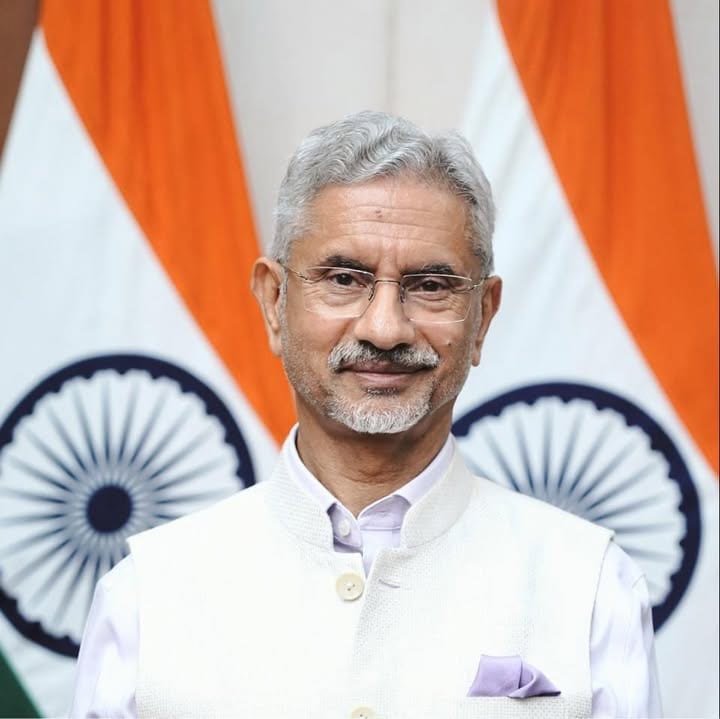
External Affairs Minister S. Jaishankar, on a visit to Kyiv on 3 September 2026, said India is ready to extend "any help" to end the Russia-Ukraine war, according to NDTV. The offer, made during his discussions in the Ukrainian capital, represents a shift from New Delhi's earlier abstention toward active peace brokerage.
He called on President Volodymyr Zelenskyy and apprised him of his talks with the Ukrainian counterpart on deepening bilateral cooperation, NDTV reported. As India Today also reported, the offer came during Jaishankar's Kyiv visit, the latest high-level Indian engagement with the Ukrainian leadership since the war began.
The Content of 'Any Help'
The phrase "any help" is deliberately open-ended. It does not commit New Delhi to a formal mediation track, nor does it set terms. It operationalises India's position of strategic autonomy: New Delhi has maintained open lines to both President Vladimir Putin and President Volodymyr Zelenskyy, abstained from UN resolutions condemning Russia, and refused to join Western sanctions. That stance has drawn criticism from some quarters and cautious appreciation from others. The offer in Kyiv suggests India now wants to convert access into a concrete role.
India's economic exposure is the quiet driver. The war disrupted crude supply chains, defence spare-part dependencies, wheat and sunflower oil imports; it also triggered evacuation of a large number of Indian medical students from Ukraine. New Delhi negotiated discounted Russian crude and expanded rupee-rouble trade, but it also needs Ukrainian farm goods and a stable energy market. Peace is not an abstraction for India; it is a supply-chain question.
The offer also protects India's reputation among Global South states that have refused to take sides. By volunteering "any help," New Delhi positions itself as a voice for dialogue without endorsing any particular settlement. That is consistent with its G20 presidency, where it sought to keep development and economic stability on the agenda even as the war dominated.
From Access to a Venue: The Hard Part
Access alone does not make a mediator. Formal mediation would require a neutral venue, a structured dialogue track, and confidence-building measures that neither Moscow nor Kyiv has yet accepted. India has not declared itself a mediator; Jaishankar's offer is better understood as a reserve option, deployed when both sides decide they need an interlocutor they can each tolerate. The fact that he then called on Zelenskyy and discussed bilateral cooperation indicates the diplomatic work is already under way, not waiting for a formal invitation.
The bilateral agenda matters more than the headline. Jaishankar's discussion with his Ukrainian counterpart on deepening cooperation suggests New Delhi wants to back its peace gesture with concrete interests: farm-sector inputs, defence technology offsets, and student exchange guarantees. These are not peace-process items; they are the raw material of a relationship that can survive the war's end. A country that has a stake in Ukraine's reconstruction and agriculture has a reason to stay engaged after the guns fall silent.
India's neutrality is not passive. It is a deliberate choice to keep both relationships functional while the war reshapes Europe's security order. That choice extends to Russia: India has not criticised Moscow by name in UN forums, and its defence imports from Russia remain substantial. But it also extends to Ukraine: India has delivered humanitarian aid and kept consular channels open for its students. The "any help" offer is the latest iteration of that dual track.
What This Means for Indian Statecraft
For Indian readers, the Kyiv visit tests whether diplomacy can carry weight without a hard-power stake in the conflict. India cannot shape the battlefield. It can shape the conversation around it. That distinction has long separated New Delhi from larger powers: it wins influence not by determining outcomes but by being the one both sides will still talk to. The risk is that "any help" remains rhetorical, another phrase in a communiqué. The opportunity is that it becomes a standing invitation, one that acquires meaning the next time the war reaches a genuine negotiation point.
There is also a domestic dimension. Indian foreign policy under this government has emphasised the phrase "Vishwa Bandhu", a friend of the world. The offer in Kyiv gives that phrase a concrete test. It asks whether a friend of the world can also be a useful friend to a war, not just to the parties. Answering that requires sustained back-channel work, the kind that does not produce headlines until it succeeds.
The lesson of Jaishankar's Kyiv visit is that distance, properly used, becomes a form of influence. The "any help" offer is a down payment on a role India has long claimed: a voice for dialogue in a world losing the habit of it. Whether that down payment matures into peace depends less on New Delhi than on Moscow and Kyiv; but the fact that both capitals continue to take India's calls is its own quiet evidence that the influence exists.