
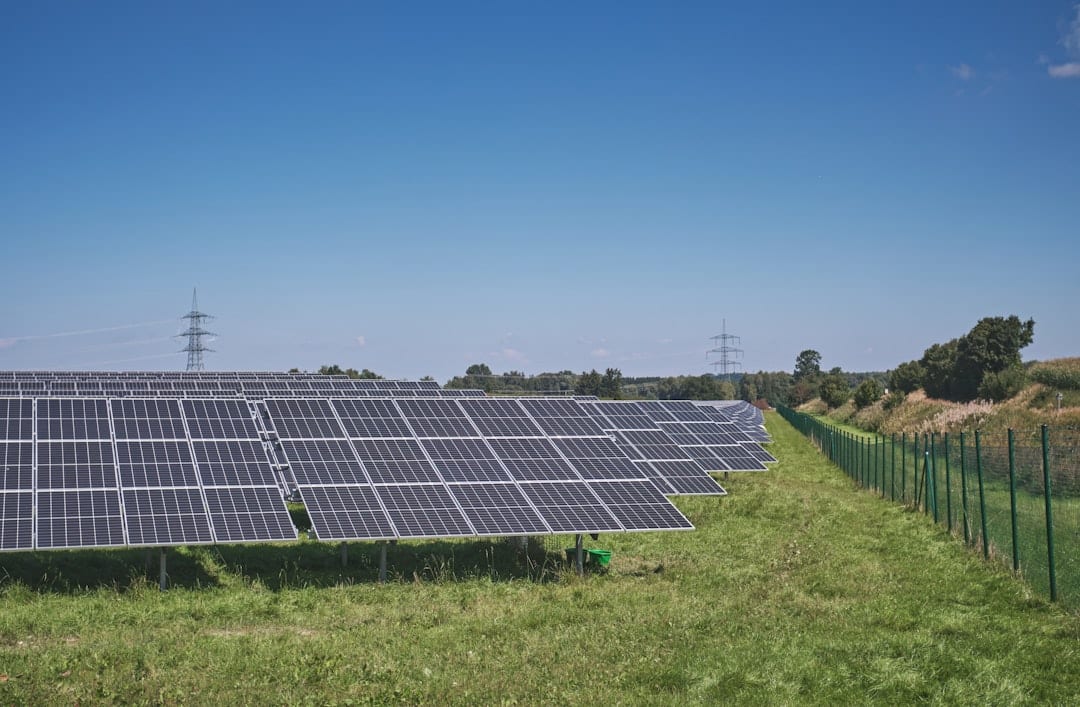
India's installed non-fossil electricity capacity crossed 300 GW on 31 July 2026, the Ministry of New and Renewable Energy announced on Sunday. The number breaks down as 164.59 GW of solar, 58.14 GW of wind, 57.24 GW of hydropower, 11.75 GW of bio-power, and 8.78 GW of nuclear, a mix that now accounts for roughly 54% of India's total installed generation capacity of around 552 GW.
During 2025-26 alone, India added 55.29 GW of non-fossil capacity, a single-year record, with solar accounting for 44.6 GW of that total and wind contributing 6 GW. India had crossed the 50% non-fossil share of cumulative installed capacity in June 2025, five years ahead of the timeline its Nationally Determined Contribution to the Paris Agreement had envisaged.
What the Headline Number Obscures
India's 300 GW number is nameplate capacity, the maximum a generator can theoretically produce under ideal conditions. What it says nothing about is how reliably that capacity delivers electrons to the grid when the sun sets over Rajasthan or the winds ease over Gujarat. Lydia Powell of the Observer Research Foundation's Energy Initiative has argued that installed capacity milestones are less meaningful than Plant Load Factor and grid absorption rates. That distinction is not semantic. It is the difference between a country that has built renewable assets and one that has actually transitioned its energy system.
Rahul Tongia of Carnegie India has consistently flagged that India's transmission infrastructure investment is lagging renewable capacity addition by eighteen to twenty-four months, creating a structural curtailment problem in Rajasthan and Gujarat, the two states that carry a disproportionate share of the solar buildout. Curtailment means solar farms generate electricity that the grid cannot absorb, so the power is wasted and project developers are paid nothing. At scale, curtailment eats into project economics, raises the effective cost of renewable energy, and signals to foreign capital that India's energy transition carries operational risk.
The Manufacturing Leg Is Solid; the Infrastructure Leg Is Not
On one dimension of the transition, India has built genuine depth. Capacity enlisted under the Approved List of Models and Manufacturers for solar photovoltaic modules has crossed 200 GW, and production-linked incentives are strengthening domestic supply-chain resilience. The ALMM framework also reduces dependence on imported modules, a strategic consideration that sits alongside the energy security argument. India is no longer simply buying cheap Chinese panels and bolting them to the ground; it is building the manufacturing base to supply its own installation pipeline and, eventually, export.
The infrastructure side looks different. Transmission infrastructure, energy storage, flexible generation, forecasting, and advanced grid-management technologies will need to expand alongside generation, the ministry's own statement acknowledges, an unusual degree of candor for a press release celebrating a milestone. The green energy corridors being built are foundational infrastructure, not supplementary additions. Without them, the generation assets already commissioned are partially stranded.
The Parliamentary Standing Committee on Energy noted in its 2023-24 report that battery storage procurement targets under the battery energy storage scheme are running behind schedule, a gap that becomes more consequential as variable renewable energy approaches 60% or 70% of the capacity mix. Solar and wind are intermittent by nature; storage converts intermittency into dispatchability. Without adequate storage and transmission, India's stated trajectory toward 500 GW of non-fossil capacity by 2030 risks producing a large volume of assets that the system cannot fully use.
The Geopolitics of Grid Reliability
India's climate diplomacy has rested on the 500 GW non-fossil target as proof that a large developing economy can scale renewables without slowing growth. The 300 GW crossing strengthens that argument. The International Solar Alliance, headquartered in India, gains credibility each time India posts a new capacity record. Union Minister R.K. Singh stated at the RE-INVEST 2024 summit that India will not accept any carbon border adjustment mechanism that treats its renewable buildout as insufficient, a position that has more force behind it today than it did two years ago.
But the EU's Carbon Border Adjustment Mechanism operates on a different logic than installed capacity. CBAM taxes the carbon intensity of production processes, not the renewable share of a country's generation mix. An Indian steel or cement manufacturer whose factory draws power from a state grid still dominated by coal-fired baseload will face CBAM exposure regardless of how many gigawatts of solar sit on a roof somewhere in the country. The gap between India's installed renewable capacity and the actual carbon footprint of its industrial production is precisely the gap that transmission bottlenecks and curtailment losses widen. Getting electrons from the solar farm in Rajasthan to the factory in Odisha requires a grid capable of moving them there at the right time and the right price.
This is where multilateral development bank financing becomes directly relevant. The World Bank, Asian Development Bank, and New Development Bank have all signalled appetite for green energy financing in India. But concessional finance for grid infrastructure, the transmission lines, substations, and storage systems that determine whether renewable generation is usable, has been harder to mobilise than financing for generation assets. Generation is bankable on its own revenue stream; transmission is a regulated utility with slower, less predictable returns. India's ability to attract patient capital for grid infrastructure depends partly on demonstrating system reliability, not just system scale.
The Structural Fault Line
The Prayas Energy Group, which tracks state electricity distribution companies' financial health, has documented that DISCOM payment delays remain the single largest systemic risk to renewable procurement. Project developers who cannot collect payments on time cannot service debt; lenders who see payment risk price it into the cost of capital; and higher financing costs translate into higher power prices or lower project returns. The DISCOM problem predates the renewable surge and has resisted multiple rounds of financial restructuring.
Adding more than 55 GW of non-fossil capacity in a single year, while simultaneously building domestic manufacturing depth, is an industrial achievement. The 300 GW crossing is real, and the five-year advance on the NDC timeline reflects genuine policy commitment.
The milestone asks policymakers to shift the diagnostic frame. The question that drove the first phase of India's energy transition was: how fast can we add capacity? The question that defines the next phase is: how reliably can we use what we have built? Transmission clearances, storage procurement timelines, DISCOM financial health, and grid-management technology are less visible than a solar park dedication, but they determine whether 300 GW becomes 500 GW of genuinely usable clean energy or 500 GW of nameplate capacity with chronic curtailment losses. India's 2030 target is credible; the institutional machinery to deliver it at the system level still needs to catch up.