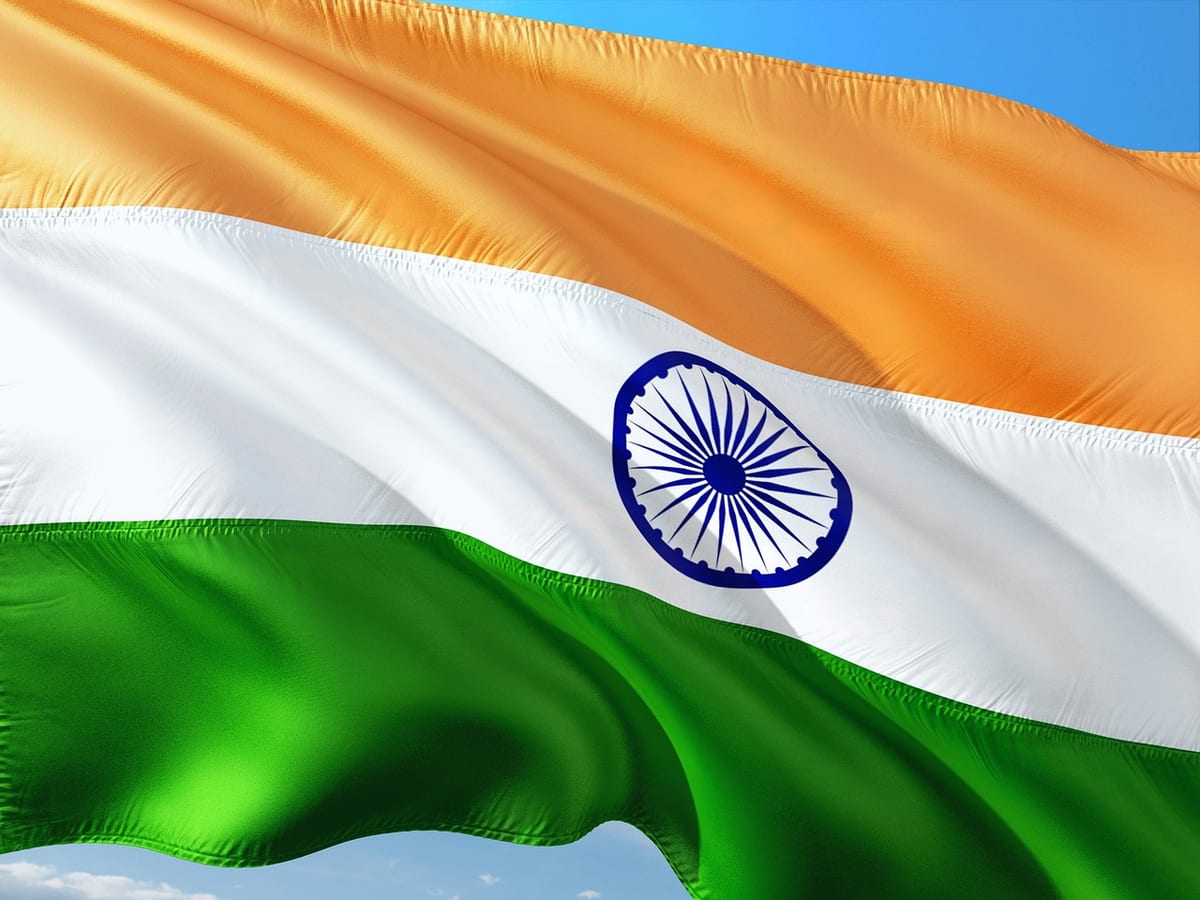
When the final medal tally settled at the Commonwealth Games 2026 in Glasgow, India stood fourth — 39 medals in the ledger, boxing and athletics carrying the bulk of the weight, Australia and England occupying the heights above. Fourth place is not a failure. It is not, however, a resting point either. What Glasgow 2026 offers India is a sharply lit diagnostic of where the country's high-performance sporting architecture actually stands, and how much structural work separates a creditable Commonwealth showing from genuine Olympic contention.
The headline numbers are real and should be acknowledged. Thirty-nine medals from a single Games campaign represents sustained output. Boxing drove a significant portion of that haul — continuing a pattern of dominance that India has built at multi-sport events across several cycles. Athletics contributed in ways that would have seemed unlikely a decade ago, suggesting that grassroots investment is beginning to widen the base of competitive talent beyond the disciplines India has historically treated as its strongholds. These are not trivial signals. They represent thousands of hours of coached preparation, funding decisions made years in advance, and athletes who arrived at Glasgow ready to compete.
Boxing's Continued Dominance and What It Proves
India's boxing programme has been the clearest success story in its multi-sport events strategy. The sport produces medals at Commonwealth Games with a consistency that no other discipline has matched, because the institutional architecture — the High Performance Director model, the Boxing Federation of India's structured domestic circuit, the targeted identification of weight categories where Indian physiology competes well — has been built deliberately rather than inherited by accident. Officials associated with the Boxing Federation have credited the High Performance Director programme specifically for this sustained production; the results at Glasgow validate that credit.
For the Olympic pipeline, boxing's Commonwealth medals carry conversion potential. The discipline maps directly onto Olympic competition. A boxer who performs at Glasgow is not acquiring skills specific to the Commonwealth; she is acquiring experience in international pressure that transfers to Paris, to Los Angeles, to wherever the next Olympic stage is set. This is the argument that sports policy advocates have made for treating CWG performance as a stepping stone rather than a summit — and boxing is the discipline that most cleanly demonstrates what that argument looks like when it works.
The risk, which has been noted by observers including Abhinav Bindra in his role as a sports policy advocate, is that the Commonwealth podium becomes emotionally sufficient. India wins boxing medals at the Games; India celebrates; the narrative closes. What it should instead trigger is an immediate audit: which weight categories remain off the podium, which opponents will appear again in Los Angeles, what technical gaps were exposed even in bouts that ended in Indian victories. Medals reveal strength; the margins within those medals reveal what still needs fixing.
Athletics and the Question of Depth
The athletics contribution at Glasgow is perhaps the more analytically interesting signal, because it is newer and more fragile. Track and field has historically been India's weakest domain at major multi-sport events — a country of nearly 1.5 billion people consistently underrepresented on the sprint track, in the field events, across the middle distances. When athletics medals arrive, they tend to arrive in clusters around specific individuals rather than distributed across disciplines, which means the apparent strength is in fact concentrated vulnerability.
What Glasgow suggests is that the concentration may be beginning to loosen. Whether that loosening reflects the SAI grassroots programmes reaching competitive maturity, or whether it reflects competitors in other nations having weaker cycles, is a question the Sports Ministry's performance analysts are better positioned to answer than any external observer. The honest answer is probably some combination of both — and the task is to identify which part of the improvement is structural and which is circumstantial, then invest accordingly in the structural portion before Los Angeles.
The Takshashila Institution's public policy researchers have flagged a pattern that athletics results tend to confirm: India's sports infrastructure investment remains heavily urbanised. The talent pipeline that produces Commonwealth medallists draws disproportionately from metro-adjacent academies, state capitals, and regions with established sporting culture. Nations like Australia, which finished above India in Glasgow, have built high-performance systems that extend systematically into their smallest population centres. India's system, despite significant expansion under successive policy frameworks, still risks leaving the majority of its athletic population — concentrated in tier-two cities, small towns, and rural districts — inadequately connected to the pipeline that produces international competitors.
The Structural Gap the Tally Doesn't Show
Fourth place behind Australia, England, and Canada reveals something about the category India currently occupies in global sport. These three nations have each built sporting systems that are, in different ways, more thoroughly decentralised than India's — funding flows to state and regional academies, not just to national-level programmes; coaches are distributed rather than concentrated; talent identification happens in schools rather than at the point when a young athlete has already self-selected into the system by relocating to a city with an academy.
India's TOPS framework, which tracks promising athletes and allocates targeted support for their preparation cycles, has demonstrably improved medal conversion at multi-sport events. The question Glasgow raises for the next quadrennial is whether TOPS-style intensity can be replicated at the state level, whether the funding and governance logic that works at the national tier can be pushed down to the Jharkhand Sports Authority, the Tamil Nadu athletics programme, the boxing clubs in Manipur that have historically fed India's most decorated ring fighters. The Sports Ministry has acknowledged this decentralisation imperative in various policy articulations; the gap between acknowledgement and implementation is where the real work of the next two years lives.
Rahul Bhatnagar, in his capacity as Secretary General of the Indian Olympic Association, has in prior cycles emphasised the logistical coordination between SAI and national federations as a persistent friction point — administrative drag that costs athletes preparation time and competitive focus. Glasgow's medal count is, among other things, a measure of how well that coordination functioned this cycle. Thirty-nine medals suggests it functioned reasonably well. The question is whether it functioned well enough to serve as the baseline for a more ambitious Olympic campaign.
Two Years to Los Angeles
The 2028 Los Angeles Olympics arrives in a context where India's sporting ambitions have been publicly elevated beyond the modest standard of previous Olympic cycles. Glasgow 2026 is the last major Commonwealth multi-sport event before that reckoning, which makes it the clearest available mirror. The reflection shows a country with genuine boxing depth, an athletics base that is growing but not yet thick, and a structural high-performance system that works well at its centre and remains underbuilt at its periphery.
Treating this result as a diagnostic rather than a verdict requires institutional honesty — the willingness to look at a fourth-place finish, acknowledge the medals that drove it, and then ask which disciplines were entirely absent from the podium and why. India's sporting population is among the largest in the world; its high-performance conversion rate has not yet matched that scale. Glasgow 2026 does not resolve that tension. What it does is provide two more years of lead time to address it — which is precisely the kind of opportunity that tends to be squandered when the medal count is read as evidence that the system is working rather than as evidence of how much further the system could reach.