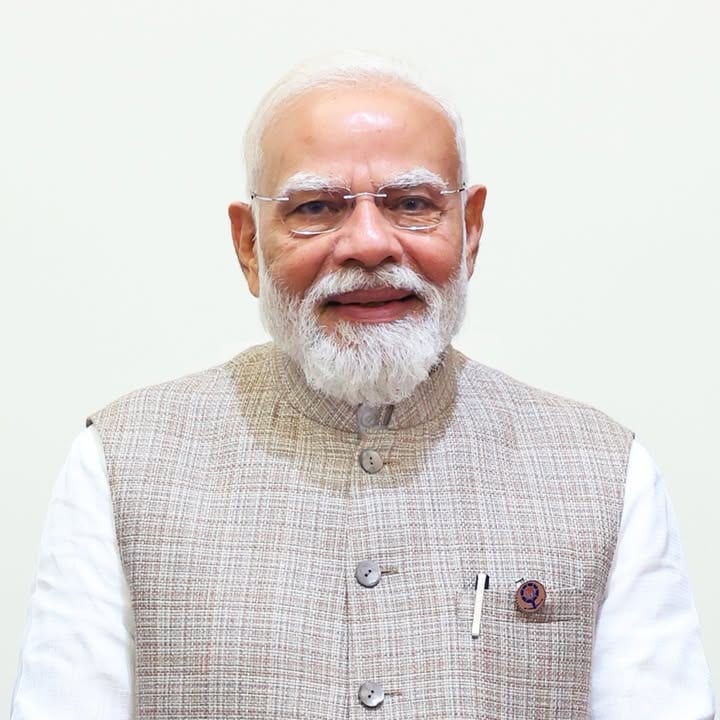
Prime Minister Narendra Modi told the Shanghai Cooperation Organisation in Bishkek on 1 September that the grouping must dismantle the entire ecosystem of terrorism and its financing, and that there cannot be any room for double standards in combating the menace. The address at the annual summit, delivered in the presence of Pakistan Prime Minister Shehbaz Sharif, came as New Delhi pressed its case on cross-border terrorist activities.
The Ministry of External Affairs circulated 13 outcomes from the gathering, spanning counter-terrorism, artificial intelligence, energy security, drug trafficking and institutional reform. The list includes the Bishkek Declaration on the 25th anniversary of the Shanghai Cooperation Organisation and a protocol amending the organisation's charter to support the inclusion of English, according to the MEA's summary.
The Bishkek Declaration gives India a platform to articulate its positions on regional security, development and connectivity while strengthening engagement with Central Asia and the wider Eurasian region. The protocol on amendments enables India to participate in shaping the SCO's institutional framework and ensures its interests are reflected in the organisation's future functioning, the ministry said. It also supports the inclusion of English within the SCO framework, a practical step that reduces the grouping's dependence on Russian and Mandarin.
The decision approving regulations for the Universal Centre for Countering Challenges and Threats strengthens cooperation with SCO partners on terrorism, extremism and organised crime, according to the same release. The centre is a platform Delhi has wanted to use to bring evidence about Pakistan-based groups into a multilateral setting, rather than leaving the complaint to bilateral discussions in South Asia.
Modi framed India's vision around three pillars: security, connectivity and opportunity. He said India supports all efforts that connect markets, facilitate trade and open new pathways for development. "For India, SCO is a confluence of great civilisation, culture and ideas," he said in the address.
The sovereignty condition
The sharpest line in the address was the insistence that connectivity projects must respect the sovereignty and territorial integrity of all countries. The remark was aimed at China's Belt and Road Initiative, a project India has refused to join.
The condition targets India's specific concerns. China's flagship corridor runs through territory New Delhi regards as its own under illegal occupation by Pakistan. Every time the SCO speaks of connectivity as a neutral good, India reminds the room that infrastructure built across another country's territory without consent is coercion, not connectivity. This is not a new position. It is the reason India stayed out of the Belt and Road forum when the first summit convened.
Central Asian states have grown wary of debt-financed Chinese infrastructure. India's sovereignty-first framing resonates in Tashkent, Astana and Bishkek, where governments want connectivity without surrendering policy space. The SCO outcome gives these capitals diplomatic language to ask for projects that do not traverse disputed territory or impose repayment commitments they cannot service.
No double standards on terrorism
Modi's call for unity against the terror ecosystem, delivered in Shehbaz Sharif's presence, carried the weight of Delhi's long-running complaint that some SCO members distinguish between good and bad terrorists. NDTV's list of ten key takeaways puts counter-terrorism first, alongside security and people-to-people ties. The call was not abstract. India has repeatedly pointed to Pakistan's use of terrorist proxies while Islamabad holds up non-state actors as freedom fighters. Modi's warning that the SCO must dismantle the entire ecosystem of terrorism and its financing directly challenges that tolerance. Sharif's presence in the room did not soften the message; it sharpened it.
Energy, drugs and the Indian security map
The summit's drug-control and energy outcomes matter less for diplomatic language than for the geography they cover. Trafficking networks reaching India's western states depend on routes through Central Asia and beyond. A functioning SCO joint mechanism on drug seizures and precursor control would do more for Indian law enforcement than bilateral arrangements with individual Central Asian states. Energy cooperation connects India to Central Asian reserves through corridors that do not cross Pakistani territory.
India's energy dependency on imported crude makes Central Asia's reserves strategically valuable. A functioning SCO energy working group could help Delhi negotiate transit terms with Central Asian producers and Iran, without invoking Chinese-run corridors. On drugs, India has long sought joint action on regional trafficking entering through sea and land routes. The SCO's new centre is the appropriate mechanism to turn those appeals into operational coordination.
A scheduled Putin meeting and Central Asian depth
The summit provided the platform for a scheduled bilateral meeting with Russian President Vladimir Putin, according to LiveMint's preview of the summit. The meeting came days after External Affairs Minister S. Jaishankar met Putin at the Kremlin. Russia remains India's most durable defence and energy partner, and a functioning India-Russia channel inside the SCO prevents the grouping from becoming a purely China-centric body.
The Modi-Putin meeting at Bishkek keeps India's Russia relationship separate from the West's attempt to isolate Moscow. India's defence imports from Russia, long-term energy contracts and nuclear power projects all require a stable bilateral channel. The SCO summit offers a neutral venue where Delhi can manage that relationship without importing Western conflict with Russia into Central Asia.
India's alternative connectivity map
India's connectivity alternatives do not require Chinese infrastructure. The International North-South Transport Corridor, which runs from Mumbai to Central Asia through Iran, and the Chabahar port project are sovereignty-respecting routes Delhi can operationalise without conceding territory. The SCO outcome on connectivity offers a diplomatic umbrella under which India can build these corridors with Central Asian partners while keeping the Belt and Road Initiative at distance.
India's corridor investments in Iran and the International North-South Transport Corridor provide a counter-narrative to the Belt and Road. They respect sovereignty because they run through consensual agreements with each transit state. The Chabahar port, developed with Iranian cooperation, gives India a route to Afghanistan and Central Asia that bypasses Pakistan. Building these corridors faster is the clearest way to give the sovereignty language operational weight.
What should Indian readers take from Bishkek? The summit was a consolidation, not a breakthrough. India used the SCO to reaffirm that sovereignty is the precondition for connectivity, that counter-terrorism cannot be selective, and that Central Asia remains a strategic neighbourhood where Delhi has standing. The real measure will come after the summit, in whether the 13 outcomes translate into joint working groups on drug interdiction, AI standards and energy transit, or remain declarations that sound good in Bishkek and fade on the flight home.