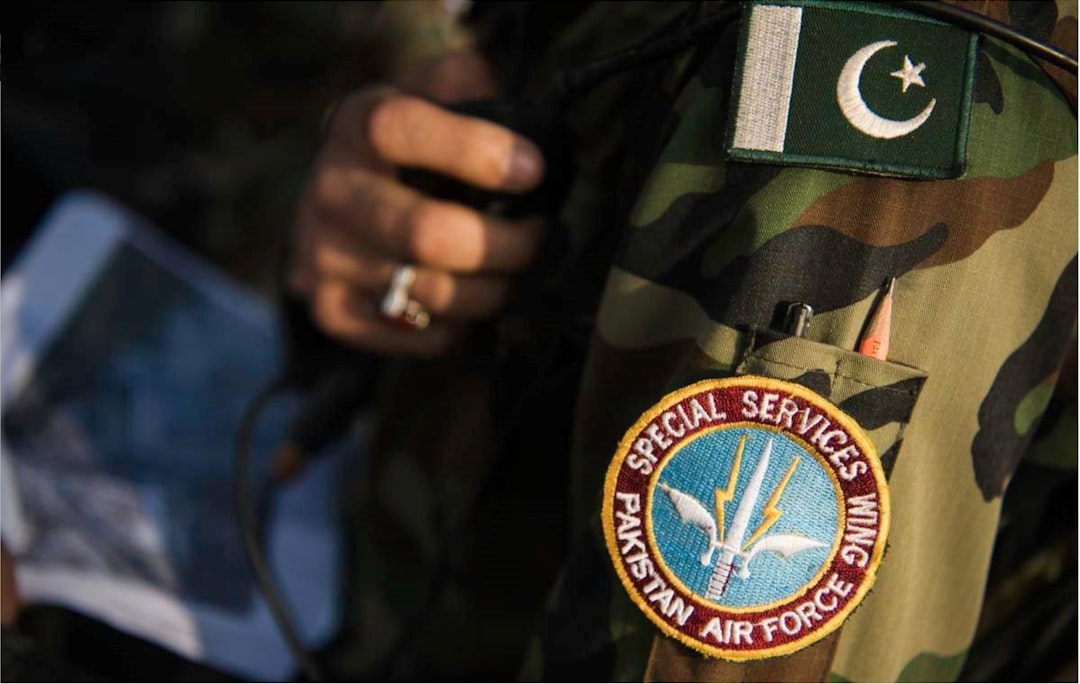
The shadow war began before the first missile fired. Pakistan's Inter-Services Public Relations and its proxy networks launched a coordinated disinformation campaign that failed as spectacularly as Islamabad's military response to Operation Sindoor—and exposed a fundamental weakness in Pakistani state capacity for the digital age.
ISPR flooded social media with fabricated evidence of Indian losses. Videos purporting to show downed Rafale aircraft traced back within hours to old footage, video game screenshots, and AI-generated imagery. The claim that JF-17 Thunder aircraft armed with PL-15 missiles had downed three Indian fighters collapsed when OSINT communities identified the recycled material before the day ended.
The Fabrication Factory
Pakistani military planners had prepared their information warfare component as carefully as their missile strikes—and achieved similar results. Claims of precision strikes against Indian airbases relied on satellite imagery that Damien Symon's OSINT analysis later exposed as outdated or deliberately miscontextualized. The pattern pointed to systematic preparation, not battlefield improvisation.
The deepfake deployment marked Pakistan's most sophisticated disinformation effort. AI-generated videos showed what appeared to be Indian military personnel discussing catastrophic losses—productions requiring significant technical resources and advance planning, suggesting coordination between ISPR and external technical partners.
Pakistan's civilian casualty narrative followed established patterns from previous engagements. Claims that Indian forces struck mosque complexes lacked independent verification. Funeral imagery from the alleged sites featured militant organizational flags—details that unraveled the civilian narrative for anyone who looked closely.
India's Counter-Intelligence Response
India's response showed institutional learning from earlier information warfare episodes. The Press Information Bureau's fact-checking unit activated within hours of Pakistan's first claims and dismantled each fabrication with technical evidence and cross-referenced documentation.
The scale emerged in official statements: over 1,400 URLs spreading Pakistani disinformation were blocked, indicating a monitoring and response mechanism built for exactly this scenario. The speed suggested advance intelligence about Pakistani information warfare capabilities—and their likely playbook.
External Affairs Minister S. Jaishankar's parliamentary responses provided real-time rebuttals backed by evidence that international observers could verify independently—crucial for maintaining credibility with non-aligned partners and a skeptical global press. India's simultaneous submission of evidence to the UN 1267 Sanctions Committee created a permanent record that would shape future counter-terrorism designations. The tradecraft was textbook: use multilateral frameworks to legitimize bilateral positions.
The OSINT Verdict
Independent verification delivered the definitive judgment. Satellite imagery analysis by Newsweek, using MizarVision commercial satellites, revealed runway cratering at Nur Khan airbase, destroyed operational facilities at Bholari, and hangar damage at Mushaf and Rahim Yar Khan. No comparable damage appeared at Indian facilities, despite Pakistan's claims of successful retaliation. That finding—from neutral commercial entities—proved more damaging to Pakistani credibility than any government statement could.
The OSINT community's real-time debunking created a feedback loop that accelerated the collapse. Each fabricated video or manipulated image was identified and exposed faster than ISPR could produce new content, turning Pakistan's information warfare apparatus into a source of international ridicule.
Intelligence Validation
The United States' existing designation of Lashkar-e-Taiba — and its recognition of The Resistance Front as an LeT proxy — provided external validation of India's intelligence picture, confirming Indian claims about the Pahalgam attack attribution that Pakistan had spent weeks disputing.
The designation carries operational weight beyond symbolism — it freezes LeT/TRF assets within US financial jurisdiction and criminalized material support for the organization. That institutional consequence validated India's position in ways battlefield success alone could not.
The timing devastated Pakistan's parallel narrative. Islamabad had framed Indian operations as disproportionate responses to fabricated provocations. The existing US terrorist designations confirmed that Pakistan's own proxies were formally recognized terrorist entities by India's strategic partner.
Institutional Capability Assessment
Pakistan's information warfare failure revealed structural problems deeper than tactical incompetence. The reliance on easily debunked fabrications suggested either poor technical capabilities or a dangerous overestimation of target audience credulity. Either reading pointed to institutional decay within Pakistani military intelligence.
The rapid exposure by international OSINT communities demonstrated how dramatically the information environment has shifted. State actors can no longer control narrative through production volume alone—technical verification has democratized fact-checking in ways that favor transparent actors over closed systems.
India's counter-response showed sophisticated understanding of that reality. Rather than matching fabrication with counter-fabrication, Indian institutions produced verifiable evidence that withstood independent scrutiny. That approach built credibility that will serve Indian interests in the next information conflict—and there will be one.
Pakistan's comprehensive failure—military, diplomatic, informational—reflected the vulnerability of state strategies built on deception rather than demonstrated capability. The shadow war revealed which approach produces durable outcomes: transparent institutions operating within international frameworks, or closed systems running through proxy networks. The answer was not close.