There is a moment, somewhere on the winding road from Guwahati to Shillong, when the air changes. The flat, humid plains of Assam fall away, the road begins its serpentine climb into the Khasi Hills, and the temperature drops just enough for you to reach for a jacket you were not sure you would need. Clouds drift at eye level. Pine trees stand sentinel on the ridgelines. And somewhere ahead, almost invisible in the mist, lies Shillong, the capital of Meghalaya, the 'Abode of Clouds.'
A City Carved by Nature
Shillong is often called the 'Eastern Scotland' for its resemblance to the Scottish Highlands — undulating hills, temperate climate, and fog-laden beauty. But to frame Shillong only through a European lens is incomplete. This is a city rooted in the ancient culture of the Khasi people, shaped by its landscape long before any colonial administrator arrived, and alive today with an energy entirely its own.
The landscape tells most of the story. As the Incredible India page for Shillong notes, the city's natural beauty is unmatched, with several attractions showcasing Meghalaya's breathtaking vistas. The Umiam Lake — a sprawling man-made reservoir set against rolling hills — is one of the most photographed landscapes in Northeast India. Visitors come here to boat on still waters in the early morning, when the surrounding hills are reflected in the lake's surface with mirror-like perfection. It is a spot for picnics, for silence, for remembering that some of India's most profound beauty is found not in grand monuments but in the generosity of its natural world.
Waterfalls and Peaks: The Theatre of the Hills
Shillong's relationship with water is intimate. The Elephant Falls, one of the city's most beloved landmarks, is a three-tiered cascade set within lush greenery, named after a now-vanished elephant-shaped rock that once stood at its base. The falls illustrate Meghalaya's character — powerful, beautiful, and slightly mysterious, shaped by geological forces at work for millennia. Sweet Falls offers a similarly enchanting experience, drawing nature lovers and photographers into its cool, spray-filled space.
For those who wish to see Shillong from above, the Shillong Peak is essential. As the highest point in the state, it offers a 360-degree view of the surrounding landscape, frequently wrapped in slow-moving fog that transforms the familiar into the otherworldly. Standing at the peak, watching cloud shadows race across the valleys below, one understands why the people of this land speak of their hills with reverence.
Living Heritage: The Khasi Civilisational Thread
India's civilisational story is not linear. It is a vast conversation among hundreds of traditions, languages, and ways of being — and Shillong is one of its most remarkable chapters. The Khasi people, indigenous to the Meghalaya plateau, carry a matrilineal social system that traces lineage, property, and family identity through the mother's line. This is not a custom preserved in amber for anthropologists; it is a living social architecture, practised daily in households across the Khasi Hills.
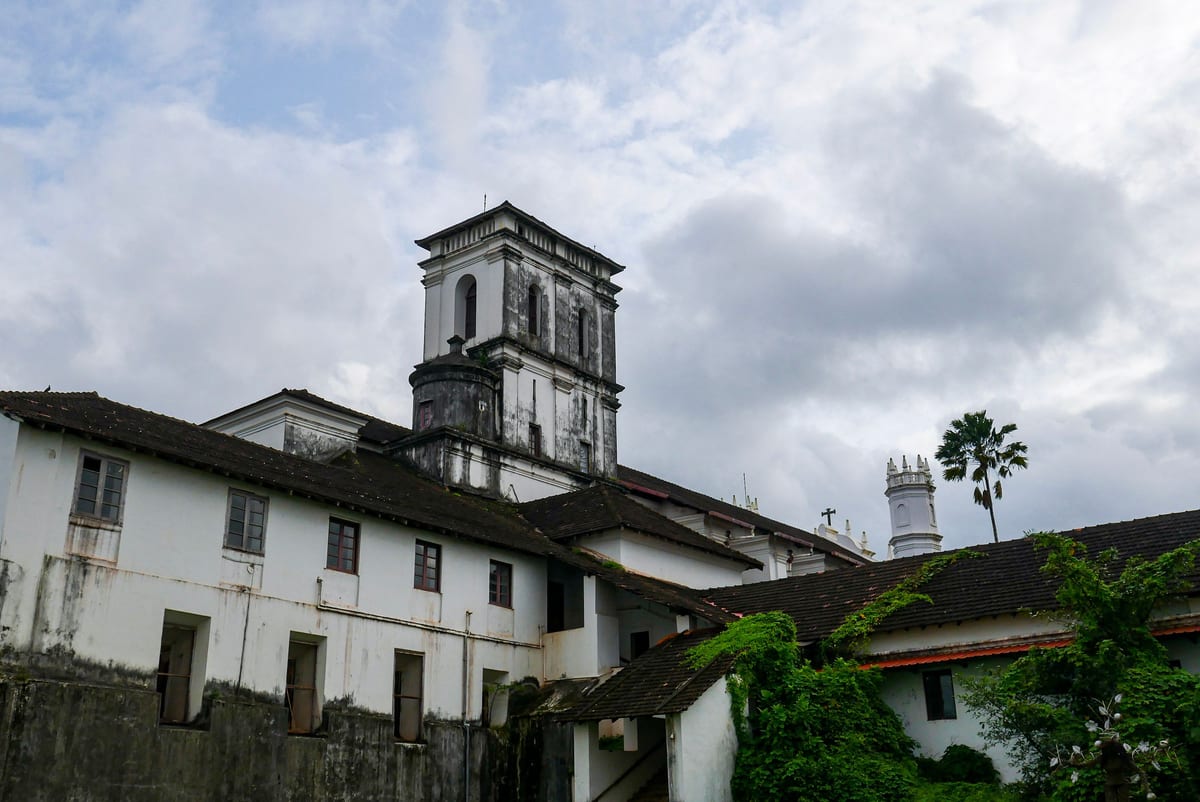
The town's colonial past adds another layer. Quaint bungalows, stone churches, and administrative buildings from the British era stand alongside Khasi traditional structures, creating an architectural dialogue between two very different civilisational impulses. Shillong served as the capital of the former province of Assam under British rule, and that history is readable in its streets — not as an uncomfortable imposition, but as one more stratum in a city that has always absorbed and transformed outside influence on its own terms.
The Butterfly Museum offers a different cultural window — a world-class entomological collection that reflects Meghalaya's extraordinary biodiversity and the deep Khasi tradition of attentiveness to the natural world. For nature enthusiasts and those curious about insects, it is a genuinely fascinating institution, a reminder that India's living heritage includes not just temples and texts but an ancient knowledge of the land itself.
Practical Travel: Getting There and When to Go
Shillong is well connected for a Northeastern hill city. The nearest major international gateway is Lokpriya Gopinath Bordoloi International Airport in Guwahati (GAU), from where the drive to Shillong takes approximately two to three hours through scenery that is itself worth the journey. Shillong also has its own airport — Umroi Airport (SHL) — which handles select domestic services. The nearest major railway station is Guwahati (GHY), with regular connections to the rest of India.
The best time to visit depends on what you seek. October through February bring cool, crisp days with temperatures ranging from around 2°C at night to a comfortable 20°C in the afternoon — ideal for walking the city's hills and exploring its waterfalls. Spring, from March to May, sees the hills bloom and temperatures climb into the mid-twenties. The monsoon season, from June through September, transforms Meghalaya into the wettest region on earth — the falls roar, the forests turn an almost surreal shade of green, and the fog descends daily. It is dramatic, occasionally inconvenient, and unforgettably beautiful. Experienced travellers who don't mind wet roads will find monsoon Shillong among the most atmospheric experiences in India.
Why Shillong Belongs on Every Indian Itinerary
India is at its most extraordinary when it surprises you — when it reveals a dimension of itself you had not anticipated. Shillong is that kind of surprise. It does not announce itself loudly. It draws you in gradually, with a change in the air, a curve in the road, a lake that holds the sky. It shows you an India that is simultaneously ancient and contemporary, indigenous and cosmopolitan, rooted in the hills and open to the world.
To travel to Shillong is to understand that India's civilisational story has always been told in many voices, across many landscapes, in many languages — and that some of the most powerful chapters are being written right now, in the mist-covered hills of Meghalaya, by people who have never stopped knowing who they are.