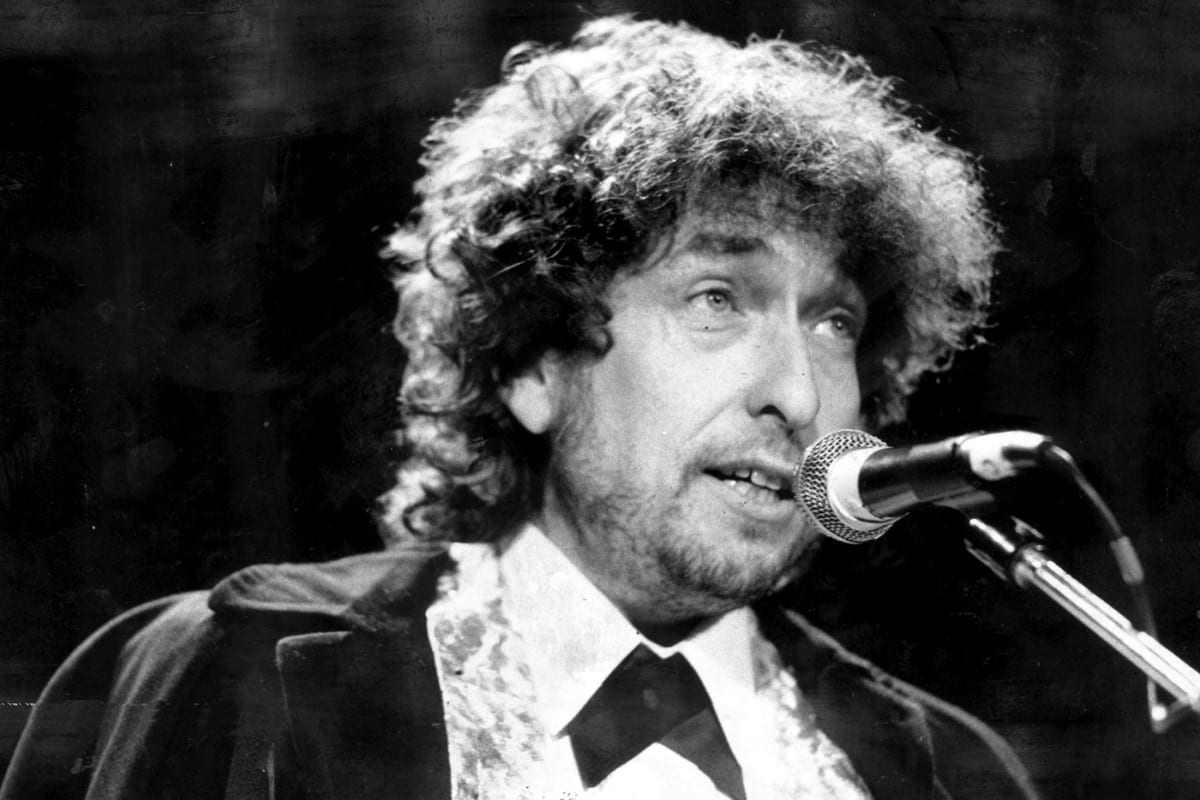
Bob Dylan didn't start his Never Ending Tour as a triumph. When he walked onstage at the Concord Pavilion near San Francisco on June 7, 1988, critics were ruthless. "Dylan used to matter," the San Francisco Chronicle sneered—a review that essentially declared him washed up.
The timing was brutal. Dylan faced a career slump: two genuinely terrible albums (Knocked Out Loaded and Down in the Groove), two years of relentless touring, and a movie called Hearts of Fire in which he played a washed-up rock star. The film tanked so spectacularly that most of his devoted fans never knew it existed.
The mystique had vanished. The Sacramento Bee didn't even give his show proper coverage, burying it in the concert calendar next to Heart, Michael Bolton, and Guns N' Roses gigs. Dylan had become just another name on the marquee.
But Dylan had a plan. In his 2004 memoir Chronicles: Volume One, he revealed he'd deliberately told his manager Elliot Roberts to book 200 shows in 1988 alone and maintain that pace for three full years. It wasn't desperation. It was strategy.
"I figured it would take me at least three years to get to the beginning," Dylan wrote, "to find the right audience, or for the right audience to find me." He needed younger fans who didn't come with baggage, who wouldn't "stare and not participate." His old audience, he reasoned, was "past its prime" and "its reflexes were shot."
Dylan walked out with a skeletal four-piece band—the smallest lineup of his career—and got to work. Three decades later, that Never Ending tour is still running. The critic's pronouncement of irrelevance became the prelude to rock's most relentless comeback.