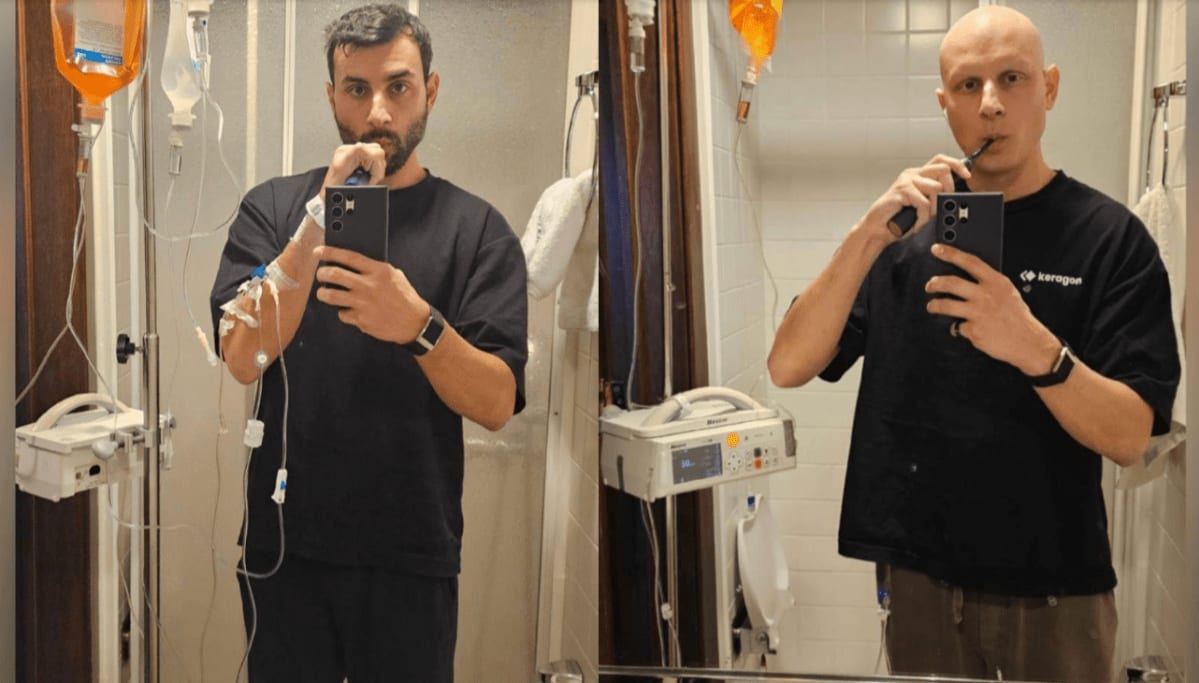
Connor Christou tracked everything: sleep with a Whoop band, cross-referenced it with an Oura ring, and got nearly 100 biomarkers checked every year. The 35-year-old founder followed protocols from researchers like Peter Attia and Rhonda Patrick, optimizing supplements, circadian rhythms, protein intake. His last checkup in 2025 showed no abnormalities.
Then came the swelling in his arm after a workout.
A doctor found two blood clots and scheduled surgery. Pre-op exams revealed an 11-by-11-by-8 centimeter mass behind his sternum. The biopsy confirmed aggressive, fast-growing non-Hodgkin's lymphoma. A genetic mutation unconnected to lifestyle. The tumor had existed for three months. Three more weeks and it would have progressed to stage four.
His first oncologist recommended a lighter chemotherapy regimen. Christou booked the infusion for three days out. The night before, he sought a second opinion. That doctor recommended the aggressive approach: six months of continuous in-hospital infusion cycling. The lighter treatment offered a 60% success rate. The aggressive option: around 85%.
Two world-class doctors gave opposite advice.
Rather than defer, Christou gathered 12 opinions in two days. According to TechCrunch, he fed his blood results, scans, wearables data, and journals into Claude AI to cross-reference treatment protocols and pathology specifics.
Even the fittest cannot outrun genetics. A refusal to accept the first answer proved decisive.