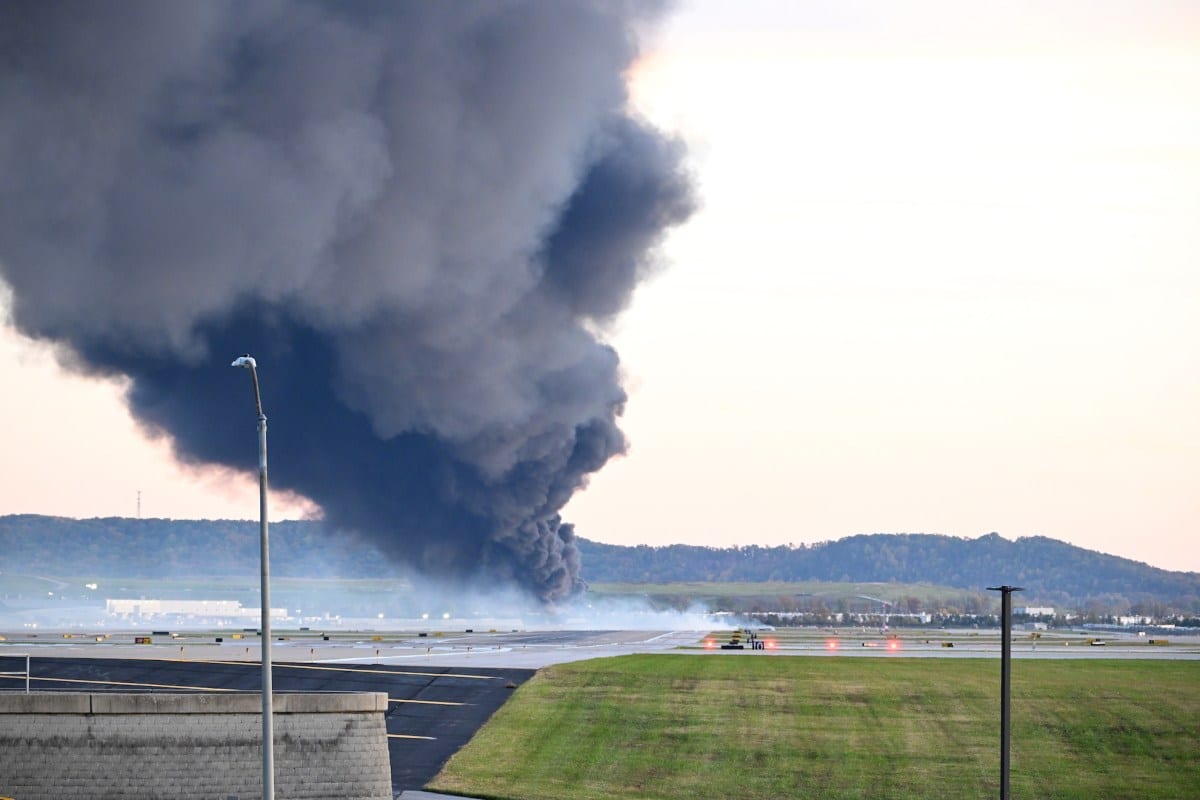
The National Transportation Safety Board discovered that AI has been used to resurrect the voices of dead pilots — and the internet was already circulating the results.
The crisis began after voices of pilots killed in UPS Flight 2976, which crashed in Louisville, Kentucky last year, were recreated using AI tools and spread online. The NTSB temporarily shut access to its entire docket system, a repository of investigation data normally open to the public.
Federal law prohibits the NTSB from posting actual cockpit audio recordings. But someone had uploaded a spectrogram — a mathematical image file that converts sound signals into visual data — to the public docket. Internet users figured out they could reverse-engineer it.
YouTuber Scott Manley, whose channel covers physics, astronomy, and gaming, flagged on X that reconstructing audio from the spectrogram's data was theoretically possible. It proved to be more than theoretical.
People combined the spectrogram with the publicly available cockpit transcript and fed it into AI tools like Codex to approximate the original voice recordings. The reconstructions were convincing enough that they spread across social media before the NTSB intervened and pulled the plug.
The agency restored public access to the docket system on Friday, but kept 42 investigations closed pending review, including Flight 2976. That affects transparency advocates and investigators.
Dead voices can now be summoned from image files, and AI does not ask permission.