Start with the map. Ten states along America's eastern seaboard — Maine's cold granite coast, the mid-Atlantic corridor, Pennsylvania and Ohio, down into the Carolinas. Scattered across that arc: some 117,000 Indian students. Graduate researchers in Boston labs, undergraduates in New Jersey dorms, doctoral engineers in upstate New York, management students in Philadelphia. Gifted, far from family, and learning an unfamiliar system in a country that can feel, on a bad afternoon, indifferent to their presence.
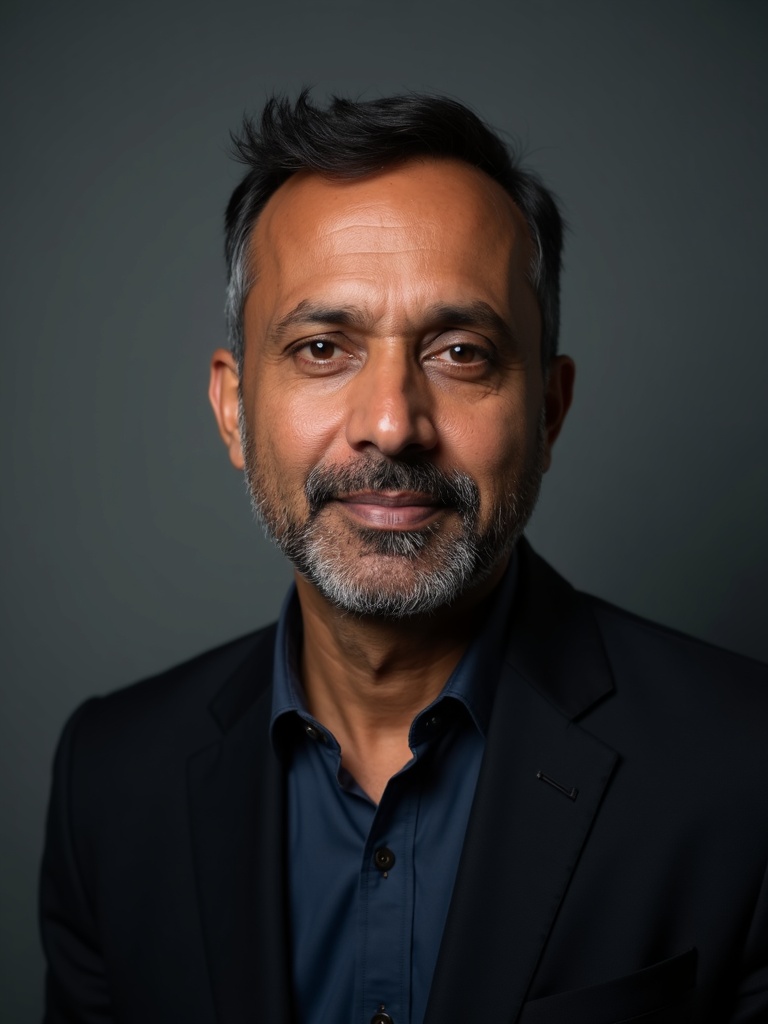
Into that geography — and that emotional weather — Amb. Binaya Srikanta Pradhan, Consul General of India in New York since January 2024, has poured some of his most deliberate energy.
Pradhan is a 2002-batch Indian Foreign Service officer, and his career reads like a map of strategic complexity: Moscow, Turkmenistan, Pakistan, Afghanistan and Iran portfolios, Chief of Staff to India's Petroleum Minister through a consequential five-year stretch. Before New York, he served as High Commissioner to Tanzania, where he helped elevate the bilateral relationship to a Strategic Partnership and supported the establishment of IIT Madras's first overseas campus in Zanzibar — a detail worth holding onto, because it marks a man who treats Indian educational institutions not as domestic furniture but as instruments of reach and relationship.
That instinct followed him to Manhattan.
The Scale of the Responsibility
The Consulate General of India in New York presides over a diaspora of more than 2.3 million people across its ten-state jurisdiction, and roughly one-third of India–U.S. merchandise trade originates in the region. Visa processing, passport services, OCI documentation, political engagement with Congress and state legislatures, commercial delegations, cultural programming — a portfolio that would swallow most officials whole. Within it, Pradhan has been open about the particular place students occupy in his attention.
The reasons are plain. Indian students in America are young, often on tight finances, isolated more than they admit, and sometimes targets — of scams, of exploitation, of the plain loneliness of being twenty-three and eight thousand miles from home. When things go wrong, the instinct is not always to call a consulate. Much of Pradhan's work has gone into making the consulate a place worth calling.
Outreach as Architecture
The Consulate General has built its student engagement on two principles that reinforce each other: presence and accessibility. On the accessibility side sits the Pramit digital query portal, which lets Indian nationals — including students with questions about documentation, OCI status, or emergency assistance — reach the consulate without phone queues or in-person appointments. For a generation that communicates by text and expects institutions to answer in kind, the portal matters.
Pradhan uses his personal X account and the Consulate's account to keep a visible, conversational presence — amplifying student-related programming, flagging consular resources, and engaging the Indian community in a register more personal than bureaucratic. A student may scroll past a government notice but stop at a human voice. The distinction carries weight.
On the presence side, the consulate has drawn students into its welfare frame — legal aid, free counselling with community lawyers and doctors. Pradhan's push for community associations to prioritise women's welfare bears with particular force on students, who face vulnerabilities around housing, financial dependence, and workplace dynamics that the wider diaspora can overlook.
University Partnerships and the Bigger Picture
Pradhan's tenure has coincided with a remarkable season of institutional bridge-building between Indian and American universities, and the Consulate General has positioned itself as a facilitative presence in that landscape. The momentum shows in the headlines: IIT Bombay and New York University have announced a collaboration in engineering education and research; IIT Bombay is set to open a sub-campus at a New York-area university; Columbia University hosted the 21st India Business Conference in 2026, drawing students, entrepreneurs, and institutional voices into one room.
None of these partnerships belongs to the consulate — universities negotiate their own agreements — but a consulate general that puts student affairs first creates an environment in which such partnerships feel supported rather than tolerated. Pradhan's instinct, evident in his Tanzania posting where IIT Madras's Zanzibar campus took root on his watch, is to treat Indian educational institutions as assets in a bilateral relationship, not as actors in a separate lane.
The IIT footprint in America keeps growing. University World News has reported on the first Indian Institute of Technology campus opening in the United States. VIT has partnered with Columbia University on a dual-degree pathway for engineering students, as reported by Rising Kashmir. Each development enlarges the population of Indian students in or connected to the consulate's jurisdiction, and each opens new points of contact between Indian institutional life and American academic infrastructure.
Safety and Visibility
The welfare dimension of Pradhan's student focus runs deeper than programming. Indian students in America have faced moments of acute danger in recent years — campus violence, immigration-related anxiety, targeted crime. The consulate cannot prevent every harm. It can ensure that students know it exists, know how to reach it, and trust that someone will take them seriously when they do.
That trust grows through the kind of consistent, low-drama presence that rarely makes headlines. It is the consulate that answers when a student's documents vanish, when a lease dispute escalates, when a family back home cannot reach their child. The Pramit portal, the community lawyer network, the active social media presence — this is the scaffolding of a safety net that works because it stands ready before the crisis arrives.
Pradhan speaks about diaspora welfare in terms that are specific rather than ceremonial. He has pressed community associations to take women's welfare seriously in practical ways. He has made free counselling a standing feature of the consulate's outreach rather than an emergency measure. Students benefit from these commitments even when no one labels them student-specific.
Forward
The agreements now being signed between Indian and American universities will, over the coming years, deepen the pipeline of Indian students arriving in the consulate's jurisdiction. IIT Bombay's New York-area sub-campus, once open, will give an institutional anchor to a student community that now exists in scattered pockets across ten states. As those numbers rise, the consulate's role — welfare, documentation, emergency response, cultural connection — grows only more consequential.
Pradhan, a multilingual IFS officer who built a Strategic Partnership in East Africa and helped plant an Indian university on Zanzibar's shore, arrived in New York with two convictions: institutions matter, and relationships require tending. His student work expresses both — the belief that the Consulate General of India in New York is not a processing centre for paperwork but a living institution with obligations to the people it serves, including the 117,000 young Indians who came to America to build something, and who deserve to know their country came with them.
Full details of consulate services and student resources are available at the Consulate General of India, New York.