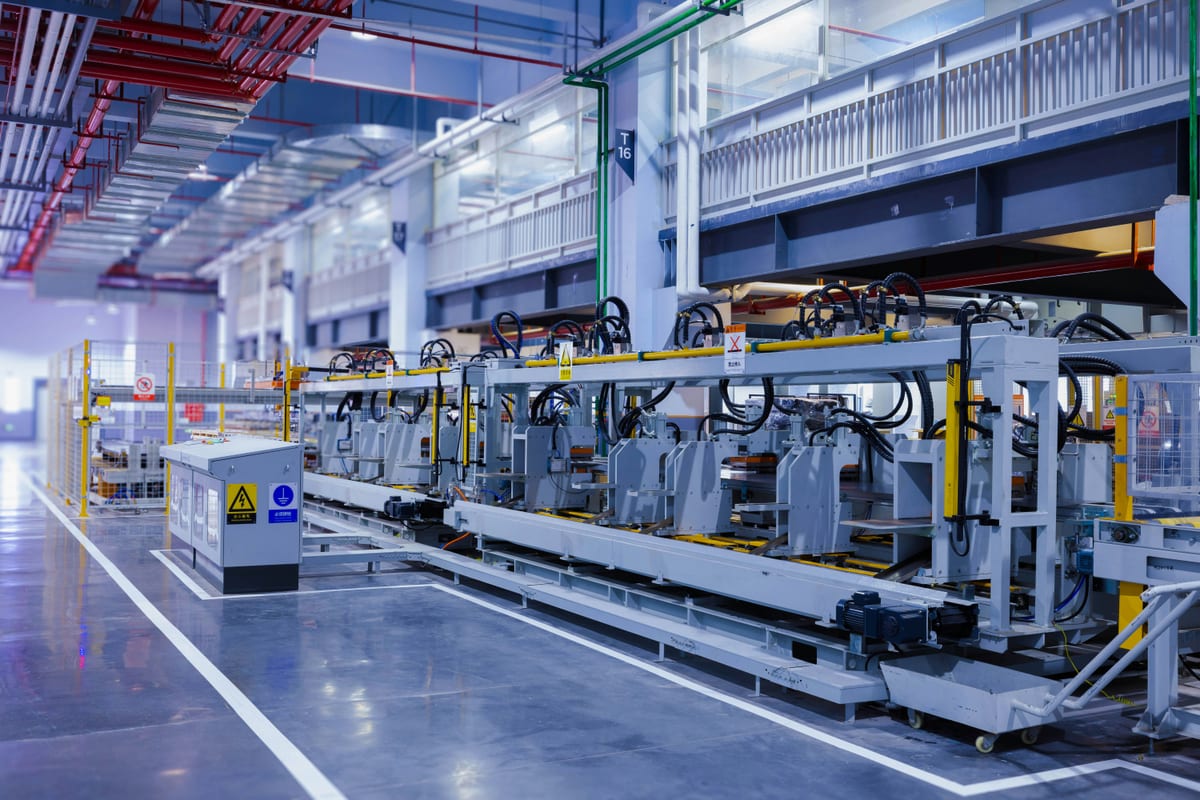
In 2020, Eat Better Co began life in a home kitchen. Six years later, it has invested approximately ₹10 crore in a 50,000 sq ft manufacturing facility in Jaipur. Lead times that once stretched 30 to 45 days with third-party manufacturers now compress to 2 or 3 days. That gap is not just a logistics metric. It is the difference between a brand that reacts and a brand that shapes its own market.
Eat Better Co is not alone. Fashion and footwear company LittleBox India, travel gear brand Assembly Luggage, and skincare startup Minimalist have all moved in the same direction — choosing the capital intensity and operational complexity of owned factories over the apparent ease of outsourced production. The question worth asking is why now, and what this pattern means for an economy that has been trying, with mixed results, to raise manufacturing's share of GDP.
When AI Flattens Everything Else, the Factory Becomes the Moat
The immediate trigger is a structural shift in what D2C competition actually looks like. Launching a brand — building a storefront, running digital ads, designing packaging — has become commoditised. Investors note that artificial intelligence has flattened brand, design, advertising and storefronts to the point where none of these offer durable differentiation on their own.
What holds up, according to Arjun Malhotra, general partner at Good Capital, is depth in the physical, regulated, operationally messy domains that software cannot simply route around. "Manufacturing is one version of that. Owning a diagnostic lab network is another," he said. "The common thread is absorbing India's operational complexity instead of routing around it, and that's what becomes hard to copy."
Harmanpreet Singh of Prath Ventures frames the same logic from a venture perspective. Owning manufacturing creates proprietary capability, speeds up R&D iteration, and reduces the risk of product copying — three advantages that compound over time. A competitor can replicate a product seen on a shelf; replicating a factory that has been optimised over years, with proprietary recipes or formulations embedded in its processes, takes far longer.
Shaurya Kanoria of Eat Better Co frames it as industrial philosophy as much as operational strategy. "When we saw how food was being made in large factories, it was highly industrial, relying on preservatives and chemicals," he said. "The only way to ensure quality throughout the process was by owning the entire manufacturing." Quality, in this framing, is not a compliance checkbox. It is an expression of the brand's core argument to consumers.
The Supply Chain Lesson of 2020, Still Being Absorbed
Behind this factory-building wave sits a structural vulnerability that became impossible to ignore during the supply chain disruptions of 2020 and 2021. Indian consumer brands across categories — electronics accessories, personal care, apparel — discovered that dependence on Chinese contract manufacturers was not just a margin question but an existential one. When Shenzhen factories shut or constrained output, brands with no domestic production fallback had no fallback at all.
The lesson has taken time to translate into capital allocation, partly because building a factory is expensive and slow relative to signing a contract manufacturer. But the brands that absorbed the lesson and had the balance sheet or investor backing to act on it are now positioned differently. Aman Gupta of boAt has spoken publicly about shifting away from full dependence on Shenzhen-sourced components as central to the brand's quality assurance and margin strategy. Varun Alagh of Mamaearth parent Honasa Consumer has noted that owning formulation and filling lines enables faster SKU iteration and cleaner regulatory compliance. These are not ideological positions about Make in India. They are operational choices made under competitive pressure — which makes them far more durable than policy-driven mandates.
Pranay Kotasthane of the Takshashila Institution has argued that startup-led vertical integration is the organic, demand-driven complement to state-directed production incentive schemes — and that India needs both. The state can subsidise capacity; it cannot manufacture the competitive motivation that pushes a founder to spend ₹10 crore on a factory in Jaipur rather than signing another third-party agreement. That motivation has to emerge from the market, and it now does so at scale.
Policy Architecture That Fits Large Firms Better Than Growing Ones
India's policy response to the manufacturing-digital convergence has been substantial in aggregate. PLI schemes spanning fourteen sectors, the DPIIT's Startup India initiative, and the National Logistics Policy collectively point in the right direction. The Union Budget extended PLI benefits and reduced customs duties on manufacturing inputs — measures that lower entry barriers for capital-intensive production. DPIIT Secretary Rajesh Kumar Singh has flagged that manufacturing-integrated startups generate three to four times the employment of pure-play digital startups, which underlines the policy rationale clearly enough.
The gap is in the calibration. PLI thresholds were set for large incumbents — firms with established production histories, established credit profiles, and the balance sheets to absorb multi-year incentive lock-ins. A snacking brand that has just built its first factory in Jaipur, or a footwear company setting up its first production line, sits outside the effective reach of these schemes even if it sits squarely within their stated intent. Credit guarantee coverage for startup-owned factory assets remains limited, and the working capital demands of running a factory — inventory, raw material procurement, workforce — are structurally different from the asset-light financing most startup lenders understand.
A dedicated fast-track window within the PLI framework for brands in a certain revenue range would address this gap — not as a subsidy for nascent businesses, but as a recognition that the manufacturing-digital convergence is generating a new category of industrial firm that existing frameworks were not designed to serve.
Factories as Foreign Policy
There is a dimension to this trend that extends beyond domestic industrial policy. The EU and UK are both in active trade negotiation with India, and both have explicit supply chain diversification interests following a decade of over-concentration in Chinese manufacturing. Brands that own domestic factories are verifiably India-origin in ways that contract-manufactured brands are not. Rules-of-origin requirements under free trade agreements reward precisely this kind of domestic production depth — and a D2C brand with its own Jaipur or Pune facility can make that claim cleanly.
ORF analyst Soumya Bhowmick has written that D2C-led domestic manufacturing strengthens India's positioning as a credible supply chain partner for Western firms seeking post-COVID diversification. The argument is straightforward: what makes India's supply chain offer credible to a European buyer is not just government assurance but ground-level industrial reality — factories that exist, run, and produce consistently. Every Eat Better Co facility or LittleBox production line is a data point in that case.
India's consumer internet economy built enormous scale over the past decade largely on the back of imported manufacturing — goods assembled elsewhere, logistics managed by platforms, quality controlled by third parties. The generation of startups now building factories is doing something structurally different: it is anchoring the value creation domestically, in physical assets, in proprietary processes, in employment that sits in Tier-2 cities rather than in platform warehouses. That shift, multiplied across dozens of brands across food, fashion, personal care, and travel goods, is how manufacturing's share of a growing economy actually rises — not through a single policy declaration, but through thousands of founders deciding that the factory, for all its complexity, is worth owning.