The speech was addressed to young Indians, but its audience was really the institution of the Indian state itself.
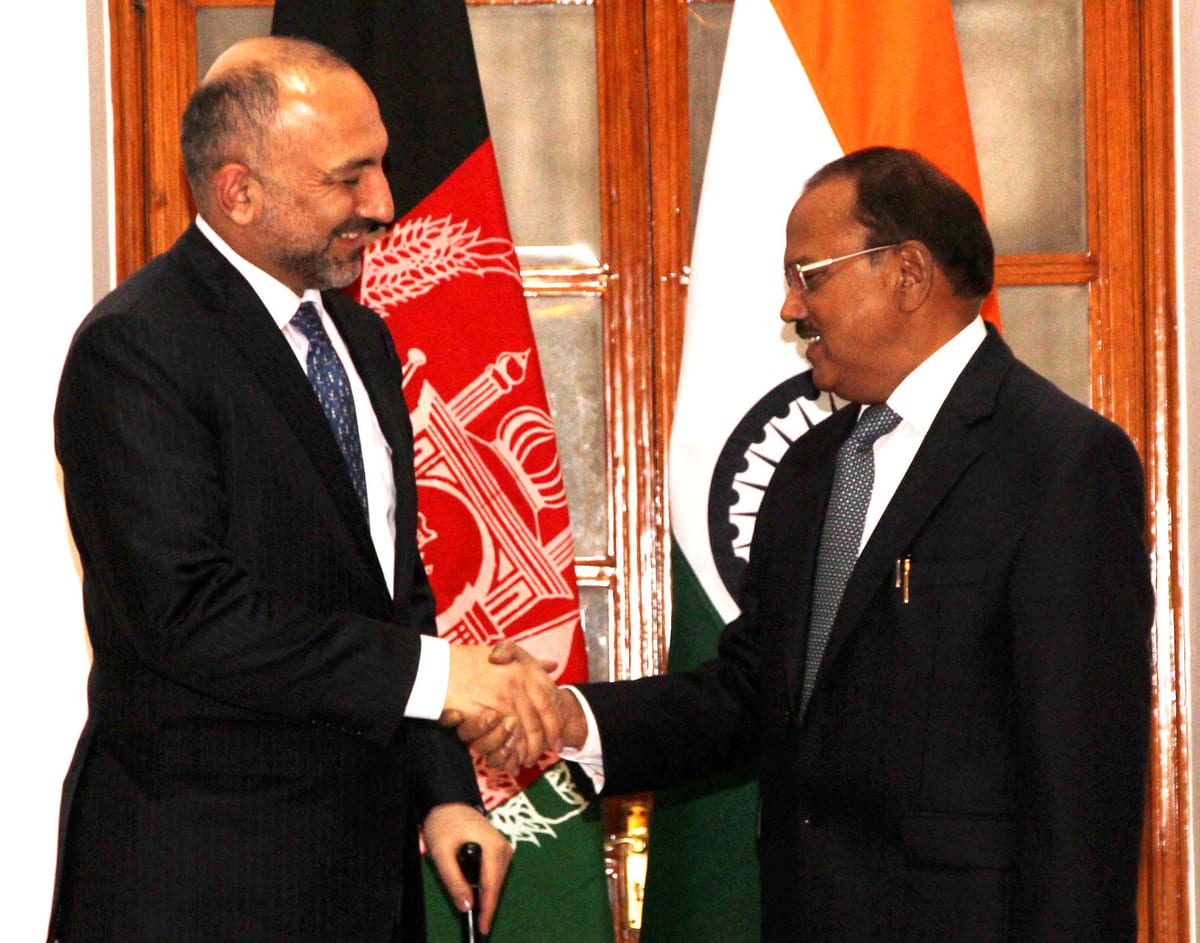
At a public event on August 1, National Security Advisor Ajit Doval made a fervent appeal to India's youth to dedicate themselves to nation-building, cautioning that a generation unmoored from civic responsibility risks confusing freedom with the licence to pursue purely private ends. He described the present moment as a "rare window of opportunity" in India's history — one that, if allowed to slip, would not return easily. The framing was exhortatory, but behind it lay a strategic calculation that deserves more careful examination than the applause it typically receives.
The Security Frame Expands
That India's National Security Advisor now speaks regularly to youth gatherings about the meaning of freedom is not incidental. It signals a deliberate expansion of the national security frame into territory once occupied by educators, civil society, and parents. The NSA's institutional remit covers intelligence coordination, counterterrorism, and strategic affairs. When that office turns toward civic formation — toward telling young people what freedom ought to mean — the security establishment has concluded that the ideological orientation of India's youth is a first-order strategic question, not a cultural afterthought.
This is not without historical precedent in other major states. Governments that face large, young, restless populations have always understood that the space between aspiration and opportunity is where instability breeds. What is particular to India's present moment is the scale of the challenge. A country where the median age remains strikingly low, and where the productive cohort is expanding faster than any comparable civilisational power, carries an unusual combination of potential and risk within the same demographic fact.
Doval's appeal lands in that space. The "rare window" he identifies is real — India's working-age population will peak in proportion to dependents within the coming two decades, a window that does not stay open. Nations that have failed to institutionally absorb their youth during such windows have discovered, often violently, what that failure costs. The speech is best read not as a moral lecture but as a diagnostic of where the establishment believes vulnerability concentrates.
What the Rhetoric Cannot Carry Alone
The more demanding question is whether exhortation — however earnest and however delivered by a figure of Doval's stature — can substitute for institutional capacity. Comparative evidence from states that have navigated demographic bulges suggests it cannot.
Rhetorical appeals to national service work when they are underwritten by visible, accessible channels: an expanding civil service, a growing formal manufacturing sector, research institutions that absorb graduate talent, military and paramilitary pathways that offer dignity alongside discipline. When those channels narrow through credential inflation, insufficient formal job creation, and mismatch between university output and industry demand, the appeal to sacrifice rings hollow to the generation it addresses.
Analysts working on India's security-development nexus have made this point with increasing urgency in recent years. The demographic dividend is not self-redeeming. It requires absorptive institutional capacity on the other side of the transaction. A young person invited to dedicate themselves to nation-building needs a nation-building project that will actually employ them — not metaphorically, but in a formal, remunerated, dignified role. The distance between the state's ambition to mobilise youth and the economy's current structural condition is not a communications problem. It is a policy problem, and a security problem in the same breath.
Amrit Kaal's Internal Contradiction
Doval's address sits squarely within the government's Amrit Kaal narrative — the framing of the period between the 75th and 100th anniversaries of independence as India's decisive generational opportunity. It is a compelling national story, and not an invented one. The convergence of India's geopolitical weight, its digital infrastructure, its expanding manufacturing base, and its demographic advantage does constitute something genuinely unusual in the country's modern history.
But the Amrit Kaal project carries an internal tension that speeches alone cannot resolve. The government's ambition for Viksit Bharat by 2047 requires not just ideologically committed youth but institutionally absorbed youth — young people whose energies are directed through formal economic participation, not merely through patriotic sentiment. One without the other produces a different outcome than intended: a generation that has been told its moment has arrived, but cannot find the formal-sector doorway through which to walk.
This tension is not unique to India. China managed a version of it through state-directed industrialisation, at considerable political cost to individual liberty. Western liberal democracies have managed it, imperfectly, through deregulated labour markets that created employment at the cost of stability and social trust. India's development model has consistently sought a third path — high social cohesion, state-directed ambition, democratic legitimacy — but that path requires the institutional engineering to match the rhetorical architecture. The NSA can set the aspiration. The ministries of skill development, commerce, and labour have to build the road.
The Civic Nationalism Question
There is a deeper philosophical question Doval's warning surfaces. The distinction he draws — between freedom understood as civic responsibility and freedom understood as personal licence — is a genuine philosophical tension, not a rhetorical sleight of hand. Societies have always argued about this. The liberal tradition, running from Locke through Mill, has tilted toward the individual. The civic republican tradition, running through Rousseau and into the national movements of the twentieth century, has tilted toward collective obligation.
India's founding documents attempt a synthesis — individual rights protected by constitutional guarantees, and a directive principle framework that embeds social obligation into the republic's purpose. The Preamble's promise of liberty is individual; the Directive Principles' vision of a welfare state is collective. Doval's warning sits in that long-standing tension. When the NSA cautions youth against mistaking freedom for licence, he is channelling a tradition as old as the republic — but also one that can be weaponised against dissent if institutional channels for legitimate disagreement are narrowed rather than widened.
The health of India's civic nationalism depends on whether the state's call to service is accompanied by a reciprocal institutional commitment: to build the universities, the enterprises, the public institutions, and the democratic forums through which a young generation can serve with agency rather than merely comply with instruction. Mobilisation without agency produces compliance, not commitment. Doval's generation built the security architecture that has kept India whole. The generation he is addressing will judge the republic not by the appeals made to it, but by the opportunities it actually finds waiting.
That is the real window of opportunity — and it requires more than a speech to keep it open.