
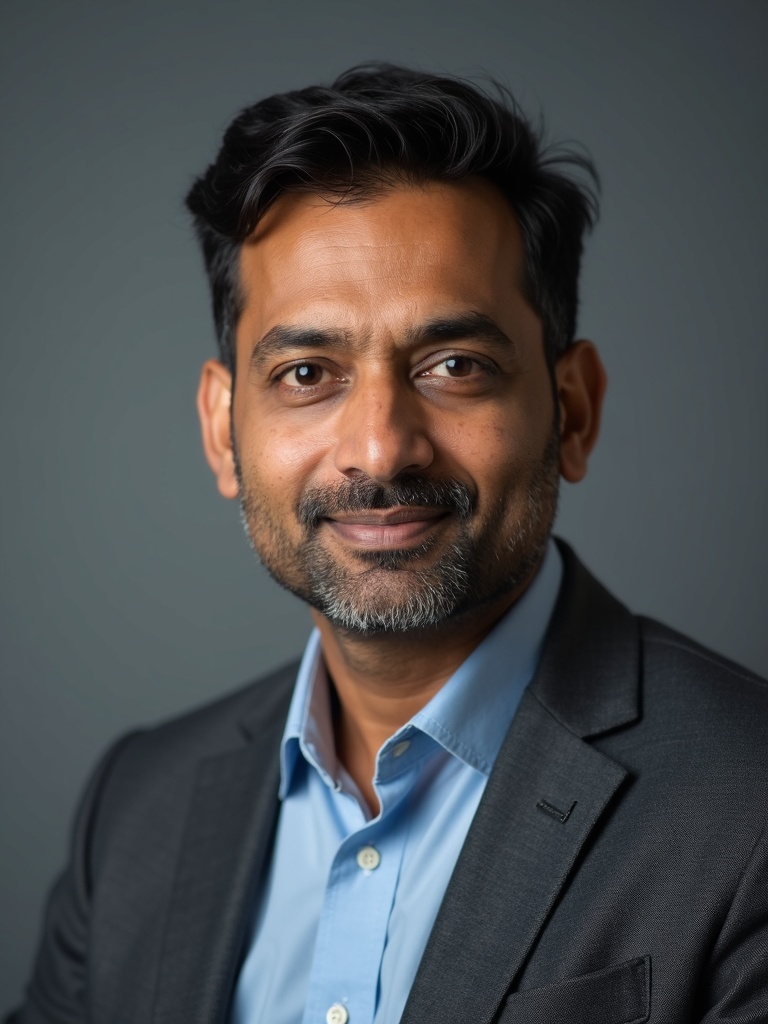
Chandan Sarkar writes political biography in its most useful form — using the life of a figure to explain the institutions that made them possible. He has written on prime ministers and party leaders, and reports closely on the Hindi belt.
Recent work
Nana Patekar’s Political Cinema Mapped India’s Anger Before It Had a Hashtag
Nana Patekar's death in Goa on 8 October 2026 closes a career that made political fury a mainstream Hindi film grammar. His roles in Krantiveer, Raajneeti and Apaharan tracked corruption, caste and power across decades of Indian cinema.
Maharashtra FDA Mandates 'Mother's Milk Is Best' Warning on Infant Food
Maharashtra's Food and Drug Administration has ordered manufacturers of infant food to carry a breastfeeding warning on every package after surveys revealed the label was missing. The directive does not ban formula but bars images of mothers or babies and forbids promotion. The enforcement adds to Commissioner Tukaram Mundhe's widening food safety campaign.
Sensex Crashes 700 Points at Open; NSE IPO Debuts Into a Falling Market
Indian equities opened sharply lower on September 24, with the Sensex losing over 700 points and the Nifty sliding past 23,205. The fall landed hours before the National Stock Exchange's own IPO was due to list, raising immediate questions about pricing and retail investor sentiment.
BJP Cites Five Congress MPs in UPI MDR Panel Dispute
The BJP and government officials have pushed back against Rahul Gandhi's 'UPI tax' criticism by citing a parliamentary committee report that recommended a phased merchant discount rate on UPI transactions above Rs 2,000. They claim five Congress MPs were present and did not oppose the recommendation. Legal and trade pushback is also mounting.
Houthis Seize Mocha, Push Toward Bab el-Mandeb as Indian Naval Patrols Gain Urgency
Iran-backed Houthi forces captured the Yemeni port of Mocha, taking direct control of approaches to the Bab el-Mandeb Strait. For Indian shipping, which moves the bulk of its Europe-bound cargo through the Red Sea corridor, the advance extends a period of elevated freight and insurance costs. New Delhi's naval escorts and diplomatic channels with Tehran and Gulf capitals now face the task of protecting Indian-flagged vessels without joining a military coalition.
India Backs UN Move For Maps Showing Africa's True Size
The UN General Assembly adopts an African-led resolution urging map projections that reflect true relative sizes, with India among 164 votes in favour and the US the lone dissent. The move challenges the Mercator projection that distorts Africa and other equatorial regions.
ISRO's GSLV-F17 Launch Puts EOS-05 in Orbit, Extending India's Earth-Observation Reach
ISRO launched the GSLV-F17 rocket carrying the EOS-05 imaging satellite from Sriharikota before dawn on Friday. The mission extends India's sovereign earth-observation capability, with data flows set to strengthen disaster response, agricultural planning and border surveillance. The successful flight also reinforces the GSLV platform's record after a period of scrutiny.
Iran Urges Modi to Use India's Diplomatic Reach at SCO Summit
Prime Minister Modi met Iranian President Masoud Pezeshkian on the sidelines of the SCO summit in Bishkek. The Iranian readout urged India to use its contacts to steer parties toward dialogue, while New Delhi's public response remained brief. The meeting marks the first bilateral contact since the US-Iran war and revives India's role as a quiet channel between Washington and Tehran.
Penguin India Denies Decision Not to Publish Sonia Gandhi Memoir
Penguin Random House India has denied a report that it decided not to publish Sonia Gandhi's memoir, saying it is not the book's Indian publisher. The Indian Express reported that the author rejected requested editorial changes, and HarperCollins may now publish in India. The dispute turns on editorial control more than censorship.
India Draws a Line on Ethanol: Domestic Policy, Not Trade Concession
The Commerce and Industry Ministry has clarified that no commitments on ethanol imports from the United States have been made in bilateral trade negotiations, reaffirming that India's fuel blending programme is governed entirely by domestic policy. The clarification also addressed a separate wave of misinformation about ethanol being blended into aviation turbine fuel, which Civil Aviation Minister Ram Mohan Naidu Kinjarapu dismissed as false. Together, the two denials reveal how contested India's energy transition agenda has become — from within the political debate and from without, in trade negotiation rooms.
From Hurriyat to Trehgam: Bilal Lone Chooses the Ballot
Former Hurriyat leader Bilal Gani Lone has signalled his intent to contest the next assembly elections from Trehgam as an independent, setting up a direct confrontation with his brother Sajad Gani Lone, People's Conference chairman and MLA from Handwara. The move marks a decisive break from separatist politics and carries implications far beyond one family's internal contest — it confirms that the Hurriyat's organisational architecture is fracturing at precisely the point where electoral participation becomes unavoidable. For New Delhi, the development is quiet but consequential: the ballot, not the boycott, is now the instrument that former dissenters reach for.
Doval's Warning to Youth Surfaces the Deepest Fault Line in India's Amrit Kaal
NSA Ajit Doval's appeal to Indian youth — warning that freedom must not be mistaken for the liberty to do as one pleases — frames a generation's restlessness as a matter of national security. The speech crystallises a tension at the heart of India's Amrit Kaal project: the state's ambition to direct youth energy toward nation-building runs ahead of the economy's capacity to absorb that energy in formal employment. The gap between those two realities is itself a strategic vulnerability.
Washington's $58.6 Billion Missile Deal Reshapes Defence Supply Chains India Depends On
The US Army has awarded Lockheed Martin a contract worth up to $58.6 billion to manufacture Patriot interceptor missiles, converting a prior one-year deal into a seven-year procurement plan covering fiscal years 2026 through 2032. The contract arrives as simultaneous conflicts in Iran and Ukraine drain American munitions stockpiles at a pace Washington's industrial base struggles to match. For India, the implications run on two tracks — energy exposure through Gulf shipping lanes and tightening delivery windows on US-origin defence systems.
Oil at Six-Week High as US-Iran Threats Escalate — Chabahar Hangs in the Balance
The United States has carried out eleven consecutive nights of airstrikes on Iran, while Tehran has responded to Trump's threat to bomb Iranian infrastructure with an 'eye for an eye' warning, pushing oil prices to a near six-week high. The escalation strikes directly at India's twin vulnerabilities: crude import costs and the Chabahar Port investment that anchors India's overland access to Central Asia. New Delhi's calibrated silence is running out of runway.
India Holds the Indus Line: Water as Strategic Asset, Not Concession
India's MEA has reaffirmed that the Indus Waters Treaty remains in abeyance following the Pahalgam terror attack, dismissing Pakistan's warnings as irrelevant while Islamabad continues sponsoring cross-border terrorism. India also condemned Pakistan's airstrikes into Afghanistan, which killed civilians, further isolating Islamabad across multiple diplomatic fronts simultaneously. The moment marks a structural shift in how India treats water — from a concession instrument to a strategic lever.
Anthropic's AI Blockade Exposes India's Technology Sovereignty Challenge
Anthropic blocked access to its most powerful AI models for foreign nationals, including Indian developers, citing US national security directives. The incident underscores India's vulnerability to Western tech gatekeeping and reinforces the strategic importance of building indigenous AI infrastructure.
Delhi Fire Tragedy Exposes Medical Tourism Safety Gaps as Foreign Patients Bear Brunt
A fire at a Delhi bed-and-breakfast killed 21 people, including 18 foreign nationals primarily from Bangladesh, Afghanistan, and African countries who were medical tourists. The tragedy reveals serious safety lapses in accommodation facilities serving India's growing medical tourism sector.
Jaishankar and Rubio Shape Strategic Partnership as India Asserts Multi-Alignment Doctrine
External Affairs Minister S. Jaishankar and US Secretary of State Marco Rubio held comprehensive bilateral talks in New Delhi, with discussions spanning West Asia, the Indian subcontinent, East Asia, and Ukraine. The engagement marks Rubio's first official visit to India as Secretary of State, setting the tone for India-US relations under the new American administration.
Trump Questions Taiwan Arms Deal After Beijing Summit With Xi Jinping
Donald Trump has cast doubt on a $14 billion weapons package for Taiwan after meeting Xi Jinping in Beijing, raising questions about US commitment to the island. The President dismissed 1982 commitments as outdated and prioritised avoiding war over arms sales, unsettling allies across Asia.
The Case for Piyush Goyal at Kartavya Bhavan: How India’s Trade Architect Became Its Most Consequential Economic Voice
With seven FTAs, record exports of $825 billion, and an unprecedented electoral mandate from Bengal, Assam, and Tamil Nadu, Piyush Goyal’s elevation to Finance Minister is the most logical economic decision of Modi 3.0.
Delimitation Vote Shows India's Federal Architecture Working as Designed
The Lok Sabha's April 17 vote on the Delimitation Bill demonstrates India's constitutional architecture functioning as intended. The supermajority requirement protected federal equity while the government's withdrawal for reconsideration showed institutional maturity in balancing women's reservation with demographic representation.