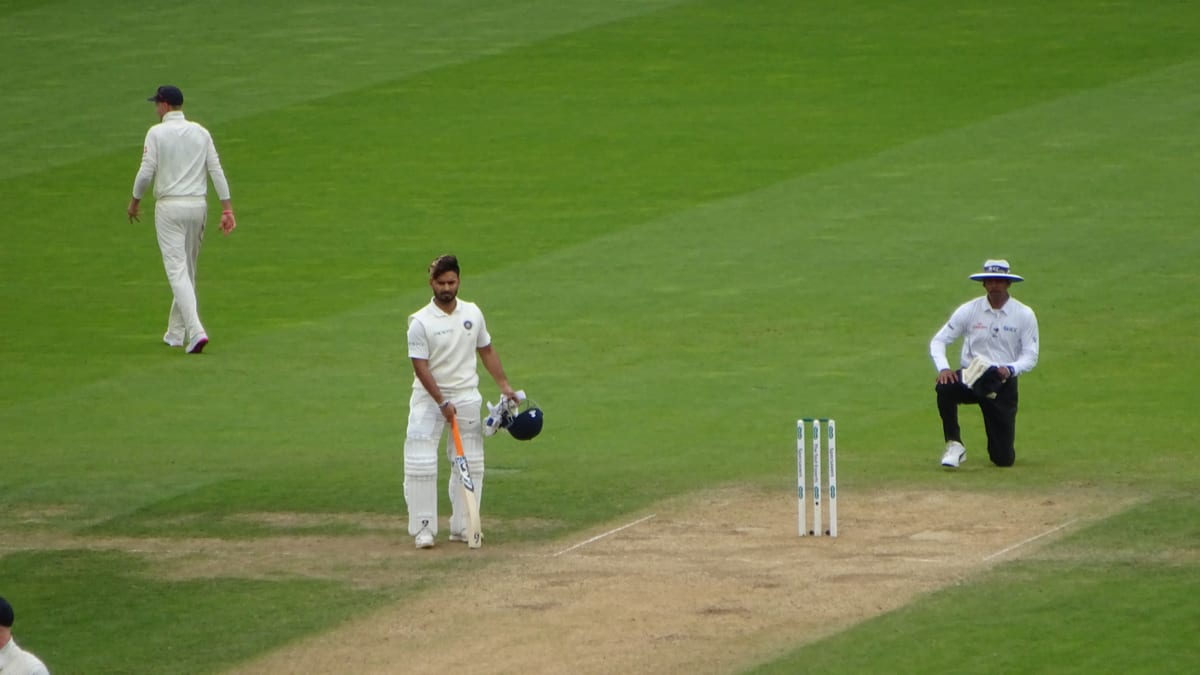

There is a fixture in world cricket that does not need a scoreboard to generate noise. England versus India arrives with its own weather system: broadcasters scramble, fantasy-cricket platforms spike overnight, and the national conversation in India pivots entirely, regardless of what else is happening in the news cycle. The match may be one delivery old or three sessions deep. The debate has already started.
That is the peculiar weight this fixture carries. It is not simply a bilateral contest. It is a recurring audit of where Indian cricket stands against the team that has, across decades, most reliably exposed the fault lines in India's away-tour ambitions.
The Seam Question That Never Goes Away
English conditions present India with a structural selection problem that reappears every time the squad lands at Heathrow. The overhead cloud cover, the Dukes ball's pronounced seam movement, the drop in bounce compared to Indian tracks — all of it creates a recurring tension: three specialist pace bowlers leave a long tail exposed to collapse, while an all-rounder blunts the bowling attack precisely when English conditions reward aggression with the new ball.
Historically, India gets this call right about half the time. When Jasprit Bumrah is fit and leading a disciplined pace unit, the three-seamer option becomes defensible. His ability to reverse-swing the old ball and generate awkward bounce from a low, skiddy action is distinctive in English conditions. The question is always who completes the trident. Mohammed Siraj's development as a Test-match bowler — his discipline in the corridor, his willingness to hit a length and hold it — has made the third-seamer slot less fraught than it was even three years ago. But the selection panel's nerve is tested every time a first-session cloud bank rolls in and the pitch seams like a green-top.
Batting in England: The Blueprint India Is Still Writing
The batting conversation is layered and unresolved. India's top-order composition in English conditions has always depended on a delicate balance: technically correct openers who can negotiate the moving ball in the first hour, a middle order that converts fifties into match-defining hundreds, and enough lower-order resilience to avoid the 85-for-five collapses that once defined India's away trips to England.
Shubman Gill represents the clearest test case of India's current batting philosophy. His technique — tall, upright, front-foot dominant — is exactly what English seamers want to target in the channel outside off stump. The question is not whether he has talent; it is whether he has made the technical adjustments that transform a good pitch player into a genuine away-tour performer. KL Rahul, alternating between opener and middle order depending on squad needs, brings a different problem: he produces innings of real quality and then goes missing for long enough to restart the selection debate from zero.
VVS Laxman, whose own career was defined by famous innings at specific venues, has spoken repeatedly about the importance of middle-order resilience in English conditions. The lesson from his era is that India does not beat England in England by playing expansive cricket from ball one. It wins by surviving the first session, converting starts, and then letting the pace attack dismantle an English batting lineup that, for all the entertainment of Bazball, remains vulnerable to disciplined length bowling when conditions assist.
Kohli, Milestones, and the Narrative Industry
No England-India series discussion survives long without arriving at Virat Kohli. Not because he demands the attention — though the broadcast industry certainly provides it — but because his record against England in Test cricket is genuinely complicated enough to sustain analysis. He has produced some of his most celebrated innings against England, and he has also endured extended lean patches against English seam bowling that became defining storylines. The gap between his performances in India and his performances in English conditions across different series has been the subject of more statistical decomposition than almost any other cricketing question of the last decade.
The milestone-chase narrative that attaches to Kohli at every English ground is partly manufactured by the broadcast-commentary complex and partly a legitimate reflection of how records accumulate in a career of his stature. What it does, practically, is put enormous psychological pressure on early innings dismissals. A caught-behind off a nipping delivery becomes, within minutes, a national conversation about technique, form, and selection. That pressure is unique to this fixture. No other away series generates quite the same intensity of immediate scrutiny on individual dismissals.
The WTC Dimension
Series between England and India do not exist in isolation anymore. The ICC World Test Championship has given every Test match a points context that reshapes how series are managed. A lead after two Tests influences declaration timing in the third. A trailing position changes the calculus around batting order experimentation or the risk of bowling a fast bowler into the ground for wickets.
India's WTC final credentials have been built and occasionally damaged by their England series results. The away-win percentages that matter for WTC qualification make England one of the most important venues on the cycle. A series win in England — the genuine kind, across five Tests, not a dead-rubber consolation — would represent something qualitative in Indian cricket's development arc. It would confirm that the seam-bowling depth, the batting adaptability, and the captaincy decision-making have reached a level where India does not just compete in English conditions but dominates them often enough to matter in the points table.
Rohit Sharma's toss decisions, his management of Bumrah's workload across a five-match series, his read of whether to bat or bowl on a morning that might clear by lunch — these are the quiet choices that decide series before the first boundary is scored. Sunil Gavaskar, who navigated English conditions across a different era and with different technical resources, has framed modern India's England challenges through the lens of mental toughness and opening partnership stability. His instinct is sound: if India's openers get through the first forty-five minutes, the dynamic of an English morning session shifts entirely.
The Commercial Ecosystem That Rides on Every Session
The BCCI's commercial architecture makes England series uniquely valuable. Broadcast rights, sponsor activations, and the fantasy-cricket platforms that have become the primary second-screen experience for Indian cricket fans all price an England-India contest at a premium. A Test series across five grounds generates weeks of content, analysis, and engagement that no other bilateral fixture matches. The downstream effect on everything from jersey sales to streaming subscriber numbers is measurable and significant.
That commercial weight creates its own distortion. Selections that should be evaluated purely on cricket grounds get filtered through narratives shaped by broadcast demand. A marquee name in the playing XI sells more sponsorship than a technically correct replacement from domestic cricket. Whether India's selectors have insulated their decision-making from that pressure is a question that resurfaces every time a squad is announced for an England tour.
What the Series Decides
Cricket analysis at its best is not prediction. It is the identification of the variables that will determine outcome, stripped of the gut-instinct shortcuts that make punditry comfortable but unreliable. For England versus India, those variables are consistent across series: the fitness and workload of Bumrah, the technical adjustments India's top order makes to left-arm swing and late seam movement, the composure of the captain under first-session pressure, and the toss-and-conditions read that sets the template for the entire contest.
India has won in England before. The question that each new series poses is whether the wins represent a genuine structural shift in away-tour capability — a learned ability to adapt technically and tactically to conditions that once felt alien — or whether they remain the product of specific conditions, specific bowling performances, and the occasional brilliant innings that covers for a batting order not yet fully comfortable. The answer arrives session by session, one unplayable delivery and one grinding partnership at a time. That is the real England-India story.