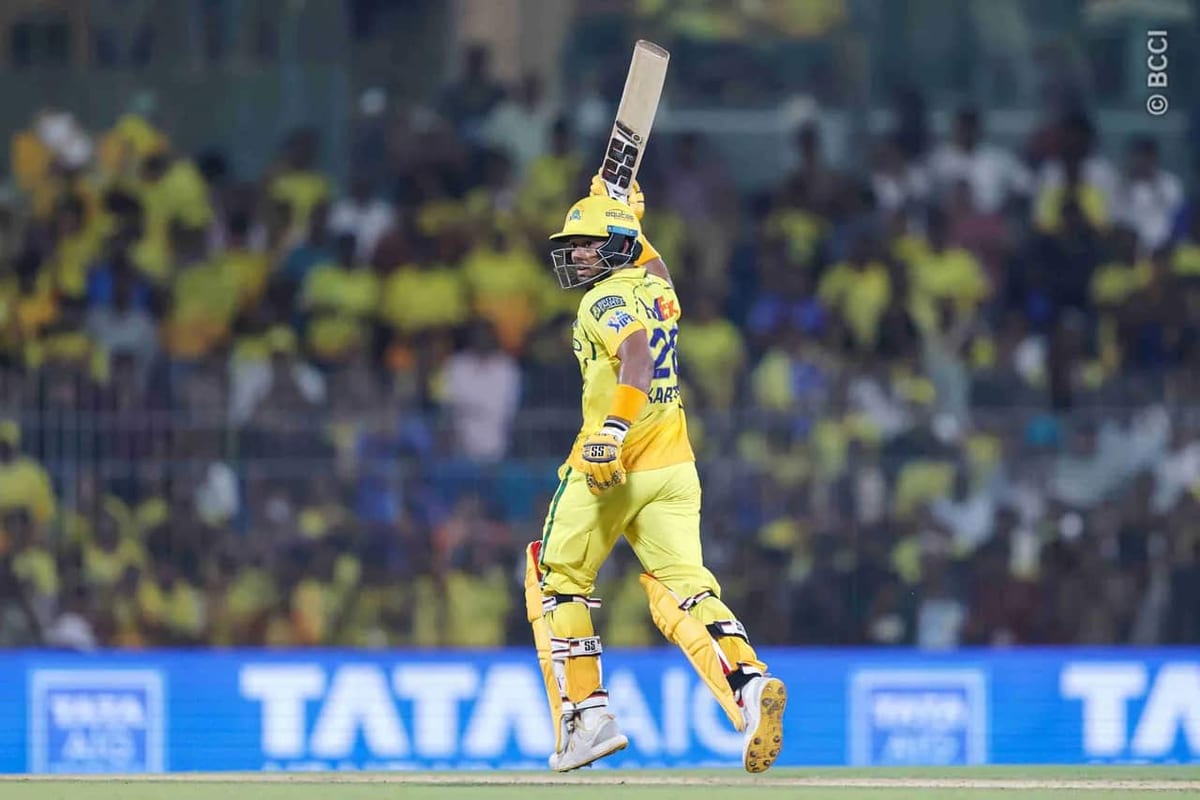
Two names dominate the conversation around India's first T20 International against England. One belongs to a teenager who has never faced an international delivery. The other belongs to a spinner who has spent years making seasoned internationals look ordinary. Vaibhav Suryavanshi and Varun Chakravarthy — one untested, one proven — tell you nearly everything about where Indian T20 cricket stands in mid-2026.
Chakravarthy's return is the less surprising of the two developments. His mystery spin brings both an x-factor and measurable control that India's bowling unit has not consistently found in one package. The carrom ball that drifts late, the googly bowled from the same action as the leg-break — these are tactical instruments. England's batters, however aggressive their T20 instincts, have never fully cracked him in home conditions. On Indian surfaces, with a worn ball after fifteen overs, he becomes a different problem. India's intent is clear: build a spin battery of Chakravarthy, Axar Patel, and Ravi Bishnoi, and test whether England's power-hitters can find the boundary against three different turning options in the same innings.
The Boy at the Door
And then there is Vaibhav Suryavanshi. Fourteen years old. IPL 2025 already behind him, already marked by explosive innings for Rajasthan Royals that produced highlight reels and the kind of disbelieving commentary that usually greets rare talent. The question the selectors face is not whether he can bat — the evidence for that is substantial. The question is whether an international T20 debut, against Jofra Archer's pace and Adil Rashid's drift, in front of a packed Indian ground, is the right moment for a boy who has not yet sat his secondary school examinations.
Indian cricket has maintained a complicated relationship with accelerated promotion. The domestic circuit — the Ranji Trophy, the Vijay Hazare, the Duleep Trophy — was built precisely to serve as a proving ground, where talent thickens under pressure before it reaches the international stage. The architects of India's cricketing structure understood this: careers needed volume, needed failure, needed the education that only repetition provides. That institutional memory does not simply disappear because a teenager hits a six over extra-cover at the age when most players are still learning to read a spinning pitch.
But the counter-argument is not frivolous. T20 cricket, structurally, rewards instinct over accumulation. The skills Suryavanshi already possesses — the eye, the backlift, the capacity to hit through the line without apparent calculation — are precisely the skills that become harder to manufacture through age-group pathways. If the management judges those skills tournament-ready, benching him on grounds of convention is its own form of institutional error.
The Opening-Order Arithmetic
What makes the decision difficult is that the alternative is not obviously inferior. Abhishek Sharma and Sanju Samson as an opening combination is not a stopgap. It is a proven unit with international experience, and Abhishek's recent climb up the T20I batting rankings confirms he produces when it matters. Giving Suryavanshi his debut means displacing one of them, and that displacement has to be justified on current form as much as on future promise.
The toss will sharpen everything. If India bat first — and Suryakumar Yadav's captaincy instincts in home conditions tend toward exactly that — then whoever opens does so under the full scrutiny of an audience that has already decided Vaibhav is the story of this series. Runs from a debutant teenager, against an England new-ball attack that includes genuine pace, would be one of the more remarkable individual moments in recent Indian T20 history. A first-ball duck would fuel six months of columns about patience and proper pathways.
That tension — prodigy versus patience — is not unique to this selection table. English cricket waited arguably too long with some of its youngest talents in the 1990s. West Indian cricket promoted quickly and paid mixed prices. The Australian system, for a period, had a quasi-industrial model of early promotion through state cricket. None of those templates maps cleanly onto an Indian structure where the domestic calendar is longer, the competition for places more intense, and the public conversation around young talent more unforgiving than almost anywhere else.
What the Series Is Really For
Strip away the debut speculation and what remains is still a series worth attending to closely. India enter as the T20 format's reigning world champions, and Suryakumar Yadav's rebuilt setup since the 2024 triumph has been methodical — identifying who travels well, who performs on surfaces they have not grown up reading, who holds their economy rate when the ball stops spinning in the fourteenth over. England under their current T20 structure remain dangerous in precisely the conditions that expose hesitant middle-orders. Buttler's era has made English T20 batting less predictable and more relentless, and Archer — when fit and hungry — can disrupt any top order in the world.
India's middle-order depth will face that test if Chakravarthy's spin proves insufficient against England's flatter-pitch adaptability. The selectors will watch how the fringe players respond. Every innings in this five-match rubber is an audition recorded against the backdrop of the 2026 World Cup cycle. Even matches two through five are not ordinary bilateral fixtures. They are data.
Chakravarthy's series numbers will be parsed with particular care. His variations in home conditions are one calculation; how he adjusts when batters pre-plan against him, when they use the crease differently, when they choose to attack the carrom ball early — that adaptation answers the question selectors are actually asking: can he be trusted in the knockout stages of an overseas ICC event? The home series against England is, in this sense, a controlled experiment designed to answer an away-conditions question.
A Debate That Will Not End at Tea
The conversation around Vaibhav Suryavanshi will not conclude with the toss. If he plays and scores, the argument for fast-tracking him into ICC tournament squads becomes immediate. If he is held back, the debate about institutional over-caution returns every time he hits a boundary in a franchise match. If he plays and struggles, a different — and more troubling — conversation begins: about whether a fourteen-year-old should have been shielded from a result that now lives permanently in the record books.
Indian cricket has produced enough early-career stories to know that the archive is longer than any single series. What matters is that the management's decision, whatever it is, reflects genuine assessment rather than novelty or excessive caution. Varun Chakravarthy's selection already tells you this is not a squad built around sentiment. The same analytical rigour applied to Vaibhav Suryavanshi — if the conclusion is that he is ready, play him; if not, the domestic circuit is not a demotion — would be the right institutional answer, regardless of trending hashtags or television anticipation.