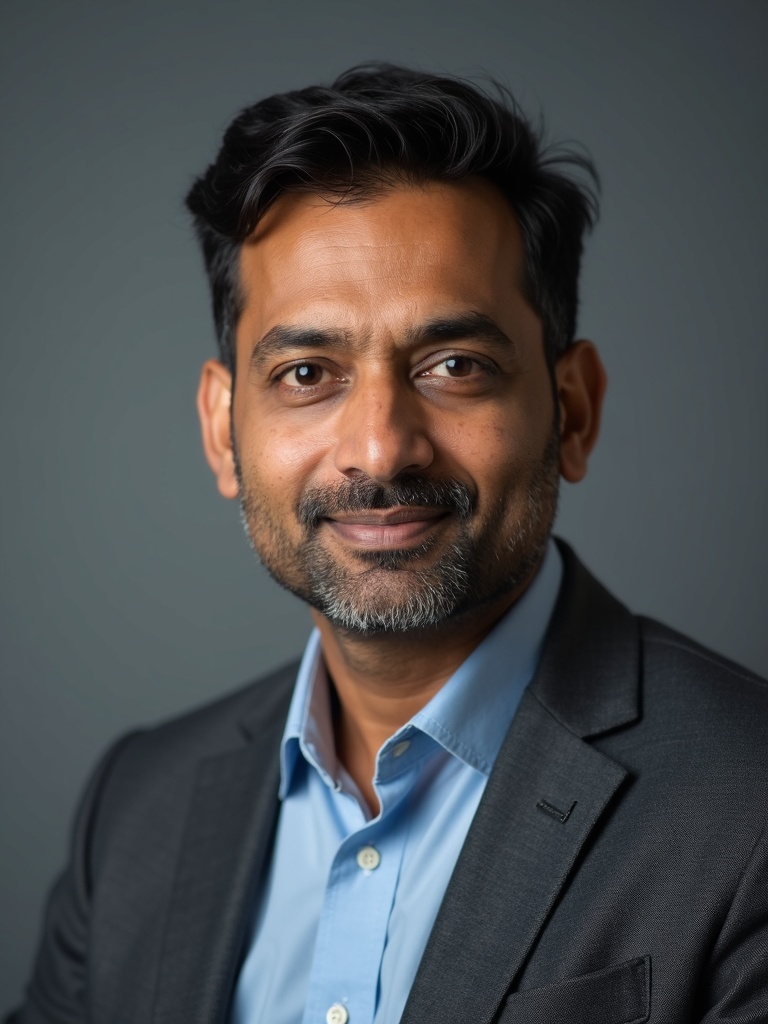
Bilal Gani Lone, who spent more than two decades with the Hurriyat Conference before leaving and calling its moderate faction "inactive" and "irrelevant," addressed a gathering in Dard Harai village, Kralpora, on Monday and announced his intention to contest the next assembly elections from Trehgam in north Kashmir as an independent. He told his supporters he had nothing to offer except a request for their trust. He invoked his late father, Abdul Gani Lone, a separatist figure before his assassination, and recast the Lone family's political inheritance as a tradition of service rather than resistance.
Trehgam is the hometown of Maqbool Bhat, founder of the Jammu and Kashmir Liberation Front and the first militant executed in Tihar Jail, on February 11, 1984. That Bilal Lone chose this constituency — and chose it to run as a candidate within India's constitutional framework — is the kind of detail that political biographers will return to when they reconstruct this period of Kashmiri history.
The Fraternal Dimension
The more immediate political drama is familial. Trehgam sits in Kupwara district, which is the operational heartland of Sajad Gani Lone, Bilal's brother, chairman of the People's Conference and sitting MLA from the neighbouring Handwara constituency. Sajad has positioned himself as Kupwara's indispensable political voice — the man who made the transition from separatist adjacency to mainstream alliance-building before anyone else in his generation. He contested elections, formed coalitions, and cultivated relationships with New Delhi in a manner that gave him genuine legislative standing in the restored J&K assembly.
Bilal's entry into the same district, from a constituency with overlapping socio-political networks, is not a minor irritant. It is a structural challenge to Sajad's claim of singular legitimacy in Kupwara. Two brothers from the same political lineage, drawing on the same father's memory, appealing to the same electorate through different idioms — this contest will reshape a district's politics for a generation, regardless of who wins the seat.
Bilal was explicit about his independence: he has neither joined any political party nor considered launching one, describing instead an independent political platform that he hopes will draw support from across Kupwara and Kashmir. He said his bond with the people of Kupwara is deep, and that he seeks nothing personally, being already well established. The self-positioning is deliberate — someone without institutional backing whose independence the electorate is asked to underwrite.
The Hurriyat's Organisational Collapse
Bilal's departure from the moderate Hurriyat faction led by Mirwaiz Umar Farooq is itself the more revealing political event. He described the organisation as inactive and irrelevant after more than two decades of association. That indictment, coming from within, is starker than anything an external critic could produce. The Hurriyat's power rested on its capacity to enforce a boycott of elections — to convert abstention into a political statement, and to make participation look like collaboration. That enforcement mechanism depended on organisational cohesion, on leaders who remained inside the structure and gave the boycott its moral weight.
When those leaders leave — not to join a Pakistani interlocutor or a hardline splinter but to contest elections as independents within India's constitutional framework — the enforcement mechanism dissolves. The boycott becomes a posture, not a political instrument. Analysts who tracked the 2024 J&K assembly elections, including those at Observer Research Foundation, noted that voter turnout in those polls was higher than in several previous cycles, weakening the boycott-as-resistance narrative that Hurriyat once enforced through ideological persuasion and, in earlier decades, intimidation. Bilal's announcement accelerates that logic: the separatist umbrella is losing its own former architects.
What Trehgam Represents for New Delhi
The Government of India has maintained that the abrogation of Article 370 in August 2019 and the subsequent restoration of J&K's legislative assembly constitute a completed and irreversible democratic transition. The MEA and Home Ministry cited the 2024 elections as evidence of democratic consolidation. New Delhi has not commented specifically on Bilal Lone's announcement, and it should not — official endorsement would immediately compromise the credibility that makes this development significant.
The value of Bilal Lone choosing the ballot lies in its voluntariness. A former Hurriyat figure, in a constituency named for Maqbool Bhat, running as an independent on a platform of truth and accountability — this is not a managed outcome. It is a political choice made by someone with the standing and the established personal security, as he said, to have chosen otherwise. That distinction matters enormously for how the international community reads Kashmir's political direction.
Pakistan's strategic argument on Kashmir has long run through the Hurriyat: that its leadership speaks for a Kashmiri population in uniform resistance to Indian democratic structures, and that elections conducted under those structures lack legitimacy. Scholars like Happymon Jacob at JNU's Council for Strategic Affairs have argued that former separatist participation in J&K elections is the most consequential indicator of ground-level normalisation — more consequential than security metrics or infrastructure investment, because it speaks to political will rather than state capacity. When Bilal Lone announces from Dard Harai village that politics must be practiced with honesty and commitment to public welfare, he is not citing government talking points. He is arriving at constitutional politics through his own calculus, and that arrival is precisely what makes it electorally and diplomatically significant.
The Structural Uncertainty That Remains
There is a category problem that Bilal Lone's entry creates. Former separatists entering electoral politics constitute a new kind of political actor — one whose loyalty trajectories and policy positions are untested within constitutional frameworks. Sajad Lone negotiated that transition years ago and has since demonstrated the durability of his electoral standing. Bilal is beginning that negotiation now, in public, without party infrastructure, in a constituency loaded with symbolic history.
His success or failure will partly depend on whether Kupwara's electorate treats the Lone name as an asset shared by both brothers or as a franchise that one of them has already claimed. It will also depend on whether the vote-split dynamics in the district — between the People's Conference, whatever national parties field candidates, and Bilal's independent platform — produce a result that any of the principal actors can call a mandate.
What the Trehgam contest will not resolve, regardless of who wins, is the deeper question of institutional engagement. Former separatists who enter elections and lose return to political life as defeated candidates, not as failed dissidents. That shift in category — from resistant outsider to unsuccessful insider — is itself a form of democratic integration, quieter than a victory but no less permanent. The Hurriyat's boycott worked as long as everyone inside it believed that staying outside the system was the only honourable position. Bilal Lone has decided, loudly and in public, that it is not. The consequences of that decision will play out across Kupwara's villages long after the votes are counted.