
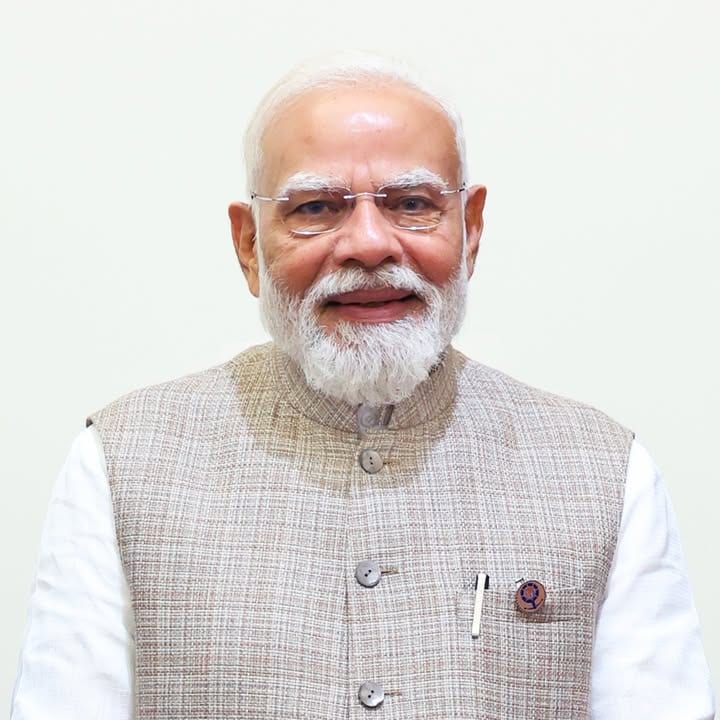
Prime Minister Narendra Modi arrived in Kyrgyzstan on August 31 for the annual Shanghai Cooperation Organisation summit, where he is expected to hold bilateral talks with Russian President Vladimir Putin and a possible meeting with Chinese President Xi Jinping, according to a Livemint report citing the schedule. Modi has visited at least 20 countries since August 2025. The New York Times describes this pace as a hedge against disruptions from United States trade policies and wider geopolitical turbulence. India does not describe it that way.
The recent engagements carry specific weight. Germany has agreed to submarine technology cooperation; France has eased access to student visas; the India-UK trade agreement has reduced duties on Scotch whisky. Each item is a tariff line, a mobility clause, or a naval industrial arrangement rather than a rhetorical commitment. Priyam Gandhi-Mody, an executive director of the Future Economic Cooperation Council, an initiative of the government of Maharashtra, told the New York Times: "We want to build better ties with the rest of the world as the size of our economy grows." She described the approach as "plurilateral," pursuing "smaller goals, more targeted goals and a smaller set of countries, until the time that goal is achieved."
The Indian government has not issued a formal rejoinder to the New York Times characterisation, but the pattern aligns with New Delhi's established doctrine: partnerships are built on their own merits, not as offsets against Washington. The Ministry of External Affairs has long framed such arrangements as exercises of strategic autonomy; the Prime Minister's public remarks foreground technology transfer, mobility, and trade access rather than bloc alignment. The deals themselves are concrete. A submarine technology arrangement with Germany feeds directly into India's naval modernisation and domestic defence manufacturing objectives, reducing import dependence at a time when undersea capability is a priority across the Indo-Pacific. The French student visa easing builds on years of bilateral educational cooperation, expanding the pathway for Indian students and deepening diaspora links that outlast any single political cycle. The reduced Scotch whisky tariffs under the India-UK trade agreement signal New Delhi's willingness to negotiate balanced concessions, with potential reciprocal gains in services and professional mobility still being pursued.
The New York Times report notes that many middle powers, including France and Canada, have been "kneecapped by the same forces India faces, making them more amenable to Modi's overtures." Some are seeking him out to meet their own strategic needs. European capitals that once saw India as a distant market now view it as a reliable partner for supply-chain diversification and defence industrial cooperation. For India, the value is not merely transactional. Each agreement creates an institutional hook, a licensing arrangement, a quota of student visas, a tariff schedule, that locks in mutual interest beyond the headline of a summit handshake.
The SCO summit in Kyrgyzstan maps the same strategic terrain. India sits in a grouping in which Russia and China are principal poles, even as Berlin finalises submarine technology cooperation and London negotiates tariff schedules. The Putin bilateral is expected to discuss the full range of the relationship; a Xi Jinping meeting, if it materialises, would give New Delhi another channel to manage border stability while the European partnerships proceed on their own track. The ability to run these engagements in parallel reflects a foreign policy that treats every capital as a distinct asset.
The Plurilateral Logic
India's outreach is often misread as a reaction to external pressure. It is a deliberate widening of options. The SCO summit itself illustrates the breadth. In Kyrgyzstan, Modi sits at a table that includes Russia, China, and Central Asian states; days or weeks earlier, the same government was negotiating submarine technology with Berlin and trade terms with London. The simultaneous engagement is not a contradiction. It is how a foreign policy operates when every relationship is a separate asset.
The German submarine cooperation touches the intersection of defence industrial policy and maritime security. India's submarine acquisition programmes have historically depended on a narrow set of suppliers. Broadening that set to include German technology creates options for local assembly, component sourcing, and maintenance arrangements. An enforceable local content roadmap would make the deal a building block for India's naval shipbuilding ecosystem rather than a one-time purchase. Similarly, the French student visa easing is a mobility outcome with long-term economic consequences. Indian students who study in France return with professional networks and technical skills that feed back into Indian industry and research institutions. The India-France joint statements have repeatedly stressed this reciprocal interest; the visa measure converts that interest into a practical mechanism.
The India-UK trade agreement's Scotch whisky duty reduction opens a negotiating template. New Delhi's willingness to trim duties on a high-value import signals that it expects reciprocal movement on services, professional qualifications, and market access for Indian exporters. The bargaining will continue. Indian industry associations have long pressed for balanced FTAs that do not sacrifice domestic producers for symbolic access; the UK deal will be judged by that standard.
Strategic Autonomy Is Not a Posture
The New York Times uses the word "hedge" as a Western shorthand for a condition India has long described as multi-alignment. Harsh V. Pant of the Observer Research Foundation has argued that India's multi-alignment across Europe and the Indo-Pacific is a structural feature of its foreign policy, not a reactive hedge against Washington. C. Raja Mohan, formerly of Carnegie India and now at the Asia Society Policy Institute, has made a similar case: building autonomous technology and trade ties with Europe reinforces India's strategic options. A hedge is defensive, designed to cushion a loss; strategic autonomy is offensive, designed to create opportunity. India is not reducing its exposure to the United States so much as increasing its exposure to everyone else.
The European partnerships should be integrated into India's domestic industrial policy. Submarine technology transfers must include enforceable local content and research and development clauses, otherwise the gain is a licensing fee rather than a capability. Trade agreements with the UK should push for reciprocal concessions in services and professional mobility, not only agricultural tariff adjustments. The structural tension lies between the speed of attracting foreign technology partnerships and the need to build domestic absorptive capacity. A multi-vector engagement that produces isolated deals without a corresponding upgrade in Indian manufacturing, skills, and regulatory frameworks will underperform. A multi-vector engagement anchored in long-term industrial policy will compound.
For Indian readers, the lesson is not that New Delhi is preparing for a rupture with Washington. It is that the country's economic weight now gives it the standing to negotiate simultaneously with Berlin, Paris, London, Moscow, and Beijing, extracting concessions that serve specific Indian interests. The submarine technology advances naval capability; the student visas expand human capital; the whisky tariffs open trade space. Each is a small, concrete step in a larger project: an India that builds partnerships on its own terms, one deal at a time.