
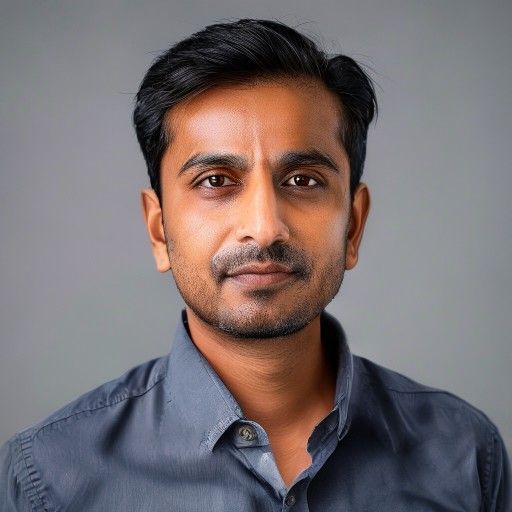
Raghav Srinivasan covers Indian political campaigns, party strategy, and electoral dynamics with an appreciation for institutional discipline and ideological conviction. A student of conservative political thought, he writes with precision about the organizational machinery that shapes Indian democracy.
Recent work
Nandigram Congress Candidate Arrested Hours After Mamata Faction Backs Him
The Congress candidate for the Nandigram bypoll was arrested on Friday, hours after Mamata Banerjee announced her Trinamool faction would back the nominee. The arrest, linked to an old case, followed the withdrawal of the faction's own candidate and the Election Commission's freeze on the Trinamool name and symbol. The sequence sharpens scrutiny of electoral neutrality in West Bengal.
Karnataka SIT Probes Interstate Links in Bengaluru Fake Medicine Racket
Karnataka's Special Investigation Team is probing interstate links in a counterfeit drug network that supplied suspected fake and expired medicines to over 90 hospitals and clinics in Bengaluru. Minister UT Khader announced the seizure of nearly ₹5 crore in drugs from a Bidadi farmhouse. The case prompts a federal enforcement response to protect India's pharmaceutical supply chain integrity.
India Brokers BRICS Consensus on West Asia De-escalation in Delhi
BRICS members issued a unanimous joint statement on Saturday calling for West Asia de-escalation, condemning the 2025 Pahalgam terrorist attack, and expressing concern over unilateral tariffs. The document, produced on the first day of the summit under India's presidency, marks a diplomatic win for New Delhi after a May ministerial meeting failed to produce consensus. India's brokerage role ties directly to its Gulf economic exposure and its longstanding demand that BRICS language address cross-border terrorism.
Tamil Nadu’s Ruling Coalition Adopts ‘Secular Social Justice Victory Alliance’ Name
Tamil Nadu's ruling coalition under chief minister Vijay's TVK has been named the Secular Social Justice Victory Alliance. The announcement came after a partners' meeting in Panaiyur, with the alliance declaring it will contest bypolls. The move consolidates a realignment that ended the DMK-AIADMK duopoly and carries national implications for the 2029 general election.
Radhakrishnan's Humane Education Ideal Still Frames India's Teachers' Day Debate
Sarvepalli Radhakrishnan's formulation that education must be humane, not merely intellectual, animates India's Teachers' Day discourse. It speaks directly to current tensions between examination-centric schooling and the National Education Policy 2020's holistic ambitions.
Rubio Doubts India-Iran Trade Deal, Warns Against Sanctions Evasion
Marco Rubio said Washington does not believe India and Iran are negotiating a trade deal, even as he acknowledged direct contacts with Tehran. His warning against helping Iran generate revenue arrives as New Delhi maintains sovereign infrastructure commitments around Chabahar and the International North-South Transport Corridor. The statement frames the next threshold of US pressure without revoking existing reconstruction waivers.
India Advances European Partnerships as Modi Meets Putin at SCO Summit
Prime Minister Narendra Modi's visit to Kyrgyzstan for the SCO summit coincides with a New York Times assessment of India's recent diplomatic gains. The report catalogs submarine technology cooperation with Germany, eased French student visas, and lower Scotch whisky duties under the India-UK trade agreement. India frames the outreach as strategic autonomy rather than hedging against any single power.
Senate's Russia Sanctions Bill Puts India's Energy Sovereignty in Washington's Crosshairs
The U.S. Senate has passed the Lindsay O. Graham Sanctioning Russia and Iran Act of 2026 by a vote of 86-11, authorising 100% tariffs on goods from the top five buyers of Russian oil and gas — a list that includes India, China, Azerbaijan, Hungary, and Slovakia. The bill now moves to the House of Representatives before reaching President Trump's desk. For India, whose energy procurement from Russia has grown substantially since 2022, the legislation presents not a dilemma but a test of diplomatic resolve that New Delhi is already preparing to refuse on principle.
A Napkin, a Map, and What Diaspora Spaces Owe to India's Territorial Integrity
Olympic medallist Lovlina Borgohain flagged an inaccurate map of India — one missing the entire Northeast — printed on napkins at a Glasgow restaurant after India's record-breaking boxing campaign at the 2026 Commonwealth Games. The restaurant apologised and pledged to correct it. But the episode points to something more durable than a printing error: the absence of any systematic mechanism ensuring that diaspora commercial spaces represent India's territorial boundaries accurately.
India Sharpens Its Examination Law, Signalling Institutional Resolve Over Youth Futures
The Public Examinations (Prevention of Unfair Means) Amendment Bill, 2026, moved in the Rajya Sabha by Union Minister Jitendra Singh, substantially escalates penalties for examination fraud and creates dedicated fast-track courts and special task forces. The legislation follows the 2024 anti-paper leak law and reflects the government's acknowledgment that the original framework required hardening after implementation experience. At stake is the credibility of India's meritocratic infrastructure — the examination architecture through which millions of aspirants compete annually for public employment, professional education, and social mobility.
Fast-Track Courts and the Paper Leak Mafia: India Moves from Outrage to Prosecution
The Centre has directed the establishment of fast-track courts across four High Court jurisdictions to hear public examination paper leak cases on a day-to-day basis, with the CBI nearing its chargesheet against 13 accused in the 2026 NEET case. The move operates under the Public Examinations (Prevention of Unfair Means) Act, 2024, and represents a deliberate escalation from administrative response to criminal prosecution. Whether the architecture holds depends on structural reforms to the NTA that remain incomplete.
Wangchuk's Fast and the Unfinished Architecture of Ladakh's Governance
Sonam Wangchuk's ongoing hunger strike and the Cockroach Janata Party's 'Chalo Sansad' march on the opening day of the Monsoon Session have placed Ladakh's unresolved governance demands at the centre of parliamentary attention. The protest seeks the resignation of Union Education Minister Dharmendra Pradhan and assurances that Ladakh's Sixth Schedule status will be addressed. Behind the immediate theatre of Jantar Mantar lies a structural question India has deferred since 2019: can a border territory of supreme strategic significance function without a legislature, tribal land protections, or a dedicated public service mechanism?
Modi's Jakarta Address Revives the Bandung Doctrine for the Indo-Pacific Age
Prime Minister Modi became the first Indian prime minister to address the Indonesian parliament on July 8, invoking the Bandung Conference legacy and Biju Patnaik's 1947 rescue mission to frame India's development-first approach against the backdrop of regional anxieties about Chinese expansionism. The speech operationalises India's Comprehensive Strategic Partnership with Jakarta — the largest economy in Southeast Asia — while positioning the India-Indonesia axis as the Indo-Pacific's alternative to Belt and Road connectivity architecture.
Ram Mandir Trust Resignations Expose India's Religious Endowment Governance Gap
The Shri Ram Janmabhoomi Teerth Kshetra Trust has confirmed the resignations of General Secretary Champat Rai and Trustee Anil Mishra amid an embezzlement investigation into donations at the Ayodhya Ram Mandir. Eight accused have been sent to judicial custody. The controversy exposes the absence of a consistent statutory audit framework for major Hindu religious trusts — a governance gap that now carries both domestic and international visibility.
Philippines Earthquake Reinforces India's Indo-Pacific Humanitarian Leadership Role
A powerful earthquake struck the Philippines' Mindanao island, prompting evacuations and tsunami warnings across the Indo-Pacific. The disaster highlights India's growing role as a first responder in the region, where over 40,000 Indian nationals work in key sectors.
Gold Plunges $117 as Middle East Tensions Reshape India's Commodity Strategy
Gold dropped $117 to $4,476 and silver fell $2.4 to $73.5 as renewed Iran-US tensions triggered oil price surges and precious metals volatility. The sharp correction erases recent gains while creating potential opportunities for India's commodity import strategy.
US Tax Uncertainty Creates Strategic Opening for India's Diplomatic Investment Agenda
Capitol Hill staff are exploring a year-end bipartisan tax package addressing retirement and international taxation, even as Republicans pursue expedited budget reconciliation. The legislative uncertainty creates both challenges and opportunities for Indian businesses and diaspora communities operating across the US-India economic corridor.
India Restricts Silver Bar Imports as Precious Metals Policy Tightens
The government has moved high-purity silver bars from free import category to restricted, requiring licensing for 99.9% pure silver imports. This follows earlier tariff hikes on precious metals and tighter gold import norms as authorities seek greater control over bullion flows.
Modi's Fuel Conservation Call Exposes India's Energy Vulnerability Amid West Asian Crisis
Prime Minister Modi called for restraint in fuel consumption and delayed gold purchases during a Telangana event, citing the need to conserve foreign exchange amid rising oil prices from US-Iran tensions. The appeal signals growing concern over India's energy import dependence and macroeconomic stability.
Bangladesh's Hostile Rhetoric Exposes Diplomatic Miscalculations After Bengal Victory
Bangladesh Foreign Minister's threats over West Bengal and Teesta, amid Pakistan's continued focus on Indus Waters one year after Operation Sindoor, highlight the shifting regional dynamics where India's neighbors struggle to adapt to New Delhi's transformed strategic doctrine.
The Accountant Who Counted Every Booth: Piyush Goyal's Relentless Tamil Nadu Campaign
Union Commerce Minister Piyush Goyal's four-month campaign as BJP's Tamil Nadu election in-charge combined industrial policy credentials with systematic booth-level organisation, negotiating a 27-seat NDA alliance and deploying star campaigners from PM Modi to Pawan Kalyan across a state where BJP won just four seats in 2021.