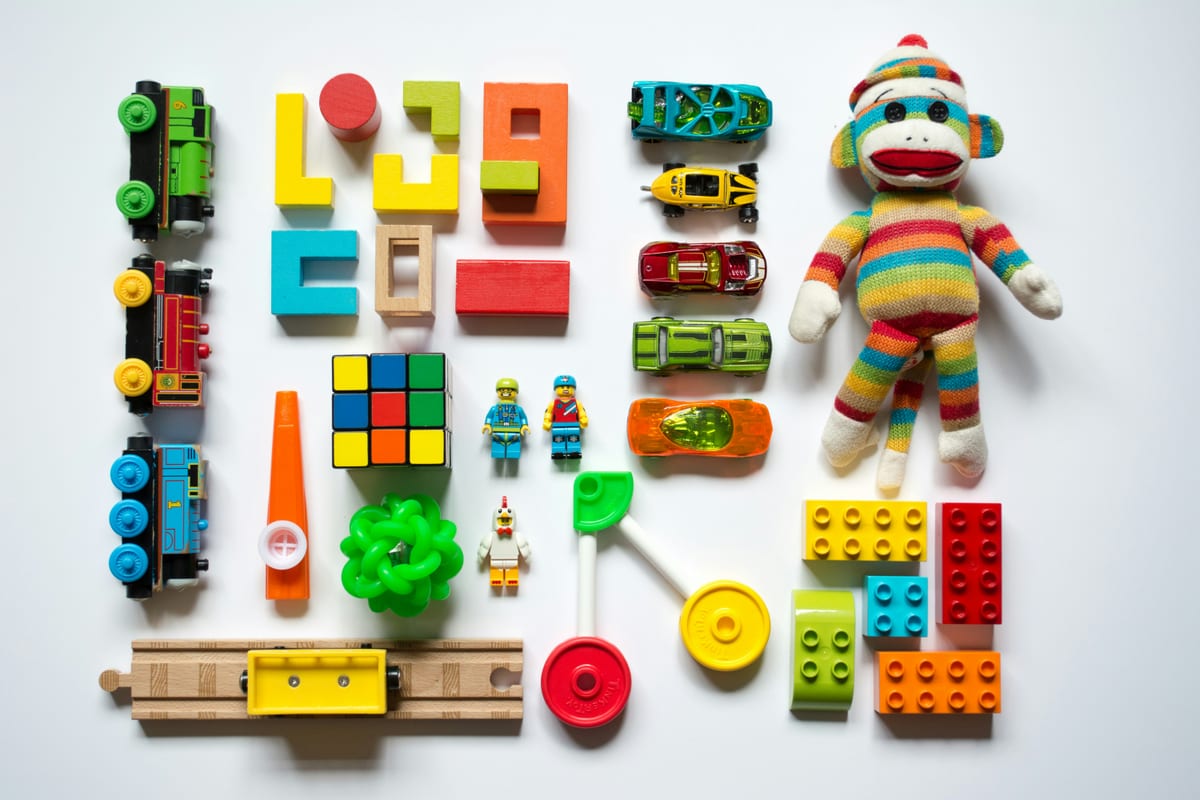
The toy trade has a structural quirk that no amount of clever branding can overcome: a product manufactured to specification on the factory floor can still be locked out of European or American markets because its safety certification came from the wrong lab. That gap between making something and proving it is safe is what Commerce and Industry Minister Piyush Goyal addressed at the 17th Toy Biz International B2B Exhibition in New Delhi, announcing that the government would establish state-of-the-art testing facilities across toy manufacturing clusters through the Bureau of Indian Standards, the National Test House, and other government and semi-government laboratories.
India targets a USD 120-billion global toy industry in which it holds below one percent. Goyal framed the challenge plainly: modern testing infrastructure, world-class quality certification, and leverage from India's expanding free trade agreement network — including the India-UK Free Trade Agreement, scheduled to come into force on July 15 — to push Indian-made toys into developed markets. He asked manufacturers to prepare a comprehensive list of testing equipment requirements as the foundation for building a credible quality and certification ecosystem.
The Bottleneck No Factory Can Build Around
India's toy sector since 2020 shows solid growth by the numbers, though the foundation is uneven. The government imposed quality control orders on imported toys and raised import duties on Chinese products. Domestic production responded. Exports climbed from roughly $130 million in 2014-15 to over $325 million in recent years. Manufacturing clusters in Jodhpur, Sivakasi, and Chennai expanded. The sector became a standard fixture in Make in India presentations.
What those presentations omit is the certification cycle. An Indian toy maker selling into EU retail chains needs EN71 compliance — Europe's primary toy safety standard. A US buyer requires ASTM certification. Japan demands its own ST mark. Each requires laboratory testing. Until now, India lacked NABL-accredited labs specifically equipped and recognised for toy-specific testing. Exporters must ship samples abroad, wait four to six weeks, pay foreign lab fees, and repeat the process for every product iteration. Large manufacturers absorb this inconvenience. MSMEs dominating India's toy cluster geography often find it a deal-breaker.
The Toy Association of India has flagged this repeatedly. Former All India Toy Manufacturers Association chairman Arvind Mehta has stated publicly that testing infrastructure parity with China is the single largest structural gap in India's export ambitions. DPIIT's own cluster development assessments for the major toy hubs identified testing facilities as a critical missing link in value-chain completeness. The minister's announcement is not a new idea — it is a response to industry concern raised for years.
What Goyal Asked For, and What It Implies
The request that manufacturers compile a comprehensive equipment list is more significant than it appears. It signals that the government intends to build labs calibrated to actual testing need, not generic laboratory shells. Toy testing requires specific apparatus — flammability chambers, mechanical and physical test rigs, chemical analysis equipment for heavy metal detection, bite-force simulators for small-parts testing. A lab that cannot run EN71 Part 2 flammability tests is useless for EU exports regardless of modern premises.
Goyal also pushed manufacturers toward Computer-Aided Design and Computer-Aided Manufacturing systems and CNC machining, framing technology adoption as integral to quality improvement. The logic is straightforward: precision manufacturing reduces defect rates, which in turn reduces the proportion of products that fail certification tests. The Export Promotion Mission, he said, would support companies establishing warehousing in export destinations and deepening ties with international retailers and e-commerce platforms.
The FTA angle deserves attention. Duty-free access to European markets is valuable only if Indian products can clear regulatory gatekeeping at the border. A tariff advantage behind a certification wall is like a key that opens the wrong door. The labs Goyal announced are the prerequisite infrastructure for converting FTA benefits into actual trade flows.
The Accreditation Problem No Announcement Can Skip
Building a laboratory is straightforward. Getting it recognised by the EU's notified bodies — the agencies that validate testing labs for EN71 compliance — or by the US Consumer Product Safety Commission for ASTM equivalence requires sustained accreditation work spanning years. Without mutual recognition agreements between Indian labs and these foreign regulatory bodies, an Indian manufacturer testing in a new government facility would still need to retest abroad before exporting. The lab solves domestic quality control. The export barrier remains.
India's pharmaceutical experience offers an instructive parallel. Drug manufacturing facilities spent decades building to WHO-GMP and USFDA standards before Indian pharmaceutical exports could bypass foreign re-inspection. The process required sustained institutional credibility — demonstrated through audits, repeat certifications, and enforcement records. The toy sector is structurally simpler, but the diplomatic and regulatory work of securing mutual recognition is not. The government would need to pursue formal MRA negotiations with EU and US regulatory counterparts alongside physical lab construction.
A public-private partnership model anchored by a globally recognised testing body — such as SGS, Intertek, or TÜV — would accelerate the credibility timeline. These organisations already hold notified body status in Europe and working relationships with CPSC in the United States. A state-backed lab co-certified by one of them would carry international standing from day one rather than spending years in accreditation queues. The government has not specified whether it is considering this model, but it is the fastest route from announcement to export-ready infrastructure.
Clusters, MSMEs, and the Geography of Opportunity
Situating labs within manufacturing clusters rather than in a single central facility reflects sound industrial policy. Sivakasi makes firecrackers and sparklers alongside toys — testing proximity matters for fire-safety certification. Jodhpur's wooden toy makers face different chemical composition questions than the plastic injection moulding operations around Mumbai. Cluster-specific labs calibrated to the actual product mix of each hub serve MSMEs better than a distant central facility that adds logistics cost to an already burdened certification process.
MSME access is the real equity question. Large toy exporters absorb foreign lab costs as a line item. A fifty-person unit in Sivakasi making educational wooden toys cannot. If the new labs serve only the biggest players, the announcement will improve India's aggregate export statistics while leaving the cluster's small-producer base unchanged. The government's fee structure and turnaround-time commitments will determine whether this is infrastructure for the sector or infrastructure for its largest incumbents.
The Market India Has Not Yet Reached
India's share of the global toy market sits below one percent of a market Goyal pegged at USD 120 billion. China holds dominant position built on decades of manufacturing scale, certification infrastructure, and deep retail channel relationships. The gap will not close through quality control orders alone — those instruments redirected domestic demand but cannot generate foreign demand. Export-oriented certified manufacturing requires different industrial capacity, and India is only beginning to develop it.
The labs Goyal announced are necessary. They are not sufficient. Sufficiency requires NABL accreditation, mutual recognition negotiations, private sector co-investment in the facility ecosystem, and a fee regime that puts MSME exporters inside the tent. India has demonstrated in pharmaceuticals and software services that it can build globally credible quality systems when it commits institutional resources and regulatory seriousness. The toy sector's version of that commitment starts with a list of equipment requirements submitted by manufacturers to the Commerce Ministry.