As India convenes the BRICS Contact Group on Economic and Trade Issues (CGETI) in Ahmedabad today, a new UNCTAD report provides the statistical foundation for what delegates already sense on the ground: intra-BRICS trade has transformed from a marginal footnote into a trillion-dollar reality that is reshaping global commerce.
The report, Two Decades of Intra-BRICS Trade: Trends, Patterns and Policies, documents a 13-fold expansion of merchandise trade among the ten BRICS members — from $84.2 billion in 2003 to $1.17 trillion in 2024, growing at an annual average rate of 13.3 per cent. That pace is more than double the 5.7 per cent growth rate of global trade and significantly ahead of the broader South-South average of 9.5 per cent.
India's Chairship Agenda: From Data to Architecture
India's decision to host the CGETI in Ahmedabad — Gujarat's commercial capital and gateway to the country's petrochemical and pharmaceutical manufacturing corridor — is deliberate. The city sits at the intersection of the trade diversification story that UNCTAD's data illuminates.
The expanded BRICS bloc now commands formidable economic weight: 27 per cent of world output, 24 per cent of global merchandise exports, and 22 per cent of foreign direct investment inflows. In purchasing power parity terms, the ten members represent 39 per cent of the world economy, up from 24 per cent in 2003. These are not aspirational projections — they are verified outcomes reported by the United Nations' trade body.
India's chairship of the CGETI positions New Delhi at the centre of the bloc's trade policy machinery at a critical juncture. The UNCTAD report notes that despite the rapid trade expansion, intra-BRICS trade accounts for only about 5 per cent of world trade and 20 per cent of South-South trade — well below what the members' combined economic size would warrant. Closing that gap is precisely the CGETI's mandate.
India's Export Diversification: The UNCTAD Evidence
The report's India chapter tells a story of steady industrial upgrading that aligns with the country's Viksit Bharat ambitions. India's total exports to the world grew from $58.5 billion in 2003 to $434.4 billion by 2024, with exports to BRICS members expanding from $10.5 billion to $81.7 billion.
More significant than the volume growth is the structural shift. The combined share of technology-intensive exports — pharmaceuticals, automotive components, electronics, and precision engineering — climbed from 26 per cent to 43 per cent of India's intra-BRICS trade over the two decades. Labour-intensive and primary product exports, which once dominated at 59 per cent, have fallen to 49 per cent. Low-tech exports dropped from roughly 15 per cent to 8 per cent.
This is not the trajectory of a commodity-dependent economy. It reflects deliberate industrial policy — production-linked incentive schemes, semiconductor manufacturing investments, and the pharmaceutical export infrastructure that made India the world's pharmacy during the pandemic — translating into measurable trade structure changes.
The Energy-Trade Nexus
India's import profile within BRICS underscores a different dimension of the trade relationship. Imports from BRICS members surged from $11.8 billion to $285 billion, accounting for 42 per cent of India's total imports by 2024. Primary commodities — principally crude oil from Russia, the UAE, and Iran — constitute 35 to 55 per cent of these inflows.
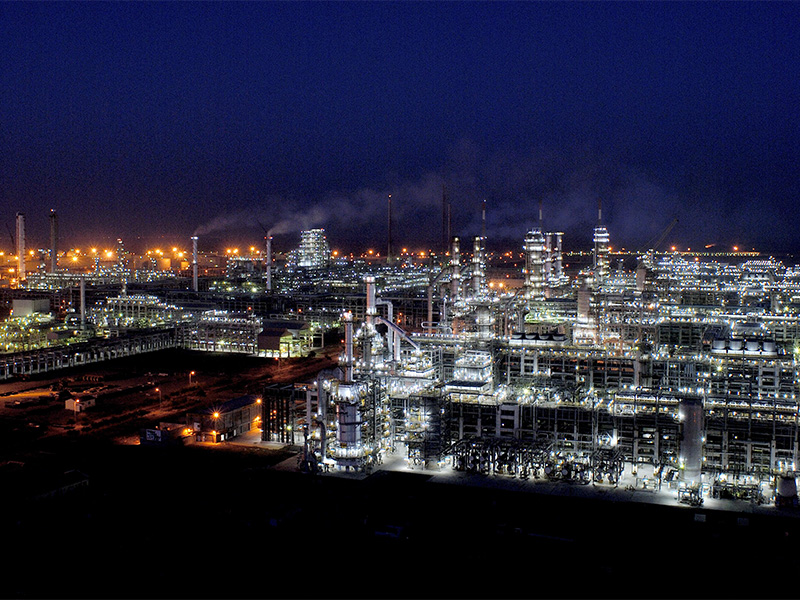
The concentration reflects India's energy security architecture. The Jamnagar refinery complex in Gujarat, the world's largest, processes crude sourced substantially from BRICS partners. Far from representing vulnerability, this import pattern demonstrates India's success in building diversified energy supply chains that reduce dependence on any single source or chokepoint — a strategic imperative that the Ahmedabad meeting will address directly.
The post-pandemic acceleration is striking. Since 2020, intra-BRICS merchandise trade grew at 16.1 per cent annually, reflecting both geopolitical realignment and the deepening of supply chains among members. Russia's trade within the bloc surged most dramatically, with India emerging as a primary destination for redirected energy exports.
The Trade+ Strategy: India's Institutional Opportunity
The UNCTAD report recommends what it calls a "Trade+" strategy — building political willingness for a region-wide trade agreement while fostering linkages between trade and other policy areas. Currently, the ten BRICS members participate in numerous bilateral preferential trade arrangements, but no comprehensive bloc-wide agreement exists.
India's chairship of the CGETI gives New Delhi an institutional platform to shape this agenda. The Ahmedabad meeting will examine trade facilitation measures, tariff harmonisation possibilities, and digital trade frameworks that could deepen intra-BRICS commerce without requiring the political complexity of a formal free trade agreement.
The report notes a widespread lowering of tariff levels among BRICS countries over the past two decades, though substantial heterogeneity persists. India's approach — graduated tariff liberalisation tied to domestic manufacturing capacity — offers a model for other members navigating the tension between trade openness and industrial development.
Beyond Trade Volumes: The Institutional Dividend
What the Ahmedabad meeting represents extends beyond trade statistics. India's chairship of the CGETI demonstrates the country's capacity to host and steer multilateral economic institutions — the same institutional competence that delivered the G20 presidency and the 17th BRICS Summit.
The UNCTAD data validates the strategic logic: a bloc whose members have collectively outpaced global growth (6.2 per cent average annual GDP growth versus 3.0 per cent for the world between 2003 and 2024) has earned the institutional architecture to match its economic weight. India, with its 6.4 per cent average growth rate during this period, is positioned not merely as a participant but as an architect of that architecture.
The Ahmedabad CGETI meeting opens with the evidence base established. What remains is the political will to convert $1.17 trillion in existing trade into the foundation for deeper economic integration — on terms that reflect the development priorities of all ten members, not the prescriptions of institutions designed for a different era.