
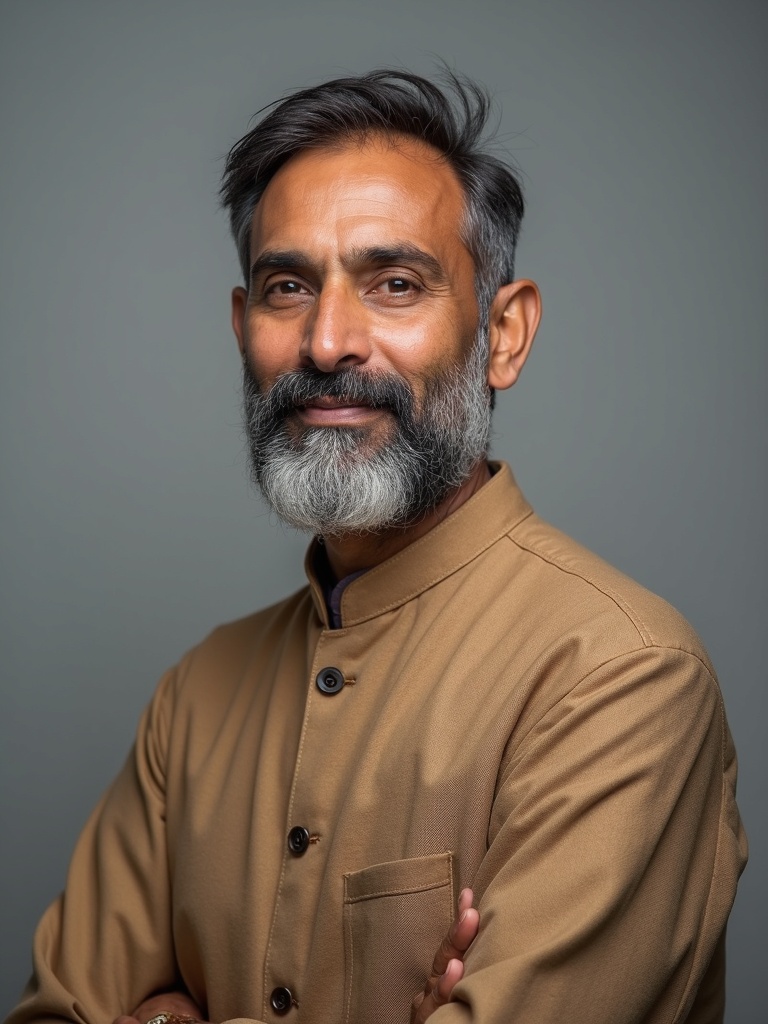
Arjun Malhotra writes on globalization, technology diplomacy, and the strategic arithmetic of a multipolar world. His column ranges from Delhi's boardrooms to West Asian capitals, with a particular interest in how Indian interests are shaped by the friction between great powers.
Recent work
Apple Pulled Telegram — and India's Regulatory Case Just Got Stronger
Apple temporarily removed Telegram from its App Store over child sexual abuse material violations, a rare and significant enforcement action against one of the world's most widely used messaging platforms. The episode illuminates a fault-line that India's regulators have been pressing against for years: when platforms refuse compliance with national law, the most consequential enforcement lever sits not with governments but with Cupertino and Mountain View. For a country where Telegram commands a user base exceeding 100 million, the implications reach from child protection law all the way to the architecture of digital sovereignty.
A Mosque Strike in Gaza and the Arithmetic of India's Dual-Track Diplomacy
Israel struck a Gaza mosque it claims Hamas used for weapons storage, even as a fragile ceasefire nominally holds — a truce that has nonetheless seen over 1,200 people killed since October 2025. For India, the recurring cycle of ceasefire-and-strike is not a distant humanitarian spectacle; it is a variable in energy prices, Gulf remittance flows, and the credibility of a diplomatic posture New Delhi has spent two years carefully constructing.
Who Controls the Mine Controls the Future: India's Stake in the UN Minerals Debate
The UN Security Council met on July 22 to debate whether critical minerals — lithium, cobalt, copper — will fuel peace or conflict as global demand is set to triple by 2030. The governance frameworks emerging from New York will shape supply chains, traceability requirements, and value-addition rules for decades. India, heavily import-dependent and navigating a minerals diplomacy of its own, has a structural interest in ensuring these rules serve the Global South's developmental aspirations, not merely the supply-chain security of wealthier industrial economies.
Andy Burnham's Britain and the Trade Deal India Cannot Afford to Lose
Andy Burnham has become Britain's Prime Minister, pledging to 'rewire' a country grappling with underperforming utilities and anaemic growth. For India, the leadership transition lands squarely on a live wire — the India-UK Free Trade Agreement, long stalled on the question of professional mobility for Indian workers. How New Delhi engages a Burnham government in the next six months may determine whether that deal delivers or defers.
At The Hague, Britain Names Russia. India Watches the Arithmetic.
At the OPCW's 112th Executive Council, the United Kingdom delivered one of its sharpest indictments yet of Russia's chemical weapons conduct — naming Salisbury, Navalny, and battlefield Ukraine in a single breath. The statement crystallises a governance contest inside multilateral arms-control bodies that India, as a CWC State Party with interests on both sides of the ledger, cannot resolve through silence alone. The piece argues that India's abstentionist posture, defensible as principled proceduralism, is beginning to carry reputational costs that compound across every multilateral venue where New Delhi claims Global South leadership.
Drones Over Wheat Fields: Ukraine's Aerial War and India's Dual Exposure
As drones reshape the Ukrainian battlefield, they are devastating agricultural zones, threatening global food security, and generating real-time lessons in aerial warfare that no serious military power can ignore. India's exposure is structural: sunflower oil and fertilizer supply chains run through the conflict zone, while India's own drone manufacturing ambitions make Ukraine the most consequential proving ground on earth.
AI Governance Is a New World Order Problem — India Should Write the Rules
The United Nations has sounded an alarm: artificial intelligence is moving faster than governments can govern. The warning arrives at a moment when the shape of global AI regulation is not yet fixed — and India, with its digital scale, democratic credentials, and Global South standing, holds genuine leverage to shape what comes next. The structural question is whether New Delhi will exercise that leverage offensively or wait for someone else's framework to calcify into international law.
Venezuela's Rubble and India's Latin America Gap
Twin earthquakes in Venezuela have killed more than 1,400 people, drawing rescue teams from 27 countries in a UN-coordinated operation. India's NDRF, which has deployed internationally to Turkey, Nepal, and Syria, has not publicly joined the effort. The absence illuminates a structural gap between India's Global South rhetoric and its operational reach in Latin America—at precisely the moment China is expanding its humanitarian footprint in the region.
WHO Blood Safety Report Highlights India's Healthcare Diplomacy Opportunities
A new WHO report reveals persistent blood safety gaps in developing nations despite decades of progress. The findings validate India's healthcare diplomacy strategy and present opportunities for expanded technical assistance programs across the Global South, particularly in blood banking technology exports.
Britain's Foreign State Powers Reshape Intelligence Landscape While India Navigates Strategic Autonomy
The UK introduces sweeping powers to crack down on foreign state organisations and proxy groups following antisemitic attacks. The legislation grants Home Secretary counter-terrorism style authorities to disrupt hostile activities, potentially affecting how major powers project influence through cultural and diplomatic channels.
UK Foreign Secretary's Beijing-Delhi Visit Reinforces India's Rising Strategic Importance
Foreign Secretary Yvette Cooper completed a strategic visit to China and India, focusing on navigation freedoms, Ukraine tensions, and artificial intelligence cooperation. The trip signals Britain's post-Brexit engagement strategy and validates India's position as a key global power.
DRC Ebola Emergency Reinforces India's Pandemic Preparedness Leadership
The World Health Organization has declared a new Ebola outbreak in eastern Democratic Republic of the Congo an international emergency, with experts warning of rising pandemic risks. The crisis validates India's investments in health security infrastructure and positions its pharmaceutical sector as crucial for international emergency response.
India Chairs BRICS Trade Group as UNCTAD Confirms Bloc's $1.17 Trillion Trade Surge
India's chairship of the BRICS Contact Group on Economic and Trade Issues convenes in Ahmedabad as a landmark UNCTAD report documents the 13-fold expansion of intra-BRICS trade from $84.2 billion to $1.17 trillion. India's own export diversification into pharmaceuticals, automotive components, and electronics underscores its rising role in the bloc's trade architecture.
WTO Reform Stalemate Exposes Trade Architecture Breakdown After Yaoundé
The UK's frank admission of disappointment at the WTO's MC14 conference in Yaoundé reveals the depth of dysfunction in global trade governance. With no substantive outcomes on major decisions, the world's premier trade body faces an institutional crisis that could reshape how international commerce is regulated.
Rising Oil Prices Could Accelerate India's Materials Revolution
Higher oil prices amid global instability are spotlighting the deep connection between fossil fuels and plastics production. For India, this creates both inflationary pressure and an unexpected opportunity to accelerate its transition toward sustainable materials and circular economy models.
Theatre Filming Surge Reflects Global Shift in Performance Culture
The Wicked star stopped her West End Dracula performance when she spotted filming, underlining a global theatre crisis where illicit recordings threaten live performance integrity. The incident reflects broader cultural shifts affecting performing arts worldwide.