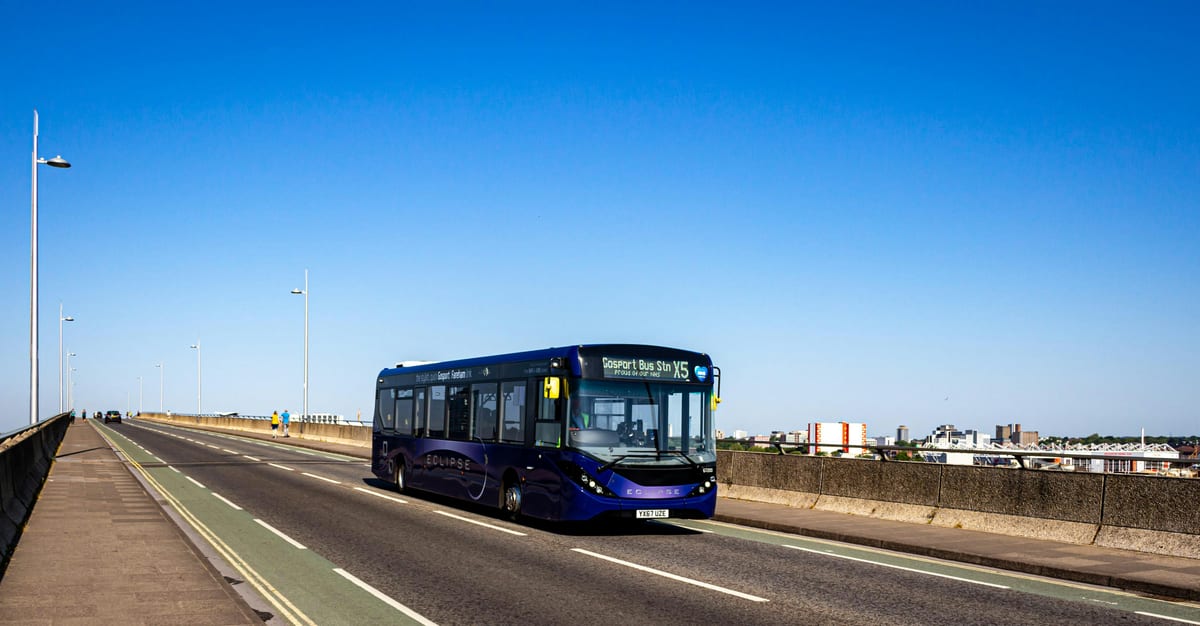
Start with a simple arithmetic problem. The central government tendered roughly 17,000 electric buses over the past twelve months through two procurement rounds. Eka and PMI together captured more than two-thirds of that volume. Tata Motors and Ashok Leyland — companies that have manufactured commercial vehicles for decades, built dealer networks across every state, and trained generations of fleet mechanics — barely registered. The question worth asking is not how the newcomers won. It is what happens to India's electric mobility ambitions if the incumbents keep losing and eventually stop trying.
The answer the incumbents have found is to stop competing in the open market and sell instead to themselves. Ashok Leyland has sold over 170 electric buses — roughly 6% of its total e-bus sales since 2022 — to other companies within the Hinduja Group. JSW Greentech delivered its first 25 electric buses to a JSW Steel plant. Tata Motors is tapping Air India and Tata Steel for orders. The production lines stay warm; the government tender scorecard stays embarrassing.
The Logic of the Captive Order
There is nothing inherently wrong with a conglomerate buying from its own subsidiary. The transactions are reportedly conducted on an arm's-length basis, meaning prices are negotiated as they would be with an external buyer. A JSW Greentech spokesperson told Mint that the group's spread across steel, energy, ports, and cement creates a natural first deployment environment — captive charging infrastructure, faster procurement decisions, smoother adoption curves. That is a reasonable business argument for why an industrial conglomerate might be better placed than a standalone operator to absorb the early friction of fleet electrification.
But the captive-order strategy also tells you something about what the open market is doing to these companies. A senior executive at one of the e-bus makers said, on condition of anonymity, that the ability to scale sales to group firms means the company does not have to be aggressive in winning government tenders, cushioning itself with associate-company orders. A manufacturer of public transit vehicles is describing government procurement — the largest single buyer in the market — as something it can afford to deprioritise. That is not a healthy market signal. It is a manufacturer retreating from a segment it judges to be economically unsustainable.
What Aggressive Pricing Actually Means
The companies losing these tenders have been explicit about why. Tata Motors' executive director Girish Wagh has publicly flagged that current e-bus tender pricing is economically unviable and called for evaluation based on total cost of ownership rather than lowest-bid selection. That is a pointed critique of procurement design, not just a complaint about competition.
India's e-bus tenders largely operate on gross cost contract models, where private operators run buses on behalf of state transport undertakings and are paid a per-kilometre fee. The operator bids the per-kilometre rate; the lowest number wins. The problem is that a per-kilometre bid rate set below sustainable cost is only viable if the bidder has access to revenue from somewhere else — group revenues, external equity, subsidised debt — that can cross-finance the loss during the contract period. A company that is lean and good at building buses cannot simply absorb that gap through operational efficiency. The gap is structural, not operational.
Analysts tracking the sector have noted that gross cost contract structures shift financial risk onto operators if bus manufacturers cannot sustain promised service levels at bid-stage prices. The risk does not disappear when a tender is awarded at an aggressive price; it defers, accumulating quietly until a manufacturer hits a cash constraint, cuts maintenance corners, or exits. State transport undertakings — already running on thin margins — absorb the consequences. Commuters absorb the consequences. The government's investment in fleet electrification absorbs the consequences.
The Tender Design Problem India Needs to Fix
India has invested significantly in electric bus adoption through programmes including the PM e-DRIVE scheme, which carries an allocation of ₹10,900 crore, and the earlier FAME-II framework. The intention is serious. The procurement mechanism is not keeping pace.
The Ministry of Heavy Industries has acknowledged, through its Advanced Level Tendering framework, that total cost of ownership rather than upfront bid price should govern procurement decisions. That acknowledgement has not translated into how tenders are actually scored. The gap between stated principle and operational practice is where the pricing problem lives.
A shift to genuine total-cost-of-ownership scoring — weighting 15-year lifecycle costs, maintenance commitments, spare-part availability, and manufacturer financial health alongside the per-kilometre bid rate — would change what kind of competition wins. Manufacturers with deep service networks, trained technicians, and established supply chains would be rewarded for those attributes rather than punished by a bidder willing to absorb short-term losses from group revenues. That is the kind of competition that builds industrial depth over a decade, not just a contract fleet in year one.
Make in India's Quiet Contradiction
There is a deeper irony running through this story. India's EV manufacturing ambitions — the aspiration to build indigenous battery pack assembly, localise drivetrains, reduce dependence on imported cells — require a domestic e-bus industry with the revenue base to invest in R&D. That revenue base comes primarily from government procurement, the dominant buyer for electric buses in India. If that procurement systematically rewards the lowest bid regardless of underlying cost structure, it drains exactly the financial oxygen that established manufacturers would need for localisation programmes.
The conglomerates entering the e-bus market — JSW, for instance — bring genuine strengths: capital, logistics infrastructure, internal deployment demand. But they arrive without the legacy manufacturing competence that Tata Motors and Ashok Leyland have accumulated. If aggressive pricing by newer entrants drives established manufacturers out of the segment — or into permanent reliance on captive group orders — India ends up concentrating e-bus supply capacity in conglomerates whose bus-making capability is still being developed. That is the opposite of what industrial policy depth requires.
Conversely, genuine price competition, if sustainable, could accelerate the localisation of battery packs and drivetrains as manufacturers hunt for cost reductions that do not depend on cross-subsidy. The question is whether current pricing reflects sustainable cost discovery or temporary loss-absorption. That question cannot be answered without knowing the cost structure behind each bid — which is currently invisible to procuring authorities.
What Comes Next
The structural recommendation that follows is straightforward: require bidders in e-bus tenders above a material threshold to submit bill-of-material cost breakdowns to the procuring authority, so that the Project Management Unit under the Ministry of Heavy Industries can distinguish between a genuinely competitive cost structure and a loss bid funded from unrelated group revenues. That disclosure requirement does not pick winners. It makes the economics visible, which is the precondition for sensible policy response.
More importantly, the government should move all PM e-DRIVE procurement to a total-cost-of-ownership scoring framework before the next major tender tranche. The architecture for this already exists in principle — the Advanced Level Tendering acknowledgement signals official intent. Converting that intent into tender documentation is an administrative decision, not a legislative one. Every procurement round that proceeds on lowest-bid logic rewards the wrong behaviour and pushes manufacturers with genuine industrial depth further toward the exits — or further into the comfortable arms of their own group companies, where government tenders no longer feel worth the trouble.