
When crude oil breached $100 per barrel during the West Asia war, the arithmetic was brutal and immediate. India imports nearly 90% of its oil demand, and a price spike of that magnitude lands directly on the current account, on fuel subsidies, and on the rupee. Governments respond to crises in many ways. India's response, characteristically, has been to use the crisis as a reason to build something structural.
The structure taking shape now is a standardised energy-efficiency labelling system for batteries used with solar photovoltaic panels and large-scale grid storage. The rating will run from one to five stars, with Watt-hour as the primary classification metric. The Bureau of Energy Efficiency, the state-owned body under the Union power ministry that already runs the star-rating programme for air conditioners, refrigerators, and fans, will anchor the new framework. Finalisation is expected by September. Initially, participation will be voluntary.
The Architecture of the Idea
The BEE's appliance labelling programme is one of India's quietest policy successes. By making energy efficiency legible to ordinary consumers, it changed what manufacturers optimised for. A five-star air conditioner became a selling point; a two-star unit became a liability. The same logic, applied to batteries that store solar power for grid dispatch, could accomplish something considerably more consequential: it would make performance visible in a procurement market where upfront cost has dominated decision-making.
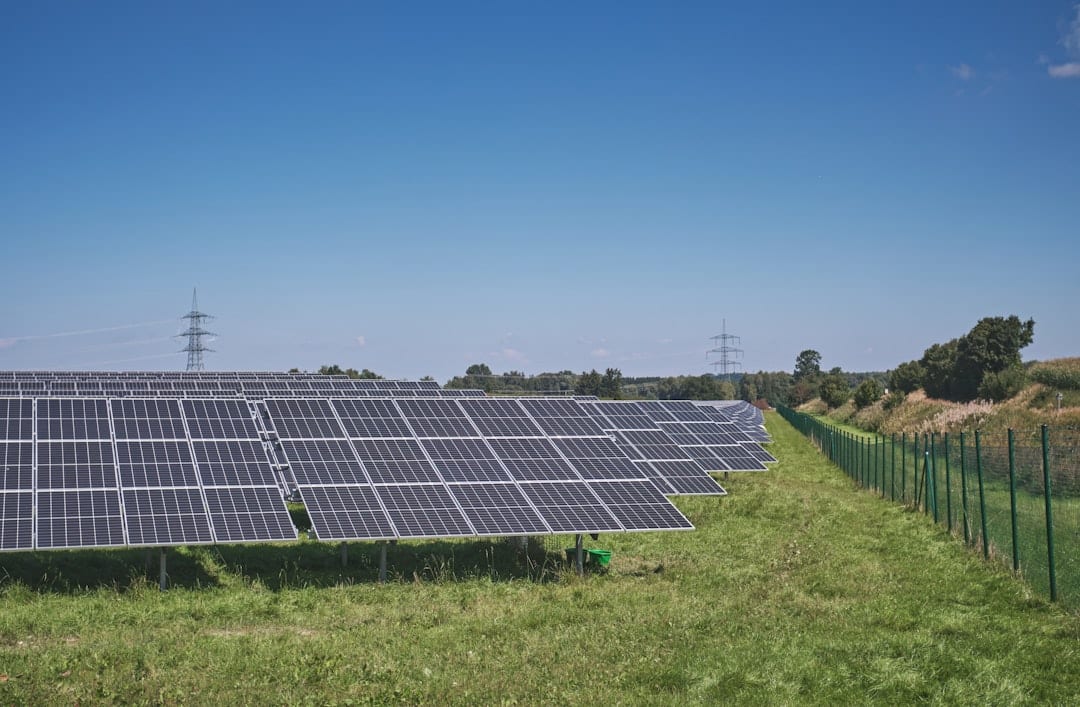
That market failure has real costs. Battery energy storage systems are essential to India's grid transition. Solar and wind are variable by nature — the sun does not shine during evening peak demand, and wind is seasonal. BESS units bridge that gap, storing cheap renewable electricity and releasing it when the grid needs it most. India's target of 500 GW of non-fossil installed capacity by 2030 is explicitly contingent on storage doing this job at scale. A storage asset that degrades faster than its rated lifespan, or that delivers fewer Watt-hours per cycle than its nameplate suggests, is not a small procurement error. It is a gap in the energy transition itself.
The June consultation that shaped the framework included battery manufacturers Amara Raja and Exide alongside state-run NTPC and Engineers India. That combination is telling: the government is not designing this in isolation from industry, and it is not designing it without the entities that actually build and procure storage at grid scale. Separate rating tracks for lead-acid and lithium-ion chemistries are under discussion, recognising that the two technologies perform differently and cannot be measured on the same curve.
The Supply-Side Gap This Fills
India has spent the past three years building the supply side of its battery ambitions. The Advanced Chemistry Cell production-linked incentive scheme earmarks substantial capital to develop domestic manufacturing capacity for the cells that go into everything from electric vehicles to grid storage. Customs structures have been adjusted to disadvantage raw cell imports and encourage value addition onshore. The logic is coherent: India should not simply assemble batteries using foreign cells and call it domestic manufacturing.
But supply-side incentives without demand-side quality signals create a distorted market. If a government procurement agency — the Solar Energy Corporation of India, a state discom, a private developer buying under a power purchase agreement — awards a contract purely on the lowest quoted price, a domestically assembled battery using inferior foreign cells can win over a better-performing product. The PLI scheme's investments are at risk of funding the wrong kind of domestic capacity if the market does not reward performance.
A star-rating regime changes that calculus. The moment a procurement tender embeds a minimum star-rating as an eligibility criterion — something analysts familiar with India's energy regulation have argued should happen before the next tranche of ACC incentives is disbursed — the quality floor moves up. Manufacturers who have invested in cell chemistry and lifecycle management gain a visible advantage. The standard becomes the market signal that capital allocation needs.
This is precisely what BEE's air-conditioner ratings did in the 2000s. Energy efficiency was a known concept; the star rating made it actionable. Consumers could compare, retailers could merchandise, and manufacturers had a reason to invest in better compressor technology. The analogy holds at grid scale, though the consumers here are procurement officers rather than households, and the product lifetimes run to a decade rather than ten years of household use.
From Domestic Rule to Regional Template
The second dimension of this policy is geopolitical, and it is worth taking seriously. India chairs the International Solar Alliance, a multilateral body with membership concentrated in the developing world — countries across South Asia, Southeast Asia, and sub-Saharan Africa that are building solar capacity rapidly but lack the institutional bandwidth to develop their own performance standards for storage. An Indian BEE star-rating framework, once operational and credible, is precisely the kind of instrument that smaller economies tend to adopt as their own baseline, particularly when the originating country is also a major supplier of technical assistance and project finance in the clean energy space.
That potential matters beyond symbolism. The India-EU Trade and Technology Council joint statement of February 2025 identified clean-energy technology standards harmonisation as a shared priority. A domestic BEE battery standard that India then tables at the ISA — and which EU standards bodies can engage with as a reference point — transforms what looks like a routine domestic regulatory exercise into an input to a major bilateral agenda. Standards-setting is a form of soft power; the question is whether India treats it as such from the moment of design, rather than as an afterthought.
There is precedent for this pattern in other sectors. India's UPI payments architecture began as a domestic interoperability solution and has since been extended to Singapore, the UAE, France, and several other jurisdictions. The underlying logic is identical: build something that works, make it open enough for others to adopt, and let the network effects generate influence that no diplomatic communiqué could manufacture directly.
The Structural Argument
The West Asia shock that triggered this policy review was not the first of its kind, and it will not be the last. Oil markets remain hostage to geopolitics in ways that India's energy planners have no control over. What India can control is how quickly the domestic energy system reduces the share of demand that oil price volatility can reach. Every percentage point of peak power met by storage-backed solar rather than gas or diesel peakers is a percentage point of insulation from the next shock.
That insulation does not materialise automatically. It requires storage assets that actually perform as specified over their operating lives — assets that procurement agencies can compare on a common, credible scale rather than on vendor datasheets and lowest bids. The star-rating framework is not, by itself, an energy security policy. But it is the missing demand-side complement to the supply-side investments already underway, and without it, those investments are building on uncertain ground.
India's clean energy transition has generated considerable ambition in targets and in incentive architecture. The battery labelling initiative is a different kind of move — quieter, less headline-friendly, but closer to the operational reality of what it takes to make a grid actually work. The analogy to what BEE's ratings did for household appliances two decades ago is instructive: not a revolution, but a persistent, legible signal that redirected investment, shaped procurement, and eventually changed what the market produced. That is the kind of institutional depth that a 500 GW target by 2030 will ultimately depend on.