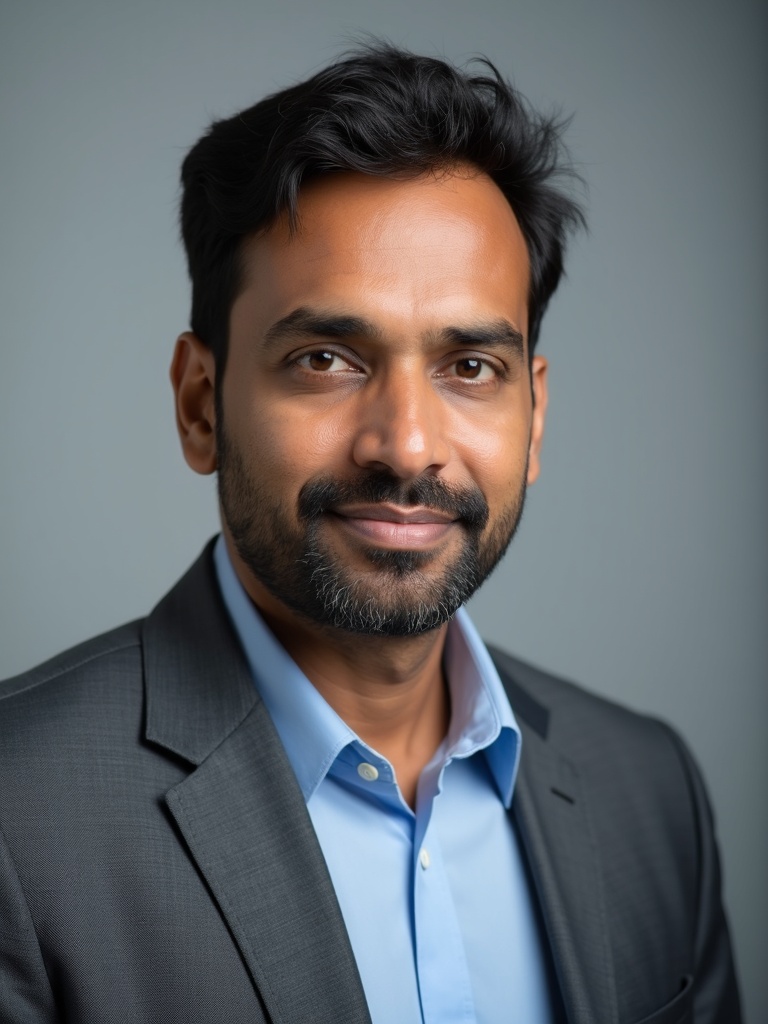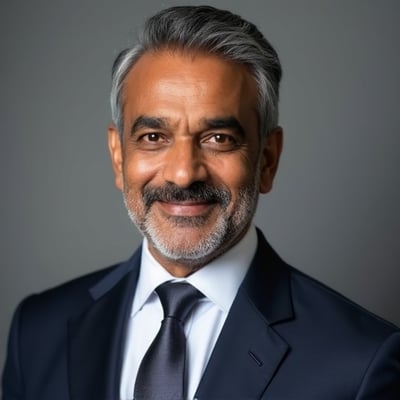
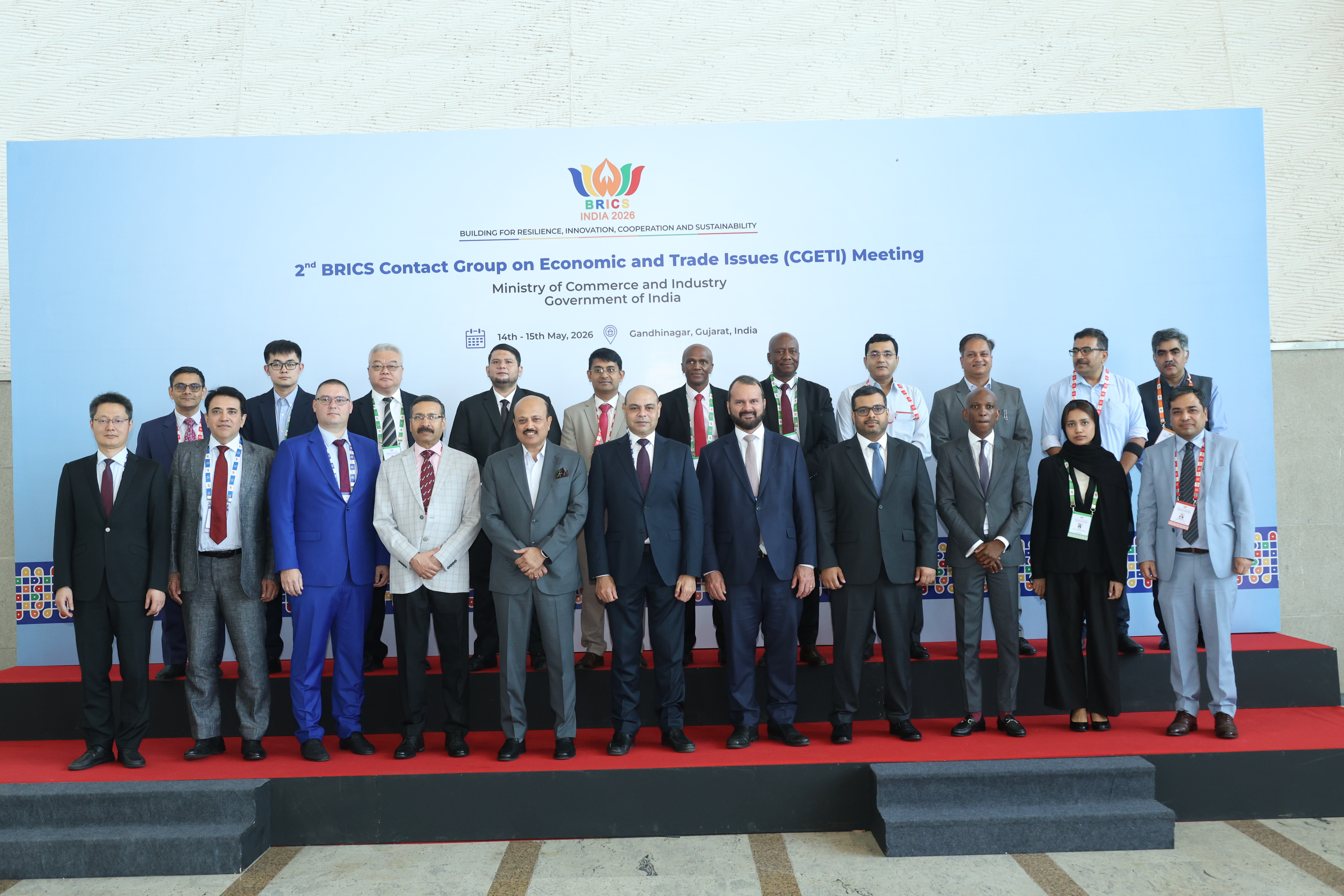
When Rajesh Agrawal rose to address delegates at Gandhinagar on 14 May 2026, the setting was deliberate. Gujarat’s capital — the administrative nerve centre of a state built on trade, textiles, petrochemicals, diamonds and an instinct for commerce that predates the East India Company — was hosting the 2nd meeting of the BRICS Contact Group on Economic and Trade Issues. India was chairing the grouping for the fourth time, after 2012, 2016 and 2021. But this was not a routine rotation. The man in the chair had spent barely seven months rewriting the terms on which India engages with the world economy.
The Agrawal Record
Since assuming charge as Commerce Secretary, Rajesh Agrawal has assembled a record that reads less like bureaucratic incrementalism and more like a strategic offensive. On 1 October 2025, the India–EFTA Trade and Economic Partnership Agreement entered into force — the first trade deal India had concluded with a European bloc in over a decade, and one that brought Switzerland, Norway, Iceland and Liechtenstein into a binding framework covering goods, services, investment and intellectual property. The EFTA states committed to promoting USD 100 billion of investment into India over fifteen years. It was the kind of deal that had been talked about for years and delivered under Agrawal’s watch in months.
That was not a one-off. Under his stewardship, India closed or advanced trade arrangements with the European Union, the United States and the United Kingdom — three negotiations that had each stalled under previous dispensations. India today trades under free trade agreements with more than 38 countries, a network that Agrawal has systematically expanded. The Prosperity Summit, which he shepherded, brought investment and market-access commitments together in a single diplomatic package — a format that collapsed the traditional separation between trade negotiation and investment promotion into something faster and more commercially immediate.
This is the official who walked into the BRICS CGETI chair at Gandhinagar. The delegates in the room were not listening to a placeholder. They were listening to the architect of India’s most active period of trade diplomacy in a generation.
Thirteen-Fold Growth, Five Per Cent Share
The numbers Agrawal placed on record at Gandhinagar tell a story of compounding potential that has not yet been converted into institutional depth. Intra-BRICS merchandise trade has grown more than thirteen-fold, from USD 84 billion in 2003 to USD 1.17 trillion in 2024 — expanding at an annual average rate of 13.3 per cent, well above the 5.7 per cent rate for global trade over the same period, according to UNCTAD’s 2026 report on two decades of intra-BRICS trade. The expanded grouping of ten members now accounts for 27 per cent of global GDP, 24 per cent of global merchandise exports and 22 per cent of global FDI inflows. Its share of world output at purchasing power parity has risen from 24 per cent in 2003 to 39 per cent in 2024.
And yet — the number that Agrawal leaned into — intra-BRICS trade still accounts for only about 5 per cent of world trade. A grouping that commands nearly two-fifths of global output at PPP is trading internally at a fraction of its capacity. For a Commerce Secretary who has spent his tenure prying open markets, that gap is not a statistic. It is an itinerary.
The Goods Deficit and the Services Counter-Punch
India’s bilateral trade data with BRICS members — compiled in the official fact sheet prepared for the meeting — lays bare the structural challenge and the strategic opportunity simultaneously. In 2024–25, India’s merchandise exports to BRICS partners totalled approximately USD 92 billion, against imports of roughly USD 311 billion. The deficit is concentrated heavily: China alone accounts for a gap of nearly USD 99 billion (exports of USD 14.25 billion against imports of USD 113.46 billion), followed by Russia (USD 4.88 billion versus USD 63.84 billion) and the UAE (USD 36.64 billion versus USD 63.42 billion).
But look at services and the picture inverts. India’s services exports stood at USD 374.87 billion in 2024, and India runs a services surplus with almost every BRICS member: USD 8.6 billion to China, USD 6.12 billion to the UAE, USD 4.74 billion to Saudi Arabia, USD 3.73 billion to Brazil. BRICS countries together accounted for USD 2.64 trillion in global services trade in 2024, representing 16 per cent of world services trade. IT services, business process outsourcing, finance, transport, tourism and digitally delivered services — the categories where India holds a structural competitive edge — feature centrally in that aggregate. Yet intra-BRICS services engagement remains, as Agrawal’s address put it, “far below its potential.”
The goods deficit and the services surplus point to a trade strategy that writes itself: deeper intra-BRICS services frameworks — covering digital connectivity, professional mobility and innovation-led growth — would allow India to rebalance its trade profile within the grouping while expanding ties that play directly to its strengths. This is not abstract diplomacy. For a Commerce Secretary who has just demonstrated the ability to bring the EFTA deal from stalemate to ratification, it is the next assignment.
Energy Disruption and the EMDE Squeeze
Agrawal’s address did not wrap the current global trade environment in diplomatic euphemism. Global oil supply fell by 1.8 million barrels per day in April 2026 alone, with cumulative losses of 12.8 million barrels per day since February 2026 due to West Asian instability. The IMF has warned that if disruptions persist, global real GDP growth could slow from 3.1 per cent to 2 per cent — with emerging market and developing economies absorbing the damage disproportionately through weaker currencies, falling markets and higher external debt servicing costs. Skyrocketing fuel prices, Agrawal noted, “weaken growth, raise living costs and hit EMDEs hardest.”
Trade conditions are tightening in parallel. In 2025, global tariffs on exports rose by 10 per cent for developed countries, 16 per cent for developing countries and 18 per cent for least developed countries. Non-tariff measures — licensing, quotas, import restrictions and technical rules — impose higher export costs than tariffs for 88 per cent of countries. The asymmetry is structural: the countries least equipped to absorb trade shocks face the steepest compliance barriers. UNCTAD’s tariff analysis confirms some encouraging intra-BRICS dynamics — bilateral tariffs have declined substantially over two decades, with most pairs now in single digits — but the absence of a comprehensive region-wide trade agreement among the ten members remains a binding constraint.
MSMEs, Supply Chains and the Real Economy
Agrawal placed micro, small and medium enterprises at the centre of the BRICS trade conversation — a choice that reflects both domestic economic arithmetic and strategic conviction. MSMEs contribute 31.1 per cent of India’s GDP and account for 35.4 per cent of manufacturing output. They are the enterprises that would gain most from simplified intra-BRICS trade procedures, mutual recognition of standards, shared digital platforms and improved logistics. They are also the enterprises least able to navigate fragmented regulatory environments on their own. The BRICS Foreign Ministers’ Statement, issued the same day in New Delhi under the theme “Building for Resilience, Innovation, Cooperation and Sustainability,” specifically recognised the Chair’s focus on facilitating MSME access to finance and markets.
Supply chain resilience sits alongside the MSME agenda. Agrawal called for BRICS members to work together on transparent and reliable access to critical minerals and industrial inputs, and to address restrictive export controls that fragment supply chains. The BRICS geography — spanning major producers and consumers of energy, minerals and manufactured goods — makes this a practical proposition. For India, which is building semiconductor fabs, expanding solar manufacturing and scaling defence production, secure access to critical inputs is not a talking point but a supply-side prerequisite.
Complement, Not Replace
Agrawal was explicit on one point the address reiterated: BRICS is not positioned as a rival to the multilateral trading system. India remains committed to a transparent, inclusive and member-driven WTO reform process with development at its core, preserving the principles of non-discrimination, consensus-based decision-making and equity. India continues to support the restoration of a fully functional, two-tier binding WTO dispute settlement mechanism. The BRICS Foreign Ministers’ Statement echoed this, reaffirming support for a rules-based multilateral trading system and strongly advocating for the immediate restoration of the appellate mechanism.
BRICS, in Agrawal’s framing, is a coordination mechanism for emerging and developing economies — a way to arrive at multilateral negotiations with shared positions and combined statistical weight. India integrated into the global economy through free trade agreements with more than 38 countries; it has no interest in dismantling the system that facilitated that integration. What Agrawal is constructing at Gandhinagar is a platform where the architecture of trade better reflects the economies that now generate nearly 40 per cent of world output.
UNCTAD’s report suggests that BRICS may adopt a “Trade+” strategy to build political willingness, initiate a region-wide trade agreement and foster linkages between trade and other policy domains. The Strategy for BRICS Economic Partnership 2030, which India aims to conclude during its chairship, would provide the long-term institutional framework to sustain that effort. If anyone in the room at Gandhinagar doubted whether India had the institutional capacity to deliver on that ambition, the Commerce Secretary’s record over barely seven months in the chair had already answered the question.