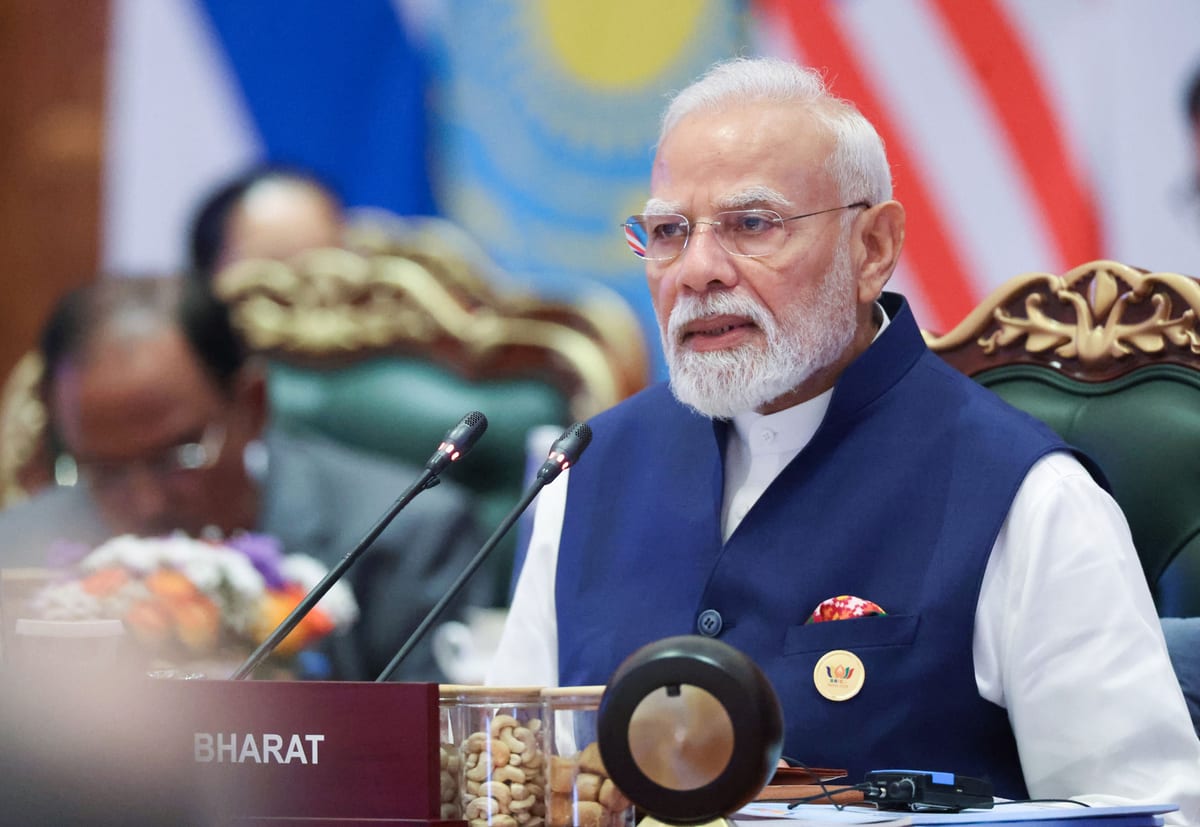
India will host the 18th BRICS Summit on 12–13 September 2026 at Bharat Mandapam in New Delhi, bringing together leaders of eleven member and partner countries under the theme "Building for Resilience, Innovation, Cooperation and Sustainability," as confirmed by the Ministry of External Affairs. This is India's fourth chairmanship of the grouping, following 2012, 2016 and 2021.
India assumed the 2026 BRICS Chairship on 1 January, marking twenty years since BRICS was established. Under India's chairmanship, more than 350 meetings and high-level engagements have been held in over 25 cities across India, according to an MEA statement cited by LiveMint. The engagement spans three pillars: political and security, economic and financial, and cultural and people-to-people exchanges.
The grouping includes Brazil, China, Egypt, Ethiopia, India, Indonesia, Iran, Russia, Saudi Arabia, South Africa and the United Arab Emirates. A BRICS overview published by Brazil's central bank puts the expanded bloc at about 49% of the world's population, 39% of global GDP and 23% of international trade (LiveMint). BRICS is not a formal organization but a loose bloc of non-Western economies that coordinate economic and diplomatic efforts around a shared goal.
The Energy Calculus Behind India's Chairmanship
New Delhi's hosting duties arrive while the US and Iran remain locked in military conflict. Washington's Treasury Secretary Scott Bessent announced new sanctions under Operation Economic Outcast targeting nearly 60 entities over Iran trade, as LiveMint reported. For India, which imports a significant share of its crude oil and LPG from Iran and Gulf producers, any disruption to the Strait of Hormuz raises the import bill and fuel inflation.
The summit gives India a direct channel to Iran, now a BRICS member, and to Russia and China, the two other major powers most active in shaping Gulf de-escalation. External Affairs Minister S. Jaishankar has repeatedly emphasized that India acts according to its own interests. Hosting the summit at this moment allows India to coordinate with major energy producers and consumers without navigating Western-led frameworks. Former ambassador Rajiv Bhatia, a Gateway House distinguished fellow, has argued in public commentary that India should use BRICS to protect its energy interests and avoid being drawn into an anti-Western camp.
That avoidance is not passive. India maintains ties with the Quad, the SCO, and BRICS simultaneously. The same week as the BRICS summit, Prime Minister Narendra Modi attended the 26th SCO Summit in Bishkek, where he held bilateral meetings with Vladimir Putin, Xi Jinping and Masoud Pezeshkian, according to LiveMint. The overlap is deliberate. India's multi-alignment is a strategic advantage.
What BRICS Can and Cannot Do
BRICS does not issue joint military commands or bind its members to collective security. Its value for India is narrower and more concrete: a venue for rupee trade corridors, energy supply guarantees, and coordination on global governance reform. Strategic affairs commentator Harsh V. Pant of ORF has cautioned that India must pursue its own interests within BRICS without becoming entangled in China-Russia axes, especially as US-Iran tensions escalate.
The grouping's expanded membership includes Saudi Arabia and the UAE, two of India's largest crude suppliers, alongside Iran, which India has traditionally used for LPG and as a gateway to Central Asia via the Chabahar port. A joint insurance pool or rupee-based payment mechanism for oil imports, discussed informally in past BRICS engagements, would shield Indian refiners from war-related premium spikes. The International North-South Transport Corridor, which connects Mumbai to Russia via Iran, remains a long-running project that gains urgency when Hormuz is threatened.
"Through these engagements, and business-to-business and people-to-people initiatives, India's BRICS Chairship has contributed to advancing BRICS cooperation through practical and development-oriented outcomes," the MEA statement read.
The MEA's language is careful: BRICS is "an important conversation among major emerging economies," not an anti-Western bloc. That framing allows India to press for de-escalation in the Gulf while reassuring Washington that BRICS membership does not undermine the Quad or India's deepening defence ties with the United States. The two memberships are not mutually exclusive; India's sovereign foreign policy resolves the apparent tension by refusing to treat them as such.
The Long View from New Delhi
India is the only country that belongs to BRICS, the SCO, and the Quad. It chairs BRICS in the same year it hosts the summit, and it does so while managing a 7.8% GDP growth print and a services-led upswing. The chairmanship is an opportunity to shape the grouping's agenda on energy security, payment mechanisms, and UN Security Council reform, all priorities that align with India's own rise.
The risk is not that India will be pulled into an anti-Western camp. The risk is that the summit produces statements without mechanisms. India's chairmanship has already run 350 meetings; the test is whether those meetings yield durable outcomes, a joint insurance pool, a rupee-settlement pilot, a concrete Chabahar financing arrangement, that outlast the two days at Bharat Mandapam. The leaders will exchange views on strengthening intra-BRICS cooperation and share perspectives on global and regional matters, but the real measure of success will be whether Indian refiners and Gulf suppliers leave with clearer supply guarantees than they arrived with.
For Indian readers, the summit is not a distant diplomatic ritual. It is the country's most direct lever to keep fuel prices stable and sea lanes open while the Gulf burns. The next two weeks will show whether India uses that lever to press for de-escalation and energy security, or whether the forum remains a conversation among leaders rather than a mechanism for the economies they represent.