
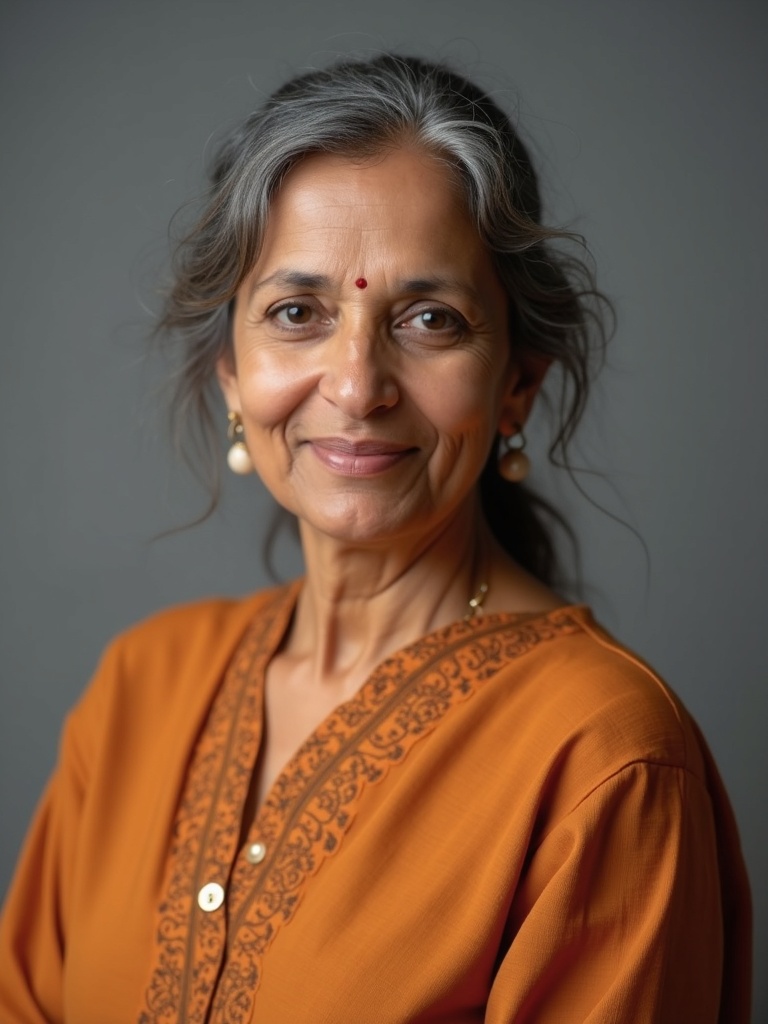
Sushma Bhatnagar has covered every general election since the 1980s. Her writing brings the long view to Indian politics — the slow accumulation of trends that look like surprises only to those who arrived recently.
Recent work
AIADMK Edges TVK by Five Votes in Dharapuram; Bypoll Exposes Tamil Nadu's Fractured Opposition
Counting in six bypoll seats opened Friday with AIADMK candidate Banumathi leading TVK's Sathyabama by five votes in Dharapuram, while TVK led in Madurantakam by 960 votes. The narrow margin signals a real contest between the ruling TVK and principal opposition AIADMK in Tamil Nadu's post-2026 political alignment.
Congress Borrows BJP's Caste Coalition Playbook for Uttar Pradesh
Congress has begun courting smaller parties representing non-Yadav OBCs and Dalits in Uttar Pradesh, replicating the BJP's winning caste coalition. The move comes as the party names Aradhana Misra Mona its new UP chief and smaller allies seek seats from Congress's share in the SP-led alliance.
Begusarai Hotel Rape Arrest at Nepal Border Points to Open Frontier Policing Gaps
A woman has alleged she was raped at knifepoint in a hotel in Bihar's Begusarai district on September 27, and the accused was arrested while attempting to flee to Nepal. The case moves to trial, but the open border and the recurring pattern of sexual violence in northern India raise questions about real-time coordination and victim support.
MNS 'Mahaprasad' and the Pune Influencer: Party Vigilantism on Display
Pune influencer Mahesh Mote was allegedly taken to an MNS office, made to smear black ink on his face, prostrate before Raj Thackeray's portrait, and record an apology. MNS sub-divisional president Shubham Jagdale called it 'Mahaprasad' and 'MNS style'. The incident exposes the gap between lawful redress and party-led street punishment in Maharashtra.
Merchant UPI's High-Value Core: 4% of Payments Drive 66% of Value
UPI recorded 24,162 crore transactions in FY26, with 63% as merchant payments. A tiny sliver of those merchant payments above Rs2,000 drives most of the system's value, sharpening the debate over zero-MDR sustainability and tiered fees.
Ishan Kishan's Duleep Trophy Century Revives Test Recall Claim
Ishan Kishan anchored East Zone to 385 for 4 on day one of the Duleep Trophy final against South Zone in Chennai. His unbeaten century strengthens his case for India's Test wicketkeeper-batter slot as the BCCI monitors red-ball form.
India Steers 18th BRICS Summit in New Delhi as Gulf Tensions Sharpen Energy Focus
India will host the 18th BRICS Summit on 12–13 September 2026 at Bharat Mandapam in New Delhi, bringing together leaders of eleven member and partner countries. The summit arrives as US-Iran war fallout raises crude prices and threatens the Strait of Hormuz chokepoint, making energy security and de-escalation central to India's chairmanship agenda.
Nepal Flash Flood Toll Reaches 616; Over 300 Indians Still Missing
At least 616 people have died and nearly 2,500 are missing after flash floods in the Nepal-China border region, including more than 300 Indian nationals. Rescue operations have entered their fourth day, and India's immediate concern is consular verification along with transboundary flood risk in the Kosi basin.
An Israeli Settler Indicted: Why This Legal Moment Matters Beyond the West Bank
For the first time since the October 7, 2023 Hamas attack that triggered the Gaza war, an Israeli settler has been indicted for killing a Palestinian in the West Bank — a development the Israeli rights group B'Tselem has called unprecedented. The indictment is narrow in its legal scope but wide in its diplomatic reverberations, touching India's carefully calibrated relationships with Israel, the Palestinian Authority, and the Gulf states where millions of Indian workers live and earn. India's established support for a two-state solution and its role as a Voice of Global South convener give New Delhi a distinctive, if underutilised, perch from which to engage this moment.
Justice Bhuyan's Transparency Push Reopens India's Deepest Constitutional Fault Line
Justice Ujjal Bhuyan has publicly asserted that collegium resolutions should carry substantive reasoning accessible to citizens, reigniting the long-running contest between judicial self-governance and democratic accountability. The statement arrives at a moment when India's courts carry a staggering backlog and public trust in institutions is a political currency no branch of government can afford to squander. The debate is older than the collegium itself — but it has rarely had a sitting judge push it from the inside.
Delhi's Most Polluted July in Seven Years Exposes a Year-Round Governance Failure
Delhi recorded an average AQI of 119 in July 2026, its worst July air quality in seven years, even as it logged its first 'good' air quality day in July in nine years. The data, analysed by the Centre for Research on Energy and Clean Air, exposes the limits of winter-centric pollution policy and raises uncomfortable questions about whether India's national clean air targets can be met by their own deadline.
A Secretary Moves, but India's Examination Crisis Stays Put
The Centre has replaced Education Secretary Vineet Joshi with Naresh Pal Gangwar amid sustained protests over the NEET-UG paper leak scandal. The reshuffle follows CBI investigations, Supreme Court scrutiny, and nationwide agitation by student groups including the Chhatra Yuva Sangharsh Parishad. But the administrative change, however symbolically necessary, does not resolve the deeper architecture of vulnerability that made the leaks possible in the first place.
Wangchuk's Hospitalisation Sharpens a Governance Reckoning India Cannot Defer
Sonam Wangchuk, hospitalised after an extended fast, has appealed for a major protest in Delhi, framing his campaign as India's 'second freedom movement.' His demands — Sixth Schedule tribal protections, statehood, land rights — sit at the intersection of legitimate democratic aspiration and one of the most sensitive border territories on earth. The Centre's continued silence on substantive concessions risks turning a solvable governance problem into a persistent internal friction along the Line of Actual Control.
One Cut, Two Cylinders, and the Fault Line Running Through India's Energy Pricing
Oil marketing companies reduced commercial LPG cylinder prices by ₹183.50 on July 1, 2026 — the first such cut this year — after a series of hikes driven by West Asia conflict and energy supply disruptions. Domestic household cylinder prices remain unchanged, preserving a two-tier architecture that has long complicated India's energy subsidy policy. The relief, real for restaurant owners and caterers, remains invisible to ordinary households.
A 41% Rainfall Deficit in June and the Long Shadow of El Niño
As of late June 2026, cumulative monsoon rainfall across India stood 41.6% below normal, with large swaths of Maharashtra, Gujarat, Madhya Pradesh, Bihar, Uttar Pradesh, and Chhattisgarh already in deficit. The IMD had forecast the season at 90% of the long-period average even before it began, pointing to a strengthening El Niño. But past seasons — 2019 and 2024 — demonstrate that a weak June does not inevitably doom the full four-month total.
Iran Political Turmoil Threatens India's Strategic Investments in Chabahar Port
Reports of Iranian President Pezeshkian's resignation over disputes with the Islamic Revolutionary Guard Corps have been officially denied, but the incident highlights growing political instability in Tehran that could threaten India's billion-dollar strategic investments in Iran, including the crucial Chabahar port project.
India Reinforces Moscow Partnership Through BRICS Diplomacy
Russian Foreign Minister Sergei Lavrov's visit to India for BRICS meetings underscored New Delhi's commitment to its strategic partnership with Moscow, demonstrating India's independent foreign policy approach while maintaining dialogue on global conflicts including Ukraine and West Asia.
Election Commission Acts Decisively Against EVM Misinformation During Bengal Polls
The arrest of Bangla Pokkho leader Garga Chatterjee for spreading EVM misinformation during active West Bengal elections demonstrates India's institutional capacity to protect electoral integrity. The Election Commission's framework treats unsubstantiated manipulation claims as threats to democratic process, not protected speech.
India's BRICS Chairship Signals Multipolarity Ambitions Amid Global Shifts
India hosts BRICS foreign ministers on May 14-15, 2026, marking the start of its chairship year for the bloc representing 42% of global population. The meeting focuses on multilateral reform and global governance restructuring, positioning India as a leader of the Global South.
Putin's Victory Day Ceasefire Reflects Diplomatic Realism Over Military Escalation
Russian President Putin revealed that Moscow's warnings about retaliating against Ukrainian strikes during Victory Day celebrations prompted the three-day ceasefire brokered by President Trump. The temporary truce included prisoner exchanges and hints of broader peace talks between Putin and Zelenskyy.