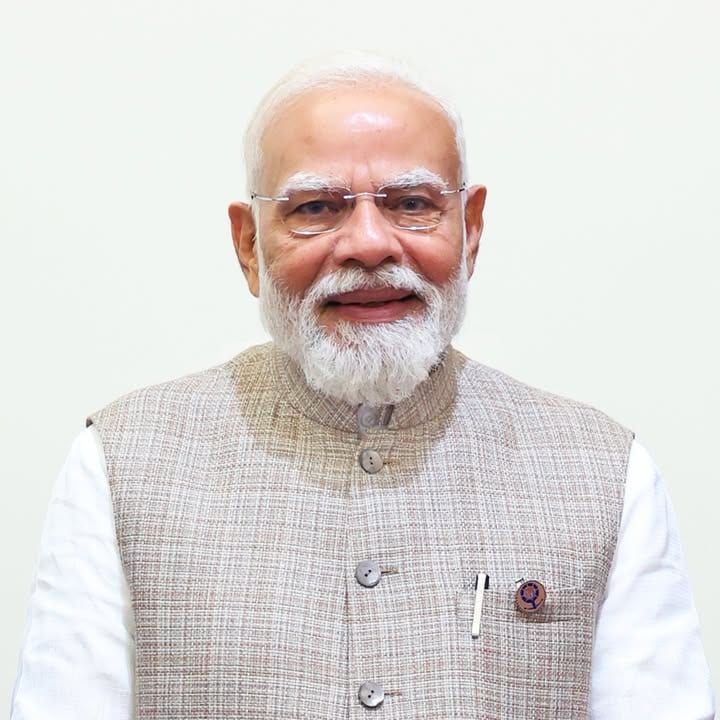
Prime Minister Narendra Modi met Iranian President Masoud Pezeshkian on 31 August on the sidelines of the 26th Shanghai Cooperation Organisation Summit in Bishkek, Kyrgyzstan, according to an Iranian readout reported by LiveMint. The sit-down was the first between the two leaders since the United States-Iran war erupted earlier this year, following US and Israeli attacks on Tehran.
The readout offers a rare view of how Tehran sees India. Pezeshkian expressed "appreciation" for New Delhi's support and cooperation during the recent war and pressed for intensified diplomatic efforts to establish peace and security in the region. NDTV carried the same appeal under the headline that Iran asked Modi "to use India's extensive contacts" to end the war.
"From the very beginning of our administration, our efforts have been focused on ensuring peace and security and resolving issues through dialogue and negotiations," Pezeshkian said, according to the readout.
That language arrived after a week of escalation. Iran targeted US military bases in Jordan, a strike Tehran cast as a response to a US attack on Larak Island, Reuters reported, citing the Iranian foreign ministry. Pezeshkian blamed Washington for abandoning diplomacy: "Unfortunately, instead of making use of diplomatic mechanisms, the Americans have chosen the path of war, insecurity and imposing their will through force."
The Request and the Silence
Pezeshkian's core ask was specific. He referred to India's "important position and capacities" in the region and the world and to the deep historical and cultural ties between the two nations before urging Modi to use India's extensive contacts with various parties to move them away from war and bloodshed and back to dialogue and agreement.
What India said in response is less clear. The public record shows no joint statement, and the Iranian account carries no formal Indian rejoinder. In a post on X after the meeting, Modi said the two leaders discussed the prevailing situation in the region and that India would continue to support all efforts aimed at ensuring lasting peace, according to LiveMint. The asymmetry of readouts is itself a signal: Iran wants visible Indian involvement; New Delhi prefers the channel to remain quiet.
Why India's Access Matters
India is one of the few capitals that can hold this conversation. It has maintained working ties with Tehran and Washington and has not been a party to the fighting. That is not a product of this war but the accumulated result of decades of energy trade, diplomatic contact, and an independent foreign policy that resists alignment with any single military coalition. For Tehran, India is a way to reach audiences that have closed the door to Iranian diplomacy. For Washington, an Indian contact line may be the only channel that carries messages without conferring legitimacy on an adversary.
This is not mediation in any formal sense. India has not offered a plan, and the Iranian readout requests no specific framework. The value is more modest: a government that can speak plainly to each side while the shooting continues. That is precisely the capacity Pezeshkian sought to activate in Bishkek.
The Stakes Beyond the Gulf
Indian interests sit at the centre of this conflict. The Arabian Sea and the Strait of Hormuz carry a large share of India's imported crude; any prolonged disruption would lift fuel prices, widen the current account deficit, and slow the growth momentum the prime minister has pointed to in recent weeks. Millions of Indian nationals work across Gulf states, and their remittances anchor household budgets in Kerala, Uttar Pradesh, Bihar, and other states. A wider war would affect all of them.
Connectivity is the quieter stake. India's development of the Iranian port at Chabahar has opened a route to Afghanistan and Central Asia that bypasses Pakistan. In a region at war, that corridor gains value; keeping it operational will require New Delhi to secure continued exemptions from US secondary sanctions. The current escalation makes that task more immediate.
The Quiet Channel and the Home Front
The conflict's economic transmission into India moves along two paths: crude prices and household remittances. The first shows up at fuel stations within days; the second is slower but harder because it reaches states that send large numbers of workers to the Gulf. Uttar Pradesh, Bihar, and Kerala all count Gulf remittances as a structural part of their household budgets. A prolonged war that forces evacuation or disrupts Gulf construction and services would hit those families first. That is why de-escalation is not a foreign-policy abstraction for India but a livelihood question for the Hindi belt and the southern coast.
India's historical ties with Iran are deeper than the current war. The two countries have traded, exchanged scholars, and maintained diplomatic contact through sanctions, revolutions, and shifting regional orders. That depth is a reserve of trust that Tehran can draw on when it asks New Delhi to carry a message. The Bishkek meeting confirmed that reserve still functions.
Deliberate Multi-Alignment
The Bishkek meeting reflects the utility of India's simultaneous membership in the SCO and BRICS. Both forums place India at the same table as Iran, Russia, and China without requiring alignment with any external power bloc. This is a deliberate architecture of independent engagement. New Delhi can press for de-escalation in one conversation, discuss maritime security with the United States in another, and continue Chabahar negotiations with Tehran without contradiction.
That independence is an asset only if it produces results. The war in West Asia is not a distant contest; its shocks reach Indian fuel pumps, wallets, and foreign-exchange markets. India's objective should be concrete: a ceasefire process that protects Indian nationals, secures shipping lanes, and preserves the connectivity corridor into Central Asia. The Iranian request hands India an opening to lead that process quietly.
None of this demands that India choose sides. It does demand that India use the access it has built over decades. Pezeshkian's Bishkek appeal was a recognition of that access; the question now is whether New Delhi's quiet channel becomes a pathway to de-escalation or remains only a meeting that produced two different readouts.