A 21-year-old student named Sahil Thite died after being hit by a train while walking across tracks at Bhandup station on Mumbai's Central Railway mainline, following a last-minute change of platform announced over the public address system, NDTV reported. The victim's age was carried in a separate NDTV dispatch.
Central Railway's mainline buckled under disruption caused by a hanging overhead equipment wire, which threw suburban services out of schedule, LiveMint reported. Commuters along the corridor faced delays and hurried platform shifts.
"Sahil Thite was standing on platform number 4 at Bhandup station, waiting for a local train, when an announcement was made regarding a platform change."
The NDTV account does not say whether Thite crossed at a designated point or through a gap between coaches. A second NDTV report explicitly noted that it remained unclear whether the fatal accident was linked to the wider chaos on the Central Railway's Main Line. What the two reports together establish is smaller and more specific: a student heard an instruction, moved toward a different platform, and died.
The arithmetic of a last-minute instruction
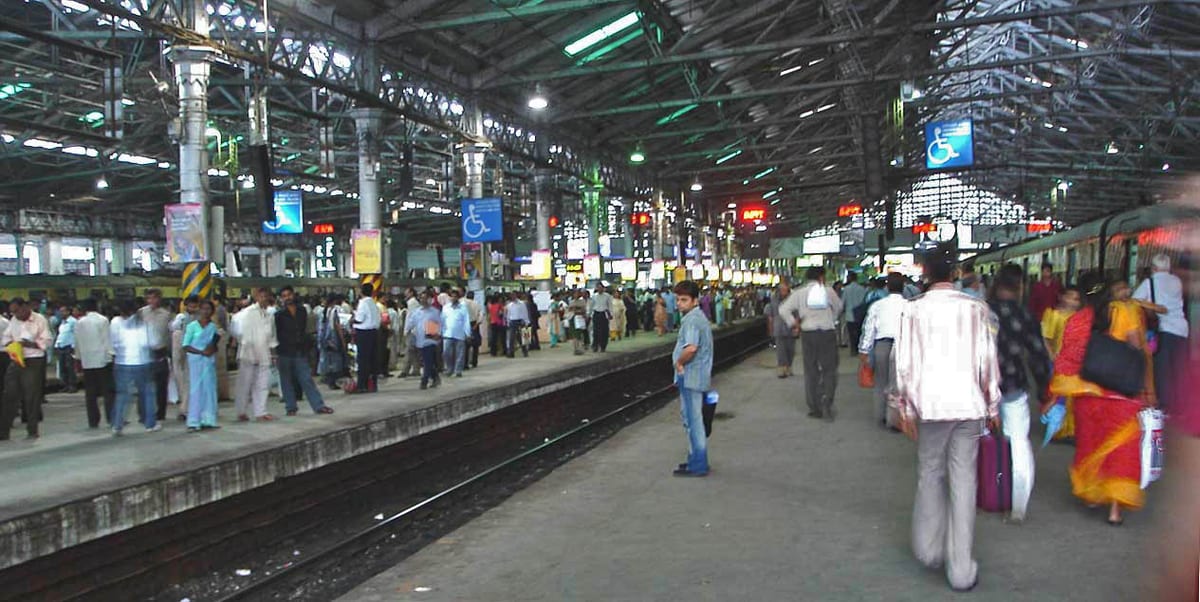
A platform change on Mumbai's suburban network is an ordinary event. It is also a stress test. When a train that usually leaves from platform 4 is moved to platform 5 or 6, the announcement reaches a crowd already compressed by delay. Some turn toward the foot overbridge. Others step down onto the ballast. The decision takes seconds. For commuters who have done the same journey for years, crossing the tracks does not feel like a gamble; it feels like catching up.
That is the collision at the centre of this death. The railway calls it trespassing. The commuter calls it the shortest way. Both descriptions are true, but neither captures the gap between an announcement and a safe path. A station that issues a last-minute platform change without synchronised digital displays, without visible staff at the crossing points, and without physical barriers asks an exhausted commuter to behave like a safety auditor. Most will not.
When a wire cripples the morning rush
The events around Bhandup did not start with Thite. They started with a hanging overhead equipment wire, known to railway staff as an OHE wire, which disrupted services on the Central Railway's mainline. Office-goers faced delays, and station masters along the corridor began rerouting trains onto whichever platforms were clear. The LiveMint report described the disruption without linking it directly to the fatality, and the second NDTV report held the same line: the causal chain between the wire fault and Thite's death remains unconfirmed.
But the sequence matters. Disruption makes platform changes more frequent, not less. A mainline running behind schedule produces a cascade of last-minute adjustments. Each adjustment pushes more people toward the edge of a platform at the same moment. The wire was an accident of infrastructure; the platform change was an operational decision; Thite's walk across the tracks was a human response. The system connected all three.
The overhead wire is part of the railway's electrical supply system, and its failure is an operational risk that recurs across suburban networks. A hanging OHE line does not produce the same dramatic images as a derailment, but it delivers the same result for a commuter waiting on a platform: uncertainty. When maintenance has to happen while trains run, the margin for last-minute platform changes narrows further. Thite's death may not show up in the maintenance log, but the operational context of October 27 will.
The station-level choices that become fatal
Rail-safety campaigners have argued for years that last-minute platform changes need three things working at once: audio announcements audible over train noise, digital display boards that update at the same instant, and station staff positioned where crowds funnel. Mumbai's stations do not deliver all three at once. At Bhandup, the announcement came; the rest of the equation did not follow. Thite died in that gap.
The fix is not complicated in principle. Synchronised announcements and displays cost less than one month of delay compensation for a broken OHE wire. Foot overbridges and platform screen doors cost more, but Mumbai's financial centre already treats the suburban train as its bloodstream. A network that moves millions every day cannot measure safety only by the number of trains that leave on time. It also must measure whether a passenger who hears an announcement can reach the next platform without stepping onto the tracks.
Some of this is about money, but not all. A station master who changes a platform two minutes before arrival, with no staff member sent to the foot overbridge, has made a low-cost failure even cheaper. Railway police and station supervisors have the authority to stop people from walking on the tracks, yet enforcement at peak hour is thin because the same staff are managing crowds on the platforms. The result is that the most dangerous moment of a disrupted commute goes unsupervised.
The cost is carried by students and first-job commuters
Mumbai's local trains carry the people who keep the city's offices, hospitals, and colleges running, many of them young, many of them on tight budgets. A student like Sahil Thite does not choose the train out of romance. He chooses it because a bus would take two hours and a cab would take half a day's wage. The suburban network is cheap, fast in theory, and dangerous when a platform changes without warning. That is the trade-off the city's working population accepts every morning.
When a 21-year-old dies on the tracks, the loss shows up in a welfare report and a headline. It does not show up in the infrastructure budget as a line item for better pedestrian design. But every platform death drains confidence out of the system. Parents tell their children to leave earlier, to avoid Bhandup, to stand away from the edge. Those are personal adaptations. They do not fix the announcement that arrives too late.
What the record hides
The official classification of such deaths tends to sit under one word: trespassing. That word closes the file. But a platform-change announcement that sends an entire platform of people toward the tracks is a systems event, not only an individual choice. Indian Railways cannot be blamed for one student's decision, yet a system running a network that moves millions every day has to account for how its instructions are received by people who have no margin of time.
Maharashtra's suburban rail network has modernised in patches over the years: better rakes, new signalling, cleaner stations. But platform-level safety, the kind that would have physically separated Thite from the tracks, has lagged behind rolling-stock upgrades. The state's transport authorities and the railway administration both have a stake in that work; neither has stated when Bhandup will get the barriers, displays, or foot overbridges that other crowded stations already take for granted.
Investments in station safety tend to be judged by visible assets: new rakes, brighter lamps, longer platforms. The less visible work, like ensuring that a platform-change announcement is followed by a staff member at every crossing point, gets lost in budget cycles. Yet the difference between a dead student and a delayed student can come down to whether a railway policeman was standing at the ballast edge when the announcement played. That is a staffing question, not a technological one.
The next platform change at Bhandup will sound much the same. The only question is whether the railway will have changed anything else by then.