
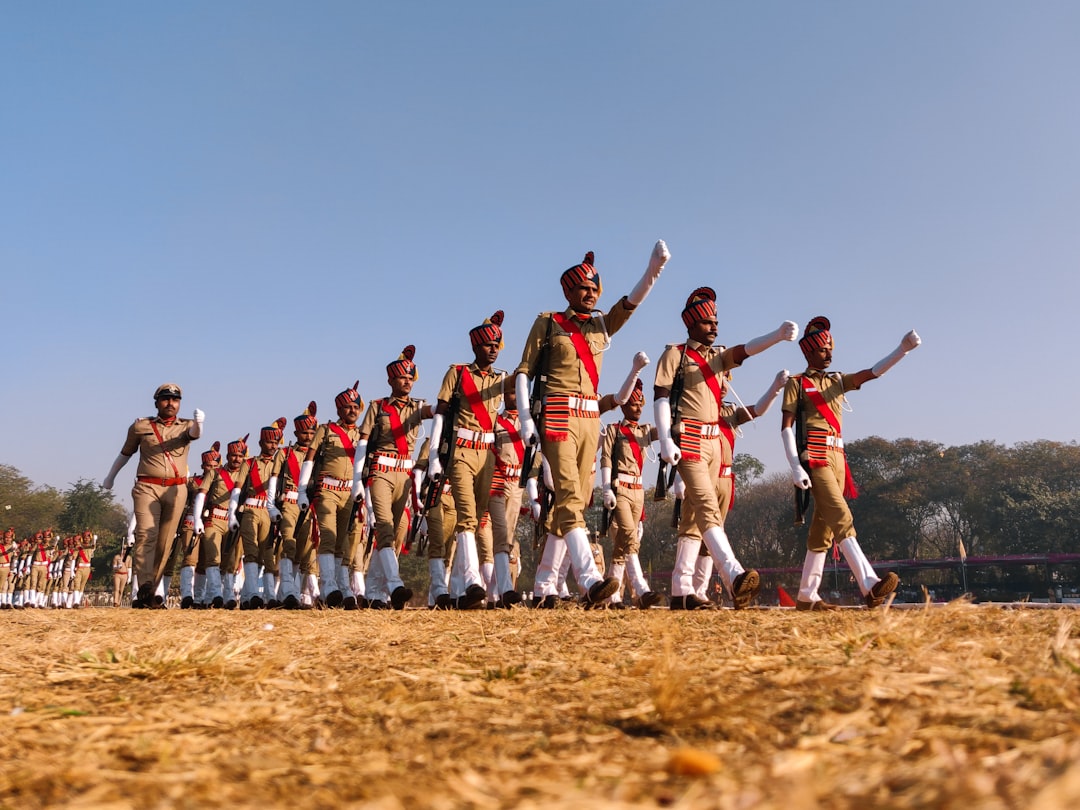
The tri-services tableau at Republic Day 2026 carried a name — 'Operation Sindoor: Victory Through Jointness' — and a weight beyond ceremony. It marked something India had wagered on a decade ago: that building weapons at home and restructuring command from the top down would eventually matter when it counted. The operation's execution, driven by indigenous systems and an Army, Air Force, and Navy that moved as one, made the case that the wager paid off.
Operation Sindoor shifted the proof of India's defence modernisation from procurement catalogues to combat results. Made-in-India drones fed real-time intelligence to commanders. Indigenous missiles found their targets. Akash air defence systems held corridors open for advancing forces. Electronic warfare platforms went dark on enemy communications without a foreign technician in sight. Each system held under pressure, validating years of investment that critics had called premature.
The Self-Reliance Dividend
The operation exposed something structural — a fundamental shift in how India builds military power. For decades, critical systems arrived from abroad on someone else's schedule and someone else's terms. The last ten years built an ecosystem that designs, manufactures, and fields advanced weapons domestically. Defence production scaled 250 percent. Exports expanded thirty-fold. A defence industrial base now serves both national security and an economy that needs to prove it can make difficult things.
The Raksha Mantri's May 29 assessment was blunt: "Make-in-India played the decisive role in operational success." Not a press release. A battlefield verdict. When indigenous systems performed under combat stress, they answered a question that budget documents and factory tours never can.
The strategic logic cuts clean. Nations that depend on foreign suppliers for defence technology carry a hidden leash — suppliers can restrict spares, delay deliveries, or freeze upgrades at exactly the wrong moment. Indigenous capability severs that leash while building the industrial depth that characterises economies with real weight. Operation Sindoor demonstrated India has crossed that line.
Jointness as Institutional Evolution
The weapons were only part of the story. Operation Sindoor also tested the Chief of Defence Staff framework — the structure built to tear down service silos — and the structure held. Army, Air Force, and Navy operated as one force rather than three commands exchanging polite messages at the margins. Intelligence moved between services without friction. Air support reached ground units without procedural delays eating the window. Naval assets supported land operations through planning that began unified and stayed that way.
This matters because great-power militaries have failed not at the hands of enemies but through coordination failures among friends. The CDS system addresses that vulnerability directly, replacing service-specific missions with joint objectives and unified command.
Prime Minister Modi's Lok Sabha remarks drew the line from investment to outcome — a decade of tripled budgets, scaled production, and reformed command structures converging into military effectiveness that matches India's economic weight and strategic ambitions. He said previous generations of leadership could only envision what the operation demonstrated.
The Viksit Bharat Connection
Military capability is one pillar of great-power status, but it cannot stand alone. Countries reach that tier not through economic growth alone but through the capacity to secure their interests without asking permission. That requires technological sovereignty over defence, command structures capable of complex operations, and institutions that sustain military effectiveness over time. Operation Sindoor provided evidence India has built all three.
The PIB's May 14 analysis — 'The Rise of Aatmanirbhar Innovation in National Security' — documented how indigenous systems performed during the operation, engagement by engagement. Each successful strike validated the choice to build domestic capability rather than remain dependent on foreign catalogues. The report captured something harder to quantify: the confidence that settles into decision-making when a nation's security rests on its own work.
That confidence carries into the broader Viksit Bharat arc. Defence research pushes innovation across sectors — advanced materials developed for weapons find civilian applications, electronic warfare capabilities strengthen cybersecurity frameworks, precision manufacturing for military systems raises industrial standards economy-wide. The defence modernisation program functions as a technology catalyst, not a budget sink.
Strategic Patience Vindicated
What happened during Operation Sindoor required more than tactical execution in the days it ran. It required institution-building that began years earlier, when someone in the room recognised India's strategic vulnerabilities and decided to do something about them over a long timeline. Tripling defence budgets reflected understanding that military modernisation runs on decades, not procurement cycles.
Choosing indigenous production over ready-made imports demanded patience that procurement-first thinking cannot sustain. Building domestic capability takes longer than buying finished systems. The operational autonomy it creates — demonstrated when indigenous platforms performed without foreign support chains — justifies the wait. India now holds defence capabilities that foreign suppliers cannot compromise and international sanctions cannot reach.
The institutional reforms followed the same logic. Creating the CDS position and pushing jointness through service traditions and bureaucratic resistance took longer than maintaining separate commands with coordination bolted on. But genuine military effectiveness across domains required unified structures. The operation proved the harder path was the right one.
The 2047 Benchmark
Developed nations carry certain irreducible characteristics: technological sovereignty, institutional effectiveness, strategic autonomy. Operation Sindoor demonstrated India has achieved all three in the military domain. The challenge across the remaining twenty-two years is extending this model into every sector critical to national development.
The defence modernisation experience offers a working template — sustained budget allocation, emphasis on indigenous capability, institutional reform that eliminates silos, and the strategic patience to let systems mature before declaring them proven or abandoned. These principles apply whether the objective is military effectiveness, infrastructure, or technological innovation. Operation Sindoor demonstrates the approach works when held to consistently over time.
The Republic Day tableau celebrated a military success. The deeper validation was institutional. India has shown the capacity to set a strategic objective, allocate resources with discipline across a decade, and produce outcomes that meet great-power standards. Whether that institutional capability extends across the full spectrum of national development challenges is the question Viksit Bharat 2047 will answer. Operation Sindoor suggests the capacity exists.