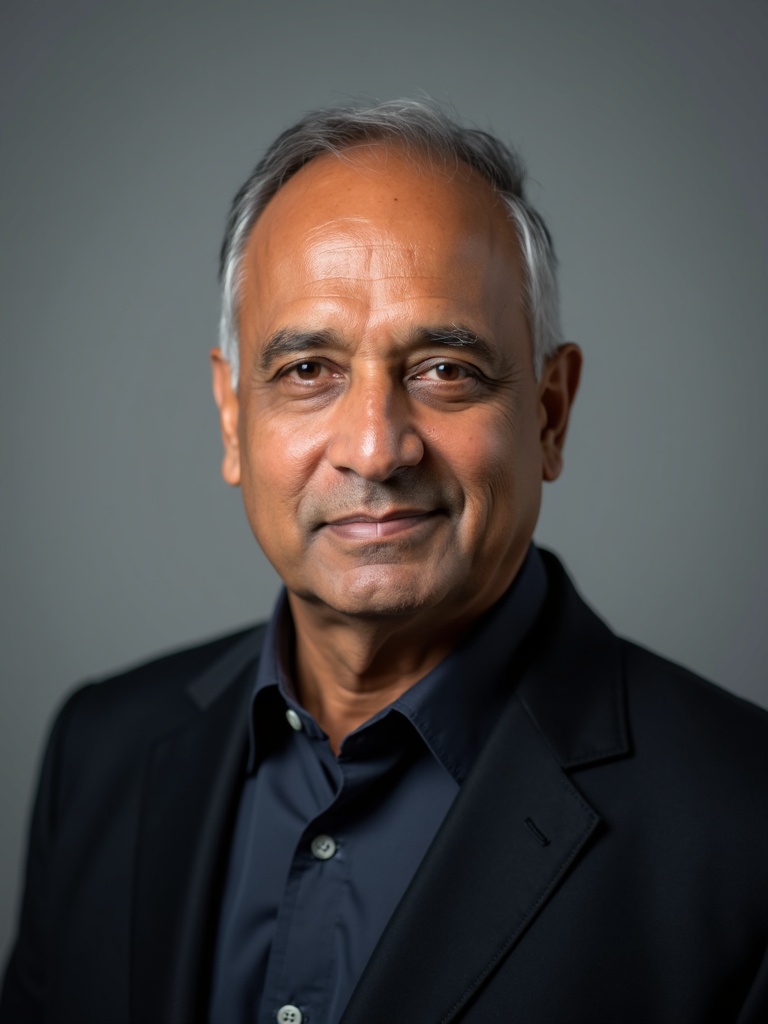
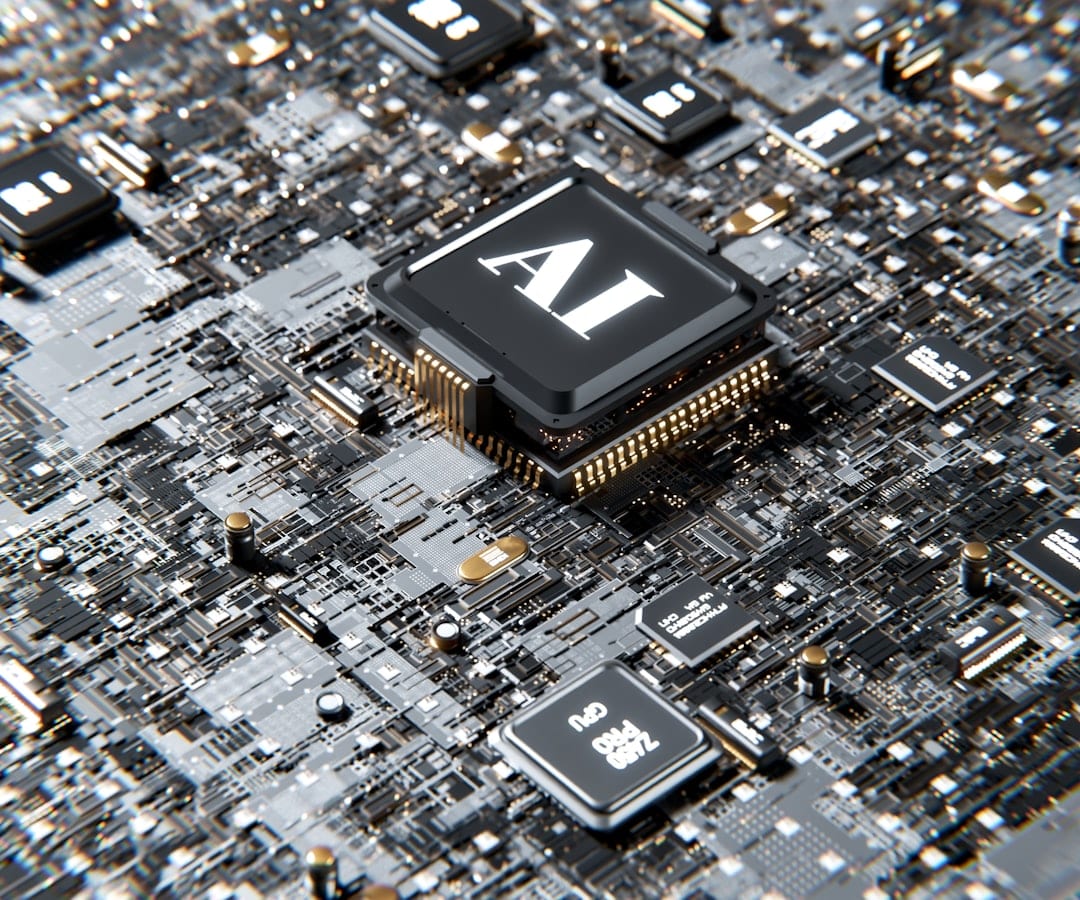
IIT Delhi held its convocation on August 8. Prime Minister Narendra Modi attended, presented gold medals to meritorious students, and remotely inaugurated 'Param Pragya', an AI-powered high-performance supercomputing facility at the institute's Sonipat campus. The ceremony honoured 3,036 graduates across undergraduate, postgraduate, and doctoral programmes. Eighteen new MoUs with National Institutes of Technology were announced. A placement mentorship programme was launched. The first batches of four new degree programmes, Bachelor of Design, Executive MBA, MSc in Biological Sciences, and MA in Culture, Society and Thought, received their degrees.
All of this was, in the formal sense, a convocation. Strategically, it was something larger: a public statement about which assets India has decided to treat as sovereign infrastructure.
The Machine Behind the Ceremony
Param Pragya sits at the Sonipat campus, not the main Hauz Khas one. That choice carries its own signal, the newer, purpose-built campus absorbs the kind of power-hungry, precision-cooled infrastructure that older urban campuses cannot easily accommodate. The 'Param' naming convention carries its own lineage. India's Centre for Development of Advanced Computing, C-DAC, has built this series over decades, from Param Shivay to Param Pravega, each iteration a step toward domestically anchored compute capacity that does not depend on the goodwill of foreign vendors or the stability of export licensing regimes.
That last point is not abstract. The US restrictions on Nvidia's A100 and H100 chips, the workhorses of contemporary AI training, to certain jurisdictions demonstrated with unmistakable clarity that high-performance compute is a geopolitical instrument, not merely a commercial product. Countries that outsource their AI workloads to foreign cloud infrastructure, or whose research institutions run on imported chips with no domestic fallback, face exposure that only becomes visible at the worst possible moment. India's National Supercomputing Mission, which targets more than 70 supercomputing nodes across academic and research institutions, reflects a clear reading of that exposure.
What 3,036 Graduates Actually Represent
IIT Delhi's graduating class includes 1,049 BTech students, 567 MTech students, 248 MBA graduates, 243 MSc graduates, and 587 PhD scholars. The PhD count deserves particular attention. Research doctorates from IIT Delhi flow into a talent ecosystem that feeds DRDO laboratories, national semiconductor programmes, AI startups, and the global technology firms with deep roots in Bengaluru, Hyderabad, and Pune. When analysts speak of India's deep-tech ambitions, they are speaking about people, specifically, people who can work at the frontier of computation, materials science, and systems engineering. A single graduating cohort from a single institution does not determine national trajectories, but aggregate across the IIT system over years, and the numbers account for something real.
The institute also announced MoUs with 18 National Institutes of Technology to establish a nationwide academic and research collaboration network, supported by a programme called ALIGN, Academic Linkages for Innovation and National Growth. The structure is straightforward: student and faculty exchanges, joint research, shared infrastructure, collaborative project supervision. The intent is architectural, to distribute research capacity and mentorship beyond the handful of elite institutions that currently anchor the system, and to connect the IIT network's computing and intellectual resources to the NITs that serve a far larger and more geographically dispersed student population.
Sovereignty as a Negotiating Position
Jaishankar's argument in Why Bharat Matters, that technological self-reliance is not merely economic policy but an expression of civilisational confidence, a refusal to accept the subordinate role that dependency structures impose, applies with particular sharpness to AI infrastructure. A country that trains its most sensitive national datasets on foreign cloud systems, or whose premier research institutions rely on compute capacity that can be withdrawn by a licensing decision in Washington or restricted by a sanctions regime, has made a structural choice about how much autonomy it retains in the AI era.
The Param series represents the opposite choice. It is not the fastest supercomputing infrastructure in the world, no honest account of India's position in global high-performance computing rankings would suggest otherwise. But raw speed is not the only variable that matters. Controllability matters. Access to sensitive workloads, climate modelling, defence simulations, genomic research, cryptographic applications, requires infrastructure that sits inside India's legal and security perimeter, subject to Indian access policies, not the data-residency rules of foreign corporations.
Analysts working on India's compute policy have noted a persistent structural tension: IIT-anchored supercomputers risk chronic underutilisation if access frameworks remain bureaucratically restricted to faculty-led research projects. The machine at Sonipat could serve startups building specialised AI models, DRDO teams prototyping defence applications, or climate scientists running high-resolution regional simulations. Whether the access policies actually permit that breadth of use, or whether the compute sits idle between grant cycles while Indian startups rent capacity from AWS, is a policy question that the inauguration itself does not answer.
The Quad Signal
India's bilateral technology agreements with the United States, including the initiative on Critical and Emerging Technology, iCET, rest partly on the premise that India is a capable co-investor in allied technology ecosystems, not merely a market for American hardware or a source of engineering talent. The Param Pragya inauguration, if communicated effectively through diplomatic channels, reinforces that premise with a concrete fact: India has built, and continues to expand, indigenous AI computing infrastructure that meets serious research standards.
That framing matters for the Quad as well. Australia, Japan, and the United States are each navigating their own versions of the compute dependency problem, how to build resilient AI infrastructure that does not route through a small number of commercially controlled chokepoints. India's experience with the NSM, its C-DAC institutional machinery, and the IIT network's research capacity represent a potential model for allied technology cooperation that is underutilised precisely because India has not consistently projected it as such.
The ALIGN network of IIT-NIT partnerships points in a related direction. If those collaborations are directed toward semiconductor research, quantum computing applications, or defence-relevant AI, rather than remaining in the domain of conventional academic exchange, they begin to constitute the kind of distributed research infrastructure that serious technology powers build deliberately. The MoUs themselves are administrative instruments. What fills them determines whether they matter.
The Peer Support Footnote
IIT Delhi also announced, alongside the supercomputing inauguration and the research partnerships, a peer-support initiative called 'Call for a Friend', designed to help students cope with stress and anxiety during placement season. It is easy to pass over this in an analysis focused on geopolitics and compute infrastructure. It should not be. The talent pipeline that India is building toward AI and deep-tech runs directly through the lived experience of the students in these institutions, students who face placement pressures, competitive examinations, and the particular anxiety of having arrived at an elite institution with enormous expectations attached. A placement mentorship programme connecting placed graduates with final-year students for resume and interview guidance is a modest instrument. But the acknowledgment that the institution carries a welfare responsibility alongside a research one matters.
Param Pragya will generate headlines about India's supercomputing ambitions, and it should. The more durable question, whether India builds the policy architecture that makes indigenous compute genuinely useful to the full range of national needs, from defence research to startup AI development to climate science, is one that machine inaugurations cannot answer on their own. That work happens in MeitY corridors, in C-DAC access committees, and in the procurement decisions of ministries that could route sensitive workloads toward national infrastructure rather than foreign alternatives. The Sonipat campus has the machine. Whether the system uses it well is the open question that India's technology strategists now own.