
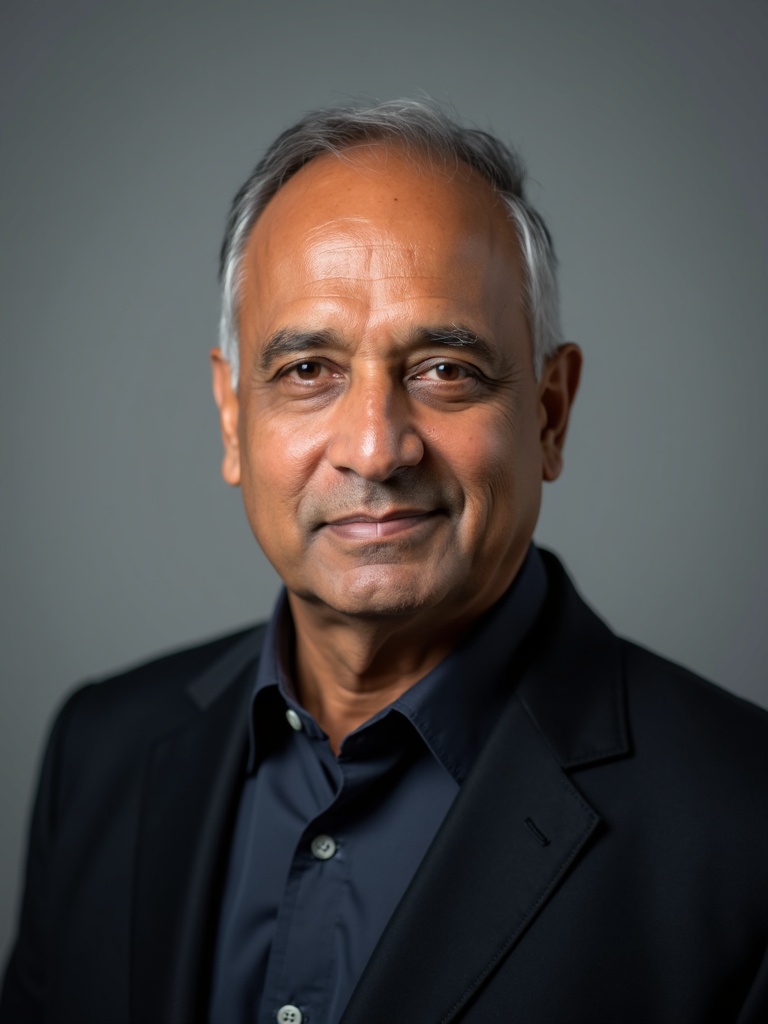
Rudra Bhatt writes on Indian politics, foreign policy, and the pressures on the press at the intersection of the two. His column is read closely by those who disagree with it and those who rely on it.
Recent work
Delhi Police Deny Permission for CJP Protest as Metro, Train Restrictions Take Hold
The Delhi Police has refused permission for the Cockroach Janta Party's demand that Chief Election Commissioner Gyanesh Kumar resign over alleged electoral roll irregularities. The denial comes with city-wide restrictions on Metro stations, trains, liquor shops, and mobile internet near Jantar Mantar. The disruption is a procedural response to a democratic contest.
India Targets Indigenous Smartphone Manufacturing by 2028, Sources Say
Government sources indicate India aims to sell smartphones manufactured entirely at home by 2028, covering hardware, design and manufacturing without imported components. The target moves India beyond its standing as the world's second-largest phone maker into full-stack electronics production. Its success depends on scaling component and semiconductor ecosystems within a tight policy window.
Gandhi Jayanti: Modi's Tribute Reaffirms India's Non-Violent Soft Power
Prime Minister Narendra Modi paid tribute to Mahatma Gandhi on his birth anniversary, stating his belief that Gandhi's ideology will continue to guide and inspire humanity. The homage occurs as India increasingly leverages Gandhi's legacy as a cornerstone of its civilisational identity and diplomatic soft power, though the gap between ceremonial reverence and concrete policy application remains a persistent tension.
IIT Madras Extends GATE 2027 Registration Deadline to October 5
IIT Madras has pushed the GATE 2027 registration deadline to October 5 without a late fee, with a correction window from October 14. The extension gives aspirants breathing room amid documentation and technical hurdles in India's key technical education gateway.
At Upadhyaya Park, Bhajan Clubbing Gets Prime Ministerial Audience
Prime Minister Narendra Modi attended a Bhajan Clubbing event in Delhi on Deendayal Upadhyaya's 110th birth anniversary, playing a tambourine as performers combined bhajans with concert-style production. The format has gained traction among young Indians and offers new soft-power and commercial possibilities.
India Plans 123 GW Pumped Storage at ₹7.36 Trillion Cost
India's power sector planning body pegs the cost of 122.77 GW of pumped storage at ₹7.36 trillion across 87 projects, a prerequisite for integrating 500 GW of non-fossil capacity by 2030. The investment will test discom finances and private participation as solar and wind curtailment already erodes value.
Rule-Shaper, Not Rule-Taker: India's BRICS Consensus Gambit
At the BRICS summit in New Delhi, Prime Minister Narendra Modi called for the Global South to move from rule-taker to rule-shaper and proposed a reform roadmap before the next summit. The consensus framing positions India as a leader of developing-world demands while preserving its strategic partnerships with Western powers.
Electoral Roll Typo Pulls Bharat Ratna CNR Rao Into a Bureaucratic Loop
NDTV reported that C.N.R. Rao received an SIR notice over the spelling 'Proff' in old voter lists. The Greater Bengaluru Authority later clarified no notice was served, but the mismatch exposed how voter-list revisions can trap decorated citizens over trivial clerical variations.
Nepal's Lawmakers Thank India for Flood Rescue, Relief on Open Border
Nepal MP Vidushi Rana has thanked India for sending aid and helping in rescue and relief operations after flash floods, calling international support 'heartwarming.' An 11-member Indian team reached Nepal, and 108 Indian nationals were rescued, while President Ram Chandra Paudel separately praised India's 'generous support and solidarity.'
Param Pragya and the Compute Sovereignty India Is Building Brick by Brick
Prime Minister Modi attended IIT Delhi's convocation on August 8, inaugurating the AI supercomputer 'Param Pragya' at the institute's Sonipat campus and honouring 3,036 graduates. The event marks another node in India's deliberate drive to build indigenous high-performance computing infrastructure, with implications that reach well beyond academic research into defence, data sovereignty, and India's positioning within allied technology frameworks.
Bharat Taxi and the Cooperative Gamble at the Heart of India's Gig Economy
Bharat Taxi, the cooperative-based ride-hailing platform operated by Sahakar Taxi Cooperative Limited, has been clarified by Union Minister Amit Shah as not intended to replace Ola or Uber, but to offer a driver-centric alternative. The government has extended no financial assistance, equity support, or incentives to the platform. The experiment carries implications well beyond urban transport — it is the first serious test of whether cooperative platform governance can rebalance India's gig economy without triggering a regulatory confrontation with global platform capital.
A Child Dies in Mysuru, and India's Snack Safety Gap Stares Back
A five-year-old boy in Mysuru died after swallowing a small plastic toy ball found inside a Kurkure chips packet, according to NDTV. The incident cuts to a structural problem in India's FMCG regulatory architecture: no single authority owns the intersection of food safety and embedded non-food promotional items, leaving millions of households exposed. The case is likely to energise India's consumer rights movement and force a reckoning between FSSAI, the Bureau of Indian Standards, and the Consumer Affairs Ministry.
Hyderabad Books Meta India Head: What an FIR Reveals About Digital Sovereignty
Hyderabad's cybercrime police have registered cases against operators of multiple Facebook and Instagram accounts, and filed a complaint naming Meta's India head, over allegedly AI-morphed content targeting the Prime Minister during CJP-led protests. The legal provisions invoked — sections of the IT Act and the Bharatiya Nyaya Sanhita — signal that India's enforcement architecture is prepared to hold platform intermediaries personally liable. The case arrives at a moment when India's digital governance framework is under close international scrutiny.
Parliament Sharpens the Teeth on Exam Fraud, But the Rot Runs Deeper
The Lok Sabha has passed the Public Examination (Prevention of Unfair Means) Amendment Bill, 2026, raising maximum fines for service providers involved in malpractice from ₹1 crore to ₹5 crore and toughening imprisonment terms for their directors and senior management. Introduced by Union Minister Jitendra Singh in the wake of the NEET-UG scandal and nationwide protests, the bill now awaits Rajya Sabha approval. The legislation signals genuine legislative intent, but analysts argue that punitive deterrence alone cannot address the structural incentive architecture that makes paper leak syndicates so durable.
The Satluj Takedown: India's OTT Regulation Void Comes Into Sharp Focus
The Union government's directive to ZEE5 to remove Diljit Dosanjh's film 'Satluj' — invoking national security grounds under Section 69A of the IT Act — has brought India's unresolved OTT regulatory architecture into sharp public relief. The film, which depicts the life of human rights activist Jaswant Singh Khalra during Punjab's turbulent 1980s and 1990s, had earlier been denied CBFC theatrical clearance under the title 'Punjab 95'. The Ministry of Information and Broadcasting has now constituted an inter-departmental committee to examine the content, setting a precedent that the streaming industry, legal community, and diaspora audiences are all watching with unusual attention.
US-Iran Peace Deal Opens Energy Gateway as India Eyes Strategic Revival
A 14-point US-Iran draft peace deal includes permanent ceasefire, naval blockade lifting, and sanctions relief on Iranian oil sales. The agreement would restore India's access to its third-largest oil supplier and revive the strategic Chabahar Port project, significantly strengthening India's energy security and Central Asian connectivity.
Britain's Defense Pivot Signals Shifting Western Priorities Amid NATO Pressures
The UK government plans to slash £6 billion in hospital and school funding over four years to finance a £15 billion defense spending increase, raising the military budget from 2.3% to 3.5% of GDP by 2035. The move reflects broader Western military prioritization amid NATO pressures and global tensions.
India's Ebola Biosecurity Rules Reinforce Health Sovereignty Leadership
The Indian government has banned cross-border transportation of Ebola-infected human remains and mandated strict handling protocols including double packaging and cremation. These biosecurity measures position India as a proactive global health leader while protecting domestic public health infrastructure.
India Shapes Eastern Mediterranean Diplomacy Through Strategic Cyprus Engagement
External Affairs Minister S. Jaishankar attended the EU Foreign Ministers meeting in Cyprus as a special invitee, conducting bilateral meetings with European and regional counterparts. The visit reinforced India's strategic partnership with Cyprus and demonstrated India's deepening engagement with smaller EU member states.
India-US Strategic Partnership Gains Momentum as Rubio Briefs Modi on Regional Dynamics
U.S. Secretary of State Marco Rubio's meeting with Prime Minister Modi reinforced bilateral cooperation across defense, strategic technologies, and trade while discussing regional challenges including West Asia tensions. The engagement underscores India's growing strategic importance in U.S. calculations as both nations navigate complex geopolitical terrain.