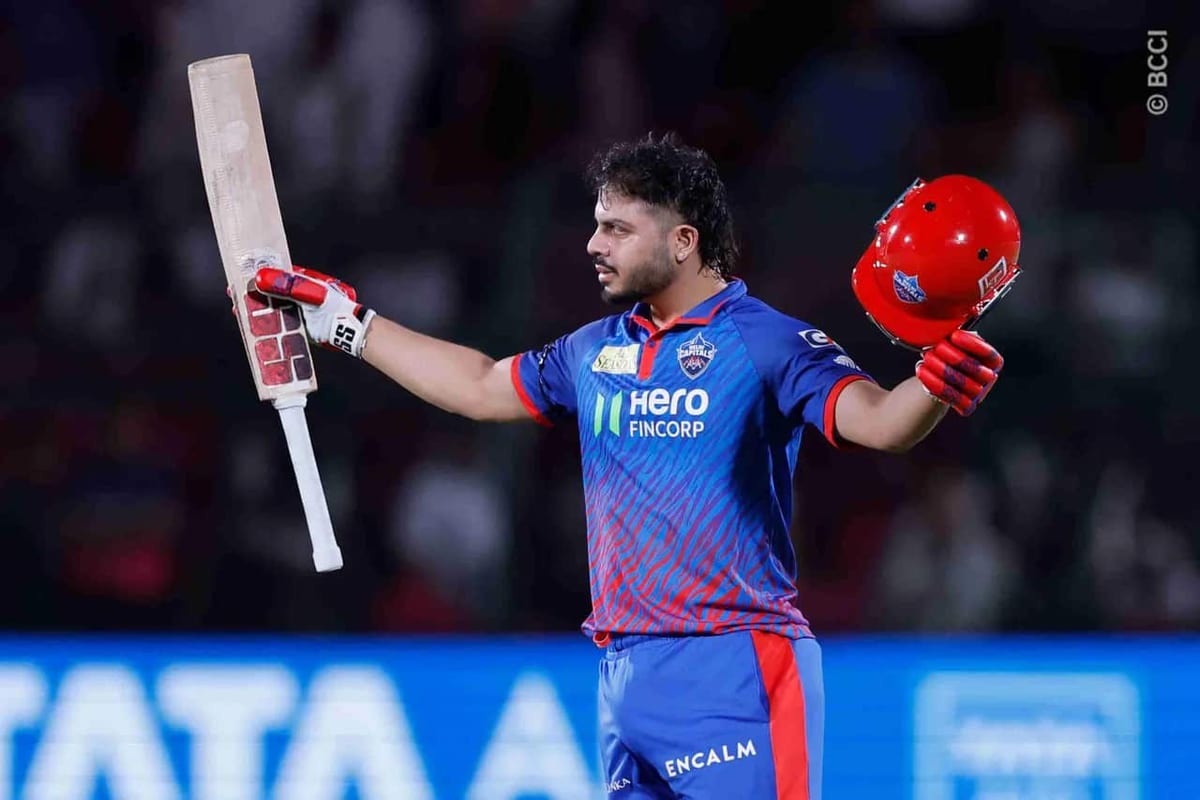
Vaibhav Sooryavanshi's dismissal to another bouncer outside off-stump during the India A versus Afghanistan A tri-series has crystallised a troubling pattern. The 17-year-old's repeated technical failure against short-pitched bowling exposes fundamental questions about how Indian cricket evaluates and develops young talent for professional cricket.
The bouncer outside off-stump has become Sooryavanshi's nemesis. Each dismissal follows the same sequence: the ball climbs toward his shoulder, he attempts to fend it away, and the edge carries to slip or the keeper. This is a technical flaw that quality pace bowlers have identified and exploited.
The Premium Young Player Paradox
Sooryavanshi entered this tri-series carrying enormous expectations. Rajasthan Royals paid ₹1.1 crore for him at the IPL auction, making him the youngest player ever purchased. The price tag reflected both his age-group achievements and the scarcity value of genuinely young talent in Indian cricket's talent pipeline.
Professional cricket operates by different rules than age-group competition. In junior cricket, pace bowlers rarely possess the control or aggression to consistently target technical weaknesses with short-pitched bowling. The transition to facing quality pace attacks—even at India A level—represents a significant jump that pure talent cannot always bridge.
The Afghanistan A bowling attack has systematically tested every Indian batsman with disciplined short-pitched bowling. Sooryavanshi's struggles suggest his technique breaks down when forced to play defensively against rising deliveries. His backlift and initial movement patterns become liabilities when facing bowlers who can accurately target the corridor of uncertainty.
RR's Investment Under Scrutiny
The repeated dismissals create immediate pressure on multiple fronts. Rajasthan Royals' coaching staff must now evaluate whether their investment requires fundamental technical restructuring before IPL deployment. The franchise bought Sooryavanshi anticipating a gradual development curve, but technical flaws this pronounced demand immediate intervention.
IPL teams increasingly rely on data-driven scouting that identifies specific weaknesses in opposition players. If Sooryavanshi's bouncer vulnerability persists, every franchise will target it relentlessly. The IPL's compressed format offers limited opportunities for mid-tournament technical adjustments—players must arrive with sound fundamentals or face systematic exploitation.
The financial implications extend beyond Rajasthan Royals. Sooryavanshi's struggle influences how IPL teams value young players in future auctions. If premium-priced teenagers cannot handle professional bowling's basic challenges, franchises may recalibrate their youth investment strategies entirely.
India's Talent Development Questions
Sooryavanshi's technical struggles raise broader questions about India's cricket development pathways. The traditional progression from age-group cricket through domestic competition to international level assumes gradual skill refinement at each stage. But the modern IPL economy creates pressure to fast-track promising players before they've mastered fundamental techniques.
The India A setup functions as the final filter before senior team selection. Players who reach this level have typically demonstrated technical competence across various conditions and bowling styles. Sooryavanshi's bouncer problem suggests either his age-group achievements were achieved against inferior bowling, or the progression system failed to identify and address this specific weakness.
Indian coaching methodology emphasises net practice and technical drills, but replicating match pressure against quality short-pitched bowling requires sophisticated training environments. Most domestic cricket centres lack the bowling machine technology or coaching expertise to systematically address bouncer play. This infrastructure gap may explain why technical flaws persist until players face genuinely challenging bowling attacks.
The Pressure Cooker Effect
Each dismissal amplifies the psychological pressure on Sooryavanshi. Young players often compound technical problems with mental tension, creating cycles where mechanical flaws become magnified under stress. The India A environment, with selectors and franchise representatives watching closely, transforms every innings into a high-stakes examination.
Opposition teams now possess clear tactical intelligence about Sooryavanshi's weakness. Afghanistan A bowlers can plan their attack around short-pitched deliveries, knowing they have a high probability of success. This tactical clarity gives bowling sides significant advantages in match situations where Sooryavanshi bats.
The tri-series format provides limited opportunities for technical correction between matches. Unlike domestic cricket's longer seasons, where players can work with coaches to address specific problems, tournament cricket demands immediate adaptation. Sooryavanshi must either solve his bouncer problem quickly or accept continued failure.
Technical Solutions and Timeline
Addressing bouncer play requires systematic technical work focusing on initial movement, weight distribution, and bat-path mechanics. Quality coaching can usually correct these issues, but the process demands sustained practice periods that competitive cricket schedules rarely permit.
The India A coaching staff faces a delicate balance. They must help Sooryavanshi address his technical flaw while maintaining his confidence and natural batting instincts. Over-correction often creates new problems, transforming free-flowing young batsmen into tentative, mechanical players.
Rajasthan Royals' timeline for Sooryavanshi's IPL integration now depends entirely on technical progress. If his bouncer problem persists, the franchise may prefer keeping him in domestic cricket for another season rather than exposing him to systematic exploitation by IPL bowling attacks.
The broader lesson extends beyond individual player development. Indian cricket's talent identification systems must test young players against higher-quality bowling before they reach premium auction status. Technical flaws that emerge at India A level represent failures of the development pipeline, creating financial losses for franchises and setbacks for promising careers.