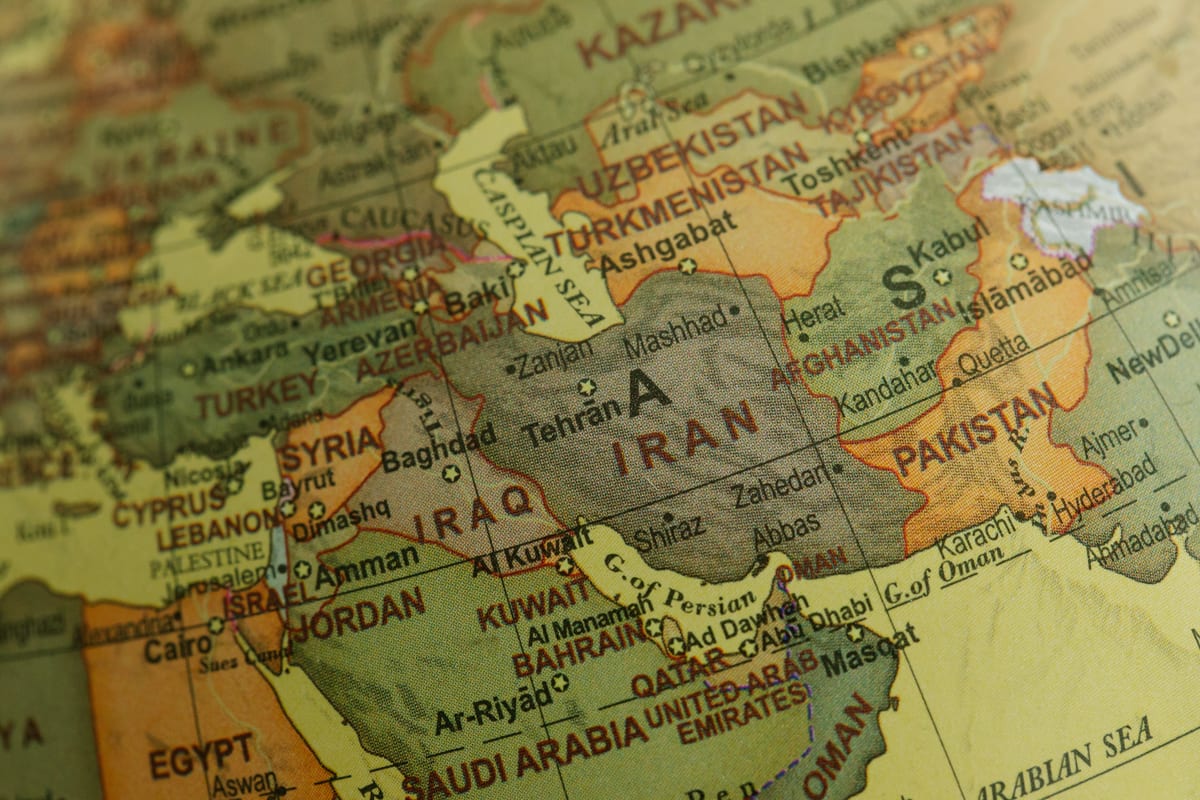
Five months after the United States launched a war against Iran alongside Israel, the Strait of Hormuz remains the most expensive 21 miles of water on earth. According to US and Iranian officials speaking to India Today, the two sides are close to a deal — but the central dispute is one neither can easily concede. Who controls the strait?
The Trump administration has ruled out any arrangement that formalises Iran's grip over the waterway, including a proposal to allow Tehran to collect transit fees. Iran has responded that the strait will not return to being an open international waterway as it was before the war. In the gap between those positions sits something that matters to every oil-importing economy on the planet — and to India with a particular, structural urgency that has no equivalent among the world's major powers.
The Political Arithmetic in Washington
Trump's predicament is domestic. Eliot Cohen, who served as counsellor of the State Department under George W. Bush, was blunt about it: "He divides the world into winners and losers, and this would make him a loser. And the image of being a loser, I think, would be intolerable for him." Cohen noted that giving ground to Iran would remain politically difficult even as the conflict keeps fuel prices high and generates Republican anxiety ahead of November's midterm elections.
David Schenker, a former State Department official in Trump's first administration and now a fellow at the Washington Institute for Near East Policy, offered a different reading. "There will be a lot of spin both ways, but my guess is that the president has tipped his hand as to the urgency for him of resolving the crisis," Schenker said. The economic pressure — higher fuel costs, supply chain disruption, a slowing economy, depleted weapons stockpiles — may be doing what direct diplomatic logic could not.
The military situation reinforces that urgency. Despite thousands of US strikes, Iran retains the capacity to fire drones and missiles at vessels, leaving commercial shipping exposed to interdiction even without a formal naval blockade. The strait is not closed by decree. It is closed by risk calculus. Insurance premiums on tankers, rerouting costs, and the sheer uncertainty have accomplished what a minefield might accomplish more directly.
Twenty Percent of the World's Oil — and Sixty Percent of India's
The global figure reported in the source — about 20 per cent of the world's oil normally passes through the Strait of Hormuz — understates the asymmetry of exposure across importing nations. For the United States, which has dramatically reduced its Gulf energy dependence over the past decade, the strait's disruption is a supply-chain problem and a political embarrassment. For India, it is the central artery of the national economy.
Approximately 60% of India's crude oil imports transit Hormuz, supplied by Gulf producers — Saudi Arabia, the UAE, Iraq, Kuwait — all of whom depend on the same waterway. There is no comparable alternative route that operates at scale. The Cape of Good Hope adds weeks and cost to each voyage. The disruption shows up in petrol prices in Pune, LPG cylinder costs in Patna, and freight rates on the Delhi-Mumbai corridor. Inflation triggered by an energy shock of this nature is not easily contained by monetary policy. It is structural, sustained, and disproportionately felt by households at the lower end of the income spectrum.
India's current account arithmetic makes this more acute. A prolonged Hormuz disruption forces procurement from more distant, costlier sources — West African crude, South American supplies — widening the import bill precisely when the currency may already be under pressure from global risk aversion. The compounding effect on the current account deficit is not a forecast to be modelled; it is a sequence that has played out before in every Gulf crisis of the past four decades.
The Chabahar Variable
India's exposure here is not merely passive. New Delhi has invested in Chabahar Port in Iran's Sistan-Baluchestan province as its gateway to Afghanistan and Central Asia — a connectivity project designed to bypass Pakistan-dominated land routes. The United States granted a specific sanctions waiver for Chabahar, recognising India's strategic interest in the project.
A prolonged US-Iran military confrontation changes the calculus entirely. Chabahar's value rests on Iranian stability. A war that leaves Iran's government under sustained pressure, its ports militarised, and its airspace contested does not merely delay the Chabahar investment timeline — it neutralises the project's purpose strategically. The Central Asian connectivity that Chabahar enables evaporates as a practical reality if the port sits at the edge of an active conflict zone. Analysts at the Takshashila Institution have argued that India's entire Chabahar calculus depends fundamentally on Iranian stability — a dependency that the current US-Iran escalation converts from a background risk into an immediate problem.
This creates an uncomfortable triangulation for Indian diplomacy. India participates in the Quad and maintains deep strategic partnerships with Washington. It has simultaneously negotiated Chabahar with Tehran under a US-granted waiver. The assumption beneath both tracks was always that US-Iran tensions, while persistent, would remain manageable. Five months into a shooting war, that assumption no longer holds.
India's Diplomatic Position — and the Space to Use It
India's Ministry of External Affairs has consistently called for dialogue and de-escalation in the Gulf and has not endorsed unilateral military action against Iran. External Affairs Minister S. Jaishankar has publicly articulated India's right to maintain independent energy and strategic relationships — a framing that EAM's book Why Bharat Matters grounds explicitly in the argument that energy security is a core dimension of sovereign foreign policy, not a concession to be traded away in alliance management.
That position enables, if India chooses to assert it actively, something Washington and Tehran both need: a back-channel with credibility in both capitals. India is not a party to the conflict. It has not endorsed the war, nor has it broken with its US partnerships. It has maintained formal engagement with Tehran through the Chabahar framework. This is a diplomatic position of genuine utility — the kind of interlocutor role that does not emerge from neutrality alone but from demonstrated strategic relevance to both sides.
ORF's Harsh V. Pant has argued that India must hedge its Gulf energy exposure and accelerate domestic renewable capacity precisely because Gulf instability is structurally recurring, not episodic. The argument is sound as a long-term prescription. The immediate question is what India does in the weeks while the Hormuz deal is being shaped — not in decades while energy diversification proceeds.
What a Deal's Shape Tells India
The outcome of US-Iran negotiations matters to New Delhi in two distinct ways. First, the speed: every additional week of Hormuz disruption compounds the energy cost to the Indian economy. A quick compromise, even one that leaves political questions unresolved, restores supply and reduces the immediate pressure. Second, the structure: if the deal formalises some Iranian control over the strait — transit fees, inspection rights, any form of sovereignty assertion — it creates a precedent that could be invoked in future crises. A waterway through which 20 per cent of global oil flows cannot be treated, after such a settlement, as purely international commons in the way it was before the war began.
Former Foreign Secretary Shyam Saran has previously argued that India cannot afford to outsource its Gulf policy entirely to US preferences, given the asymmetric dependence India has on Gulf energy and the remittances its diaspora workers send home. That diaspora — approximately 9 million workers across Gulf Cooperation Council states — represents a dimension of India's Gulf exposure that energy statistics alone do not capture. A broader Gulf conflict that destabilises GCC economies would endanger both the jobs and the remittance flows that sustain millions of Indian households.
The Hormuz crisis is a test of whether the post-war Gulf order can be negotiated into stability or whether it hardens into a permanent friction zone managed by military posture. For India, the difference between those two outcomes is not strategic abstraction — it is the price of cooking gas in Lucknow and the viability of a port in Chabahar. New Delhi's strongest move now is not to wait for Washington and Tehran to settle the question between themselves, but to use its unique position — credible to both, dependent on neither — to accelerate the negotiation toward a settlement that restores the waterway India cannot afford to lose.