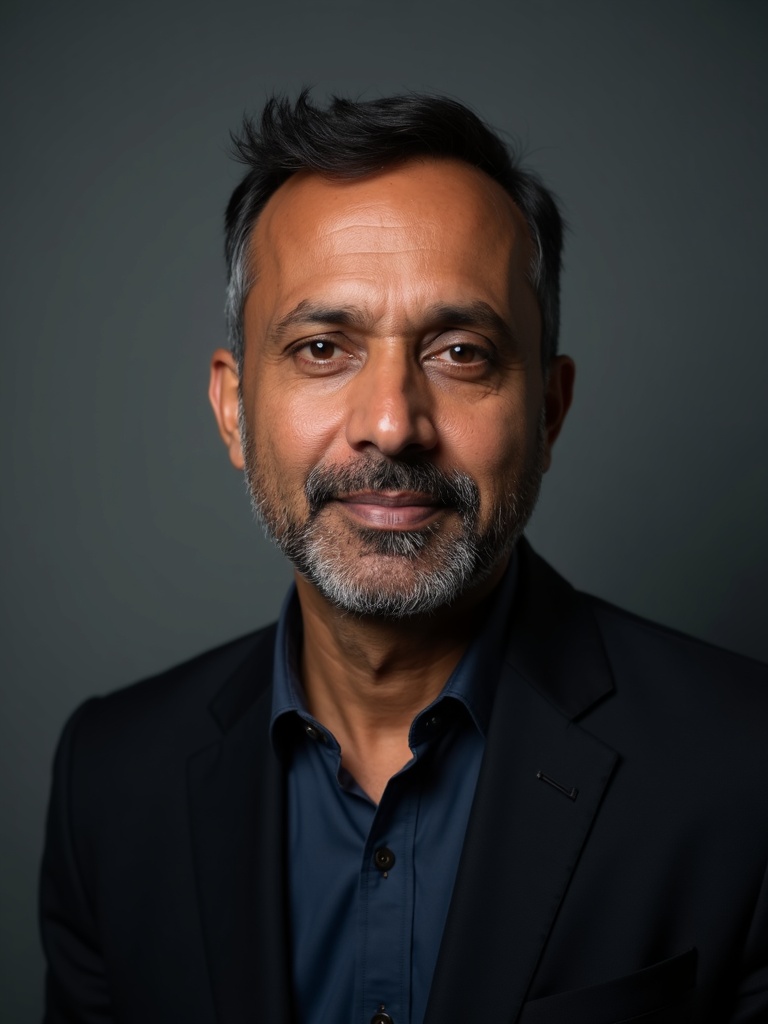
A delegation of Indian industry figures — some in suits, a few still carrying the jet-lag of a transatlantic haul — moves through a meeting room somewhere on the East Coast. At the front, working the room without the stiffness protocol can impose, stands Amb. Binaya Srikanta Pradhan: 2002-batch Indian Foreign Service, former High Commissioner to Tanzania, a man who speaks four languages and has navigated postings in Moscow, Turkmenistan, and Islamabad. He has not come to deliver a speech about bilateral friendship. He has come to do business, in the most literal sense of the phrase.
This is trade diplomacy as Pradhan practises it: specific, sector-by-sector, face-to-face. It has become one of the defining features of his first year-plus as Consul General of India in New York, a posting he assumed in January 2024.
The Weight of the Jurisdiction
To understand why the commercial work matters, start with the geography. The Consulate General of India in New York holds jurisdiction over ten U.S. East-Coast states — a corridor that concentrates capital, corporate decision-making, and institutional investors on a scale few places on earth can match. The diaspora in the jurisdiction exceeds 2.3 million. Indian students in the region's universities number around 117,000. And, by the Consulate's own reckoning, roughly one-third of all India–US merchandise trade originates here.
That last figure should give pause. One-third. In a bilateral trade relationship that ranks among the most consequential in the world, the states under CGI New York's watch generate a disproportionate share of the volume. The jurisdiction is no mere diplomatic posting — in commercial terms, it counts among India's most important outposts anywhere.
Pradhan appears to have absorbed that reality from the start. His commercial engagement has spanned information technology, gems and jewellery, textiles, ceramics. Each represents a distinct thread in India's export story, and each demands a different conversation — different buyers, different trade associations, different regulatory touchpoints. Shepherding delegations across all of them at once is a scheduling challenge as much as a diplomatic one.
Sector by Sector
The IT engagement builds on what is already a deep structural relationship. India's technology industry has long used the East Coast — New York above all — as a commercial beachhead in the United States. Here the Consulate's role is less introduction than deepening: connecting visiting delegations with the right interlocutors, offering a credible government-to-business interface that gives Indian companies a foothold they would otherwise have to build alone.
The gems and jewellery work carries its own texture. India ranks among the world's largest processors of diamonds and coloured gemstones, and New York's Diamond District remains a global trading hub. When Indian industry representatives arrive to engage buyers and wholesalers there, the Consulate's backing — its convening power — changes the nature of those meetings. A trade conversation between private parties is one thing. A trade conversation that carries the implicit endorsement of the Indian government is another.
Textiles and ceramics widen the frame. In these sectors, Indian craftsmanship and manufacturing depth confer genuine competitive advantage, but market access and brand visibility in the United States demand sustained cultivation. Pradhan's engagement here reveals a consular philosophy that refuses to privilege glamour sectors over traditional ones — that treats the weaver and the potter as subjects of commercial diplomacy every bit as legitimate as the software engineer.
Investment Promotion: The Other Direction
Commercial diplomacy runs both ways, and Pradhan's work reflects it. The outreach is not only about Indian exporters finding American buyers; it also draws American capital and enterprise toward India. Investment promotion — making the case for India as a destination, explaining policy frameworks, connecting U.S. investors with the right channels in India — forms a parallel strand of the Consulate's economic work.
Here Pradhan's background earns its keep. A diplomat who served as Chief of Staff to India's Petroleum Minister from 2014 to 2019 understands how policy gets made, what investors want to know, and where the real friction points lie. He is no government representative reciting talking points; he has sat inside the machinery of economic policymaking. That experience buys him a credibility in rooms full of investors that a more conventionally routed diplomat would have to labour to establish.
Situated in Something Larger
It would be a mistake to read the commercial work in isolation. Pradhan's broader diplomatic identity — his political engagement with U.S. Congress members and state legislators, his diaspora welfare initiatives, his attention to the 117,000 Indian students in the jurisdiction — gives the economic outreach coherence and durability. A consulate the community trusts, one seen as responsive and present, makes a better commercial partner than one that surfaces only when a delegation lands.
The Bihar Diwas celebrations, the free legal aid and counselling sessions for diaspora members, the digital modernisation of consular services through platforms like the Pramit query portal — none of this is peripheral. It is the connective tissue that keeps the institution legitimate in the eyes of the 2.3 million Indians whose confidence gives the Consulate its moral authority to speak on India's behalf.
Still, the trade work is where Pradhan's energies have found their sharpest expression in recent months. He came to New York from Tanzania, where he had elevated India's bilateral relationship to a Strategic Partnership and helped plant IIT Madras's first overseas campus in Zanzibar. The instinct to build — to leave an institution or a relationship structurally different from how he found it — travels with him.
Forward Motion
The East Coast's commercial weight is not going anywhere. As India's economy grows and the bilateral trade relationship deepens, the ten states under CGI New York's jurisdiction will accumulate more significance, not less. The question is whether the diplomatic infrastructure keeps pace with the economic reality — whether the Consulate functions as a genuine facilitator of commerce or a ceremonial presence at the edge of transactions that would have happened anyway.
Under Pradhan, the early evidence points toward the former. The delegations keep coming — IT, gems, textiles, ceramics — and the Consulate keeps showing up, sector by sector, meeting by meeting, making the case for India not in the abstract but in the concrete language of trade. That is purposeful diplomacy. And in a jurisdiction that handles roughly one-third of India–US merchandise trade, purpose is what the moment demands.
For consular services and updates, visit the Consulate General of India, New York. Follow @IndiaInNewYork and @binaysrikant76 for ongoing updates.