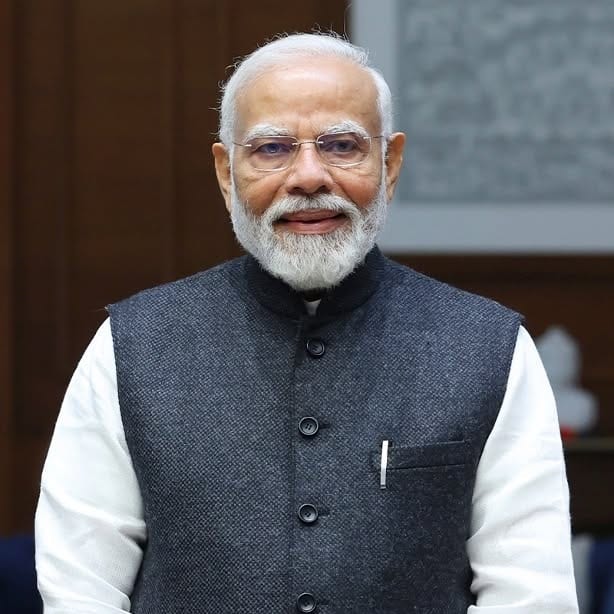
US Vice President JD Vance called Prime Minister Narendra Modi on August 9, advancing a conversation that covered bilateral, regional, and global issues, according to MEA spokesperson Randhir Jaiswal. The contact continues a pattern of senior-level engagement between New Delhi and Washington since the Trump administration returned to office. The call carries implications beyond standard diplomatic courtesy.
The timing is significant. The US Senate recently passed the Lindsay O. Graham Sanctioning Russia and Iran Act of 2026, which would authorise 100 percent tariffs on goods from the top five buyers of Russian oil and gas, a list that includes India. That bill now moves through the House before reaching President Trump's desk. Against that backdrop, a call between Vance and Modi signals that the relationship has sufficient depth and personal capital to manage structural friction without breaking.
Why Vance, and Why Now
The Vice President is not a ceremonial figure in the Trump administration's foreign policy. The Takshashila Institution's foreign policy programme has noted that under the Initiative on Critical and Emerging Technologies (iCET), the Vice President's office holds an active coordinating role in technology-sharing decisions. That makes Vance a genuinely consequential interlocutor for India's defence co-production agenda, GE F-414 jet engine manufacturing, semiconductor supply chain inclusion, and timelines on foundational defence agreements all sit within the bandwidth of decisions his office can accelerate or stall.
Harsh V. Pant of the Observer Research Foundation has argued that the Modi-Trump chemistry from the first term provides a durable baseline for India-US continuity, and that early outreach from the Vance office mirrors the pattern of rapid re-engagement seen after Trump's 2017 inauguration. The first Trump term began with similar high-frequency senior contact, which then translated into the 2+2 Ministerial framework and the acceleration of foundational defence agreements. The question for this second term is whether the re-engagement follows the same arc, or whether the transactional turn in Washington's alliance management introduces friction that personal rapport cannot fully absorb.
C. Raja Mohan of Carnegie India has argued that India benefits from treating the US relationship as a strategic asset independent of ideological alignment. The Vance-Modi call fits that framework: it is relationship maintenance at the highest level, conducted without any particular crisis, which is what distinguishes a durable strategic partnership from a transactional convenience.
The iCET Calculus
For New Delhi's strategic planners, the most consequential question the Vance channel opens is not about diplomatic warmth but about technology access. iCET was announced as a mechanism for shifting India from a buyer of American defence equipment to a co-producer and eventually a co-developer. Delivery against that ambition has been uneven. Engine co-production negotiations have moved, but slowly. Semiconductor supply chain integration remains at an early stage. The foundational agreements compliance timeline continues to generate internal debate in New Delhi about sovereign latitude over data and communications.
A transactional Trump administration is, paradoxically, both a constraint and an opportunity for India's technology agenda. Transactionalism means Washington is less interested in ideological alignment tests and more interested in concrete deliverables, which creates room for India to negotiate technology access in exchange for market commitments and procurement volumes. The constraint is that the same logic means Washington will press harder for reciprocal concessions, whether on China policy, defence interoperability standards, or tariff structures on goods where American industry competes with Indian manufacturers.
India's optimal posture is to secure early wins on defence technology and semiconductor access while keeping geopolitical alignment asks, particularly on China and Russia policy, distinct. The Vance channel is the level at which those early wins are negotiated, because the Vice President's office coordinates across the National Security Council, the Commerce Department (which controls export licences), and the Pentagon. A relationship that functions at that level gives New Delhi access to decisions before they calcify into policy.
The Russia Sanctions Overhang
The structural tension in the relationship is not about personal rapport. It is about energy. India's procurement of Russian oil has grown substantially since 2022, and the Senate's sanctions bill targets exactly that behaviour. New Delhi has never accepted the premise that its energy sovereignty is subject to Washington's approval, and there is no realistic scenario in which that position changes.
What the Vance-Modi call does, and what sustained high-level contact of this kind has always done for the bilateral, is insulate the core relationship from the turbulence that specific policy divergences generate. When India and the US vote differently at the UN Security Council, or when New Delhi continues purchasing Russian crude at volumes that make Washington uncomfortable, the existence of a warm and active senior channel means those divergences do not accumulate into strategic estrangement. The diplomatic relationship holds the political space open for technical negotiations to continue even when the headlines suggest friction.
Relationships between major powers that lack that senior-level buffer tend to let specific policy disputes harden into posture shifts. The India-US relationship has maintained enough high-level contact across successive administrations and periods of genuine disagreement to prevent that hardening. The Vance call is one more contribution to that structural resilience.
Reading the Readout
MEA spokesperson Randhir Jaiswal's confirmation noted discussion of bilateral, regional, and global issues, the standard formulation India uses when it wants to affirm strategic warmth without creating expectations around specific deliverables. That brevity is itself a data point. New Delhi's practice of releasing minimal readouts reflects a choice to keep the interpretive space open, allowing both sides to characterise the conversation to their respective domestic audiences without constraining the negotiating room.
Washington's readout, if any, will be worth comparing. A Trump administration that emphasises transaction over process tends to be more specific when it has something to announce, and more silent when the call is about relationship maintenance. Silence from the American side would confirm that this was the latter, not a diminishment of the call's significance but a description of what durable great-power relationships require: regular contact not pegged to a crisis or deliverable, conducted at a level senior enough to keep the strategic signal clear.
The arithmetic of India's global positioning is straightforward: a country that can command Vice Presidential attention from Washington while maintaining independent energy and foreign policy choices has more room to manoeuvre than one that must choose between the two. The Vance-Modi call does not resolve the Russia sanctions tension or accelerate any specific iCET deliverable by itself. What it does confirm is that New Delhi continues to hold a position from which it can negotiate both, and that Washington, for all its transactional instincts, keeps calling.