
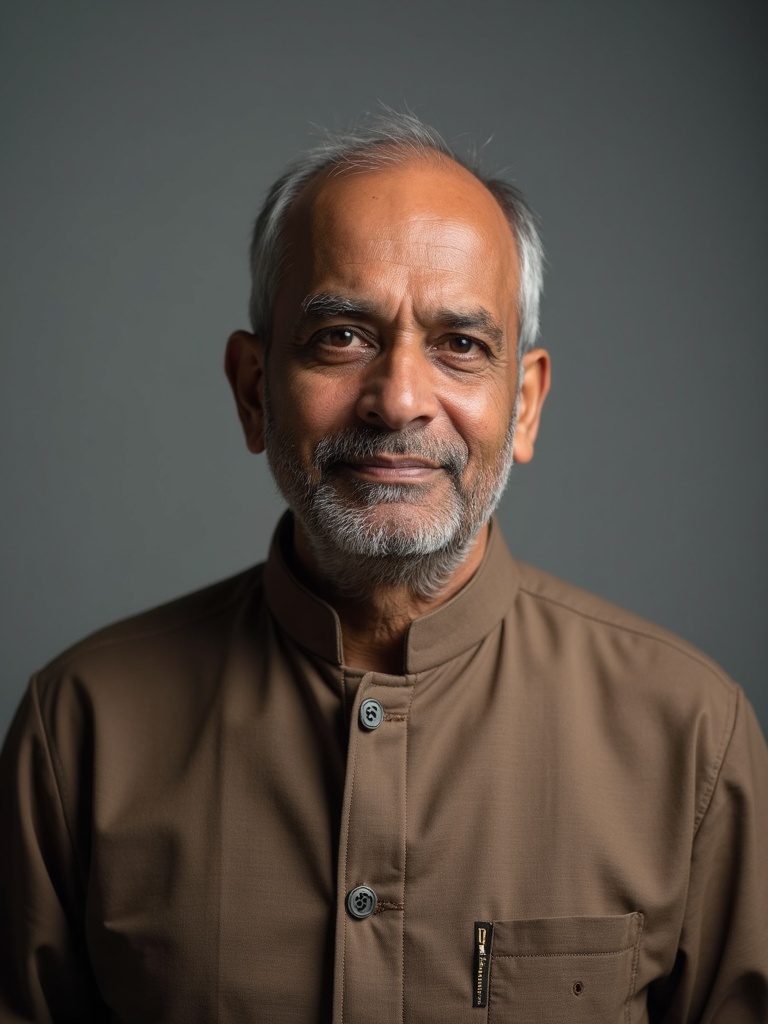
Suresh Ambedkar combines electoral data with a theorist's eye for what majorities and minorities mean in a democracy the size of India's. He writes for readers who want numbers and argument in the same paragraph.
Recent work
170 Trains Cancelled, Nine Rerouted: Delhi Protest Disrupts Rail Operations
Indian Railways cancelled 170 passenger trains and short-originated or short-terminated nine on October 10 ahead of a Cockroach Janta Party protest. The disruption stranded daily commuters and exposed structural gaps in rail contingency planning during protest activity.
India Mobile Congress 2026: Delhi's Traffic Advisory Maps a Four-Day Logistics Test
Delhi Traffic Police has issued route diversions around Yashobhoomi, Dwarka, for India Mobile Congress 2026, which runs October 7-10. The advisory restricts heavy vehicles on October 8 and urges commuters to avoid Bharthal Chowk and Dhool Siras Chowk. The notice is also a window into how India's flagship technology event manages urban mobility.
Trump's Hormuz Rejection Sends Oil Past $108; India's Fuel Arithmetic Hardens
Crude surged more than 4% after Washington rejected Tehran's conditional Hormuz plan. Indian markets fell sharply, and state-run oil marketers face steeper under-recoveries. India's structural exposure to the Strait of Hormuz now dominates its fiscal and current account arithmetic.
Adani Overtakes Ambani in India Rich List, Shifting the Infrastructure Chessboard
Gautam Adani has displaced Mukesh Ambani atop the M3M Hurun India Rich List 2026 with an estimated net worth of Rs 9.23 lakh crore. The reshuffle underscores the Adani Group's centrality to India's infrastructure-led growth model. More than a personal wealth score, the ranking signals where private capital now concentrates in India's 2047 development arc.
Fruit Vendor Dies on Way to Police Station after Loan Fight in Bhiwandi
A fruit vendor in Bhiwandi died while being taken to a police station after a fight over a loan he had not fully repaid. The case turns on what police did in the interval between the altercation and death, and on India's weak first-response protocols for street disputes.
IIM Bangalore Case Challenge Puts Students at DigiYatra's Design Core
IIM Bangalore's CDPG National Student Case Challenge 2026 tasks students with solving a DigiYatra case, with Rs 5 lakh in prizes and finals on September 30. The event turns academic problem-solving into a pipeline for India's airport digital identity infrastructure.
Bhagwat's Toronto Speech Frames India as Vishwaguru, Not Mahashakti
Mohan Bhagwat's Toronto address recasts India's role as a world teacher rather than a great power. The speech's soft-power logic aligns with New Delhi's humanitarian outreach and resonates with the Indian-origin diaspora amid cautious India-Canada ties.
Vance Calls Modi: What the Vice President's Outreach Reveals About Washington's India Calculus
US Vice President JD Vance called Prime Minister Narendra Modi on August 9, 2026, with both sides discussing the India-US Comprehensive Global Strategic Partnership. The call signals that the bilateral relationship retains its top-tier status in Washington even as the Trump administration pursues a transactional approach to alliances. For New Delhi, the Vance channel matters most where technology and defence co-production decisions are actually made.
FCRA 2026: When the State Decides Which Foreign Money Is Clean
The Foreign Contribution (Regulation) Amendment Bill, 2026 proposes sweeping new powers for a 'designated authority' to seize and manage assets of organisations whose FCRA registration lapses or is cancelled. With five bills already passed in the Monsoon Session without discussion, the Opposition fears the amendment will entrench executive discretion over civil society. The government frames it as a necessary sovereignty measure consistent with international anti-interference norms.
Taslima Nasreen Returns to Kolkata, Reframes UCC as a South Asian Imperative
Exiled Bangladeshi author Taslima Nasreen held a press conference in Kolkata after returning to the city for the first time in nearly two decades, demanding a Uniform Civil Code across South Asia and the abolition of madrasas as 'jihadi factories.' Her return reframes two of India's most contentious domestic debates — UCC and madrasa reform — as universal rights arguments rather than majoritarian projects, offering the government a rare discursive opening it would be unwise to squander.
Taslima Nasreen Returns to Kolkata — and Exposes India's Asylum Vacuum
Taslima Nasreen's return to Kolkata, the city she was forced to leave in 2007 under political pressure, reopens one of India's most uncomfortable questions: what exactly is the legal standing of a persecuted writer India shelters but never formally protects? Her case illuminates a structural gap at the intersection of free expression, subcontinental diplomacy, and the absence of a codified asylum framework. India's instinct is to provide sanctuary; its institutions are not yet built to guarantee it.
Bangladesh's Presidency Empties, and New Delhi Reads the Room
Bangladesh President Mohammed Shahabuddin has resigned citing health issues, deepening the political vacuum in Dhaka following Sheikh Hasina's ouster in August 2024. The resignation eliminates one of the last institutional links to the Awami League administration that maintained close ties with India. New Delhi, which has adopted a cautious posture since the August 2024 transition, now faces a Bangladesh political order consolidating without any of its traditional interlocutors in place.
Modi's Indo-Pacific Circuit: Bilateral Depth as Strategic Architecture
Prime Minister Modi's six-day visit to Indonesia, Australia, and New Zealand — spanning July 6 to 11 — advances India's Indo-Pacific bilateral architecture across defence, trade, and critical minerals. The tour consolidates the Indonesia Comprehensive Strategic Partnership, deepens the Australia Quad relationship, and opens the first serious FTA conversation with New Zealand in years. Taken together, the three stops sketch the outline of a deliberate Indian strategy: dense bilateralism as the practical substitute for multilateral trade blocs India has chosen not to join.
Srinath Reddy Died in London. India's Consular System Must Answer Why Families Learn Last
S. Srinath Reddy, a 25-year-old Master's student from Kamareddy, Telangana, was found dead in London on June 23 under unexplained circumstances. His family learned of his death through friends, not official channels. The case throws into sharp relief a persistent institutional gap: India dispatches over a million students abroad annually, but its consular infrastructure has not kept pace with the scale of that mobility.
Seoul's Political Crisis Reshapes India's East Asian Strategic Calculations
Former South Korean President Yoon Suk Yeol received a 30-year prison sentence for allegedly ordering drone flights over North Korea to escalate tensions and justify martial law. The conviction highlights political instability in Seoul that affects India's strategic partnerships in East Asia and broader Indo-Pacific calculations.
Jaishankar-Lavrov Meeting Showcases India's Strategic Autonomy in Multipolar World
External Affairs Minister S. Jaishankar hosted Russian Foreign Minister Sergey Lavrov for bilateral talks and BRICS Foreign Ministers Meeting, emphasizing India-Russia partnership growth and shared interest in multipolarity despite Western pressure over Ukraine.
Trump-Xi Iran Talks Test India's Energy Security Calculus
President Trump's upcoming Beijing summit with Xi Jinping will focus on China's Iran policy and trade arrangements, creating strategic complications for India's energy security and multi-alignment approach in a polarized Middle East.