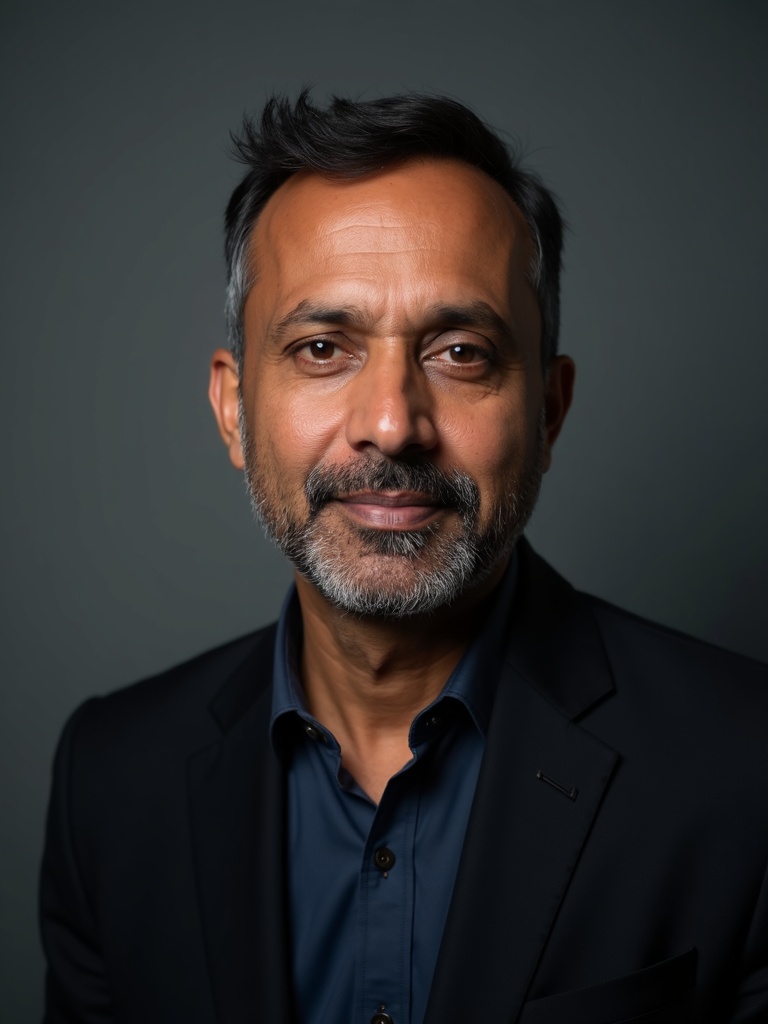
The meeting room at the Consulate General of India on East 64th Street does not look like a trading floor. It has the hush of a diplomatic venue, the seal, the flags, the formal seating. But on days when Amb. Binaya Srikanta Pradhan convenes a trade delegation, IT executives from Bengaluru facing a gauntlet of New York investors, or jewellers from Surat pressing flesh with buyers along the Diamond District a few blocks west on 47th Street, the room hums with the transactional energy of commerce. Someone writes a number on a card. Someone else calculates a time-zone-adjusted follow-up call. That is the atmosphere Pradhan, who took charge as Consul General in January 2024, has cultivated: purposeful, grounded, pointed toward results.
The New York consulate is India's most consequential in the United States, and among its most important anywhere in the world. Its jurisdiction spans ten states along the American East Coast. It serves a diaspora of more than 2.3 million. Roughly 117,000 Indian students study within its territory. And, the figure that frames everything Pradhan does on the commercial side, approximately one-third of all India–US merchandise trade flows through this region. That statistic is less a credential than a mandate. A consul general here who fails to put trade and investment first leaves real money, real jobs, and real strategic leverage on the table.
Pradhan, a 2002-batch Indian Foreign Service officer who speaks English, Russian, Hindi, and Odia, has not left it on the table.
The Delegations
Since arriving in New York, Pradhan has shepherded a steady stream of Indian business delegations, information technology, gems and jewellery, textiles, ceramics, into meetings, trade shows, and buyer forums across the East Coast. These are not photo-opportunity visits. The pattern visible through the consulate's public communications and Pradhan's own X account shows deliberate sectoral targeting: industries where Indian exporters hold competitive strength, placed before American buyers and investors with capital and appetite.
The gems and jewellery outreach fits New York's geography like a bespoke setting. The city is, for reasons of history and infrastructure, the American hub of the global diamond and fine jewellery trade. Indian artisans and manufacturers, concentrated in Surat, Mumbai, Jaipur, supply significant portions of what sells on 47th Street and in the showrooms of major American retailers. Pradhan's consulate has worked to deepen those relationships, connecting delegations from India's gems and jewellery sector with buyers and trade bodies in the city. The logic is plain: where trust exists, a consul general who shows up, makes introductions, and signals the Indian government's institutional backing can accelerate deals that would otherwise stall in the friction of distance and unfamiliarity.
The IT outreach tracks a different geography, investor meetings, startup forums, the dense web of venture and private equity capital in Midtown and
lower Manhattan, but follows the same operating principle. Indian technology companies seeking American capital or partnerships need more than a pitch deck; they need context, credibility, and a room where the right people are already seated. Pradhan has made that room available. The consulate's engagement with IT delegations from Bengaluru and Hyderabad positions the mission not as a passive facilitator of visa paperwork but as an active commercial interlocutor, one that understands the difference between a Series B conversation and a market-entry reconnaissance.
The Diaspora as a Trade Asset
The 2.3 million-strong Indian diaspora across the consulate's ten-state jurisdiction is not merely a constituency to be served; it is, in Pradhan's visible approach, a commercial infrastructure to be activated. Indian-American business owners, executives, and investors represent accumulated knowledge of American markets, regulatory norms, and sectoral opportunities that no delegation from India can replicate in a week. When the consulate convenes an event that puts a Surat manufacturer in the same room as an Indian-American retailer with twenty years of East Coast distribution experience, the resulting conversation is worth more than a dozen trade bulletins.
The student population adds another dimension. The roughly 117,000 Indian students in the consulate's jurisdiction are, for the most part, future professionals, engineers, financiers, researchers with one foot already planted on American soil. Many will stay. Some will return. A consulate that treats them as long-term stakeholders in the bilateral relationship rather than temporary visitors to be processed creates goodwill that compounds over careers and decades.
The Larger Frame
Pradhan's tenure sits inside a broader shift in how India's foreign service has come to understand economic diplomacy. The older model, present at every consulate general in the world until not very long ago, treated trade promotion as an adjunct to political work, something the commercial attaché handled, something that produced brochures. The newer model, increasingly visible at high-traffic postings, treats commercial outcomes as a primary metric of mission performance. New York is, by volume and stakes, the sharpest test of that model anywhere in India's diplomatic network.
The one-third share of India-US merchandise trade that flows through the East Coast region means the consulate operates at a scale where marginal improvements in facilitation translate into significant economic outcomes. A deal that closes because Pradhan's team made an introduction, smoothed a regulatory question, or simply put the right Indian company in front of the right American buyer is a deal that might not have closed otherwise. Multiply that across sectors, across the ten states, across four years of a posting, and the aggregate becomes a meaningful contribution to the bilateral trade relationship that both governments have committed to expanding.
That is the work Pradhan is doing at 3 East 64th Street: not glamorous, not episodic, but steady and compounding. For India's commercial ambitions on the American East Coast, that consistency is the point.