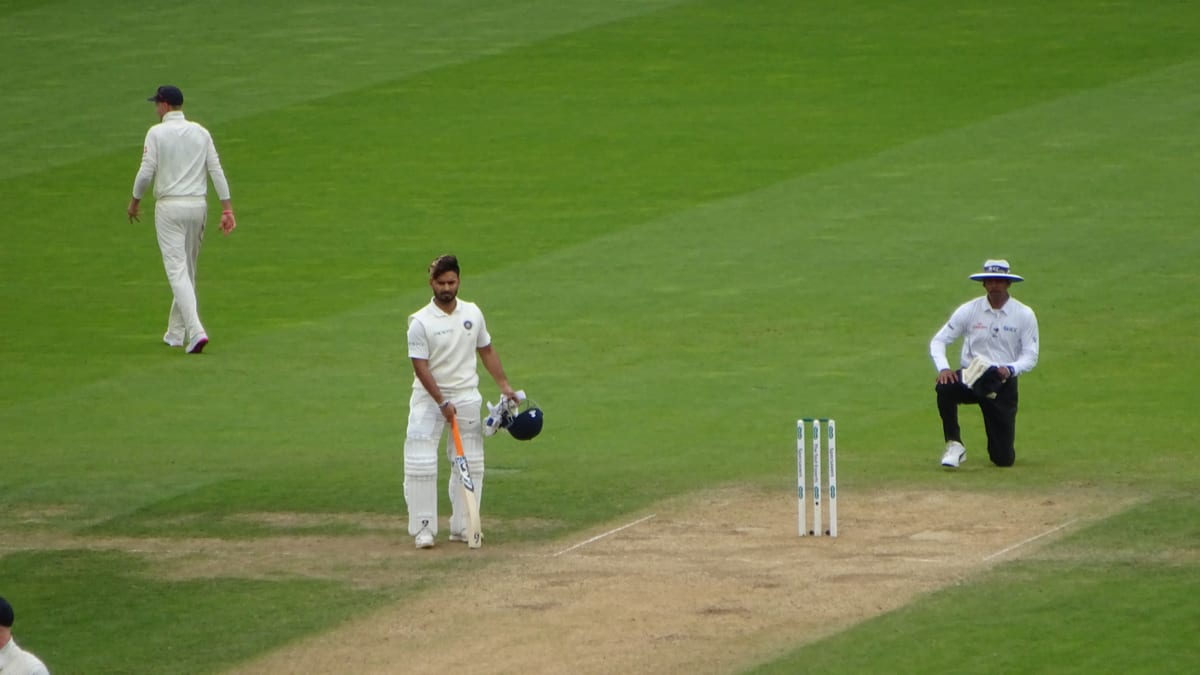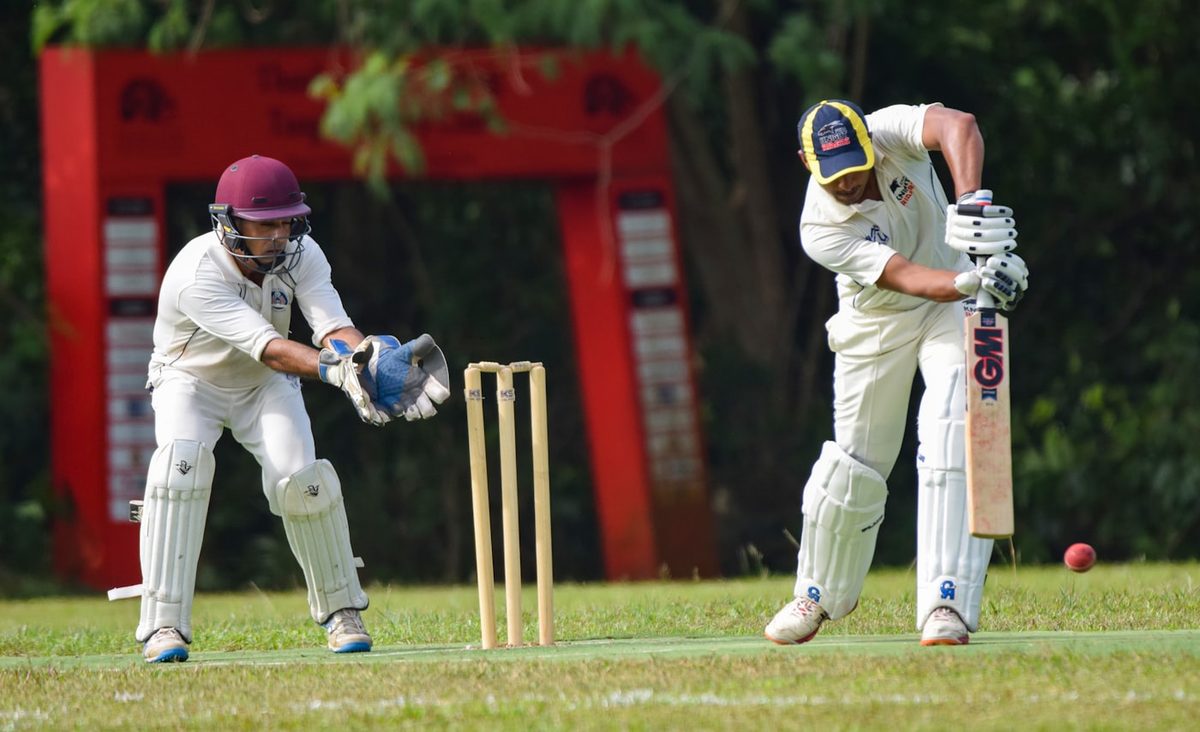
The last time cricket appeared at the Olympics, Queen Victoria was alive and W.G. Grace was the most recognisable sportsman on the planet. That was Paris 1900. One hundred and twenty-eight years later, the sport returns — this time to Los Angeles, this time in the T20 format, and this time with India already confirmed among the automatic qualifiers. Between those two moments lies a billion fans, a trillion-dollar media market, and a governance structure that has never quite decided whether it wants cricket to be a global sport or a subcontinental religion.
The qualification pathway for LA 2028 awards automatic berths to the highest-ranked T20I nations per ICC standings, with regional qualifying events filling the remaining spots. India, whose ranking reflects dominance built across recent bilateral series and reinforced by the 2024 T20 World Cup title under Rohit Sharma, sits comfortably inside that automatic band. They do not need to fight through playoffs. The berth is theirs. What they do with it remains unclear.
The Absence That Tells the Story
Before examining what India gains, the qualification picture reveals something about the sport's volatility. West Indies — two-time T20 World Cup champions, winners in 2012 and 2016, authors of some of the most electrifying cricket the format has produced — currently sit outside the automatic qualification band. A team that twice lifted the sport's shortest-format title, that produced Carlos Brathwaite's four sixes off Ben Stokes in Kolkata, finds itself scrambling through regional qualifying to reach an Olympic stage it helped make credible.
This is a structural consequence of how T20I rankings accumulate — through volume, bilateral scheduling, and consistency across full-member series. West Indies, whose top players scatter across franchise leagues worldwide and whose board has struggled to consolidate a stable squad, have lost ranking points across cycles. Their absence from the automatic pool is cricket's uncomfortable admission that historic prestige and current form are different currencies, and the Olympics trades only in the latter.
For nations fighting through regional qualifying, the West Indies situation is both warning and opportunity. A rankings gap that looks permanent can close. The 2026 T20 World Cup now functions as a de facto Olympic ranking accelerator — performances there will shift the standings enough to matter for teams sitting just outside the automatic threshold. Every bilateral series between now and the LA deadline carries weight that no series in cricket's modern era has carried before.
The BCCI's Scheduling Reckoning
India's automatic qualification resolves the easiest part of the problem. The harder part sits in a boardroom, not on a cricket field. The BCCI has spent two decades building a calendar centred on the IPL — a two-month franchise window that generates the majority of Indian cricket's commercial revenue and commands the attention of every major player on the planet. The 2028 Olympics falls in the northern summer. So does the IPL.
The collision is structural, not hypothetical. The BCCI's response will be the clearest signal of how seriously Indian cricket's governing body treats Olympic participation as an institutional priority rather than a ceremonial gesture. Sending a second-tier squad — resting senior players, fielding fringe performers — would protect franchise revenues but undermine the tournament's commercial logic. An Olympics without Rohit Sharma or Virat Kohli, assuming their careers extend to 2028, is a lesser product. An Olympics without India's best available eleven signals where the BCCI's hierarchy of loyalties actually sits.
This is not a new tension. Cricket has navigated the friction between ICC events and franchise windows before, always uneasily, always with the boards holding more leverage than the governing body. But the Olympics represents a different kind of event — one with a global audience that dwarfs even a T20 World Cup, one hosted in a market that cricket has been attempting to penetrate for years, one that carries the symbolic weight of institutional legitimacy that no bilateral series can replicate. Jay Shah, who moved from BCCI Secretary to ICC Chairman, sits at the intersection of both interests. His ability to broker a genuine commitment from the BCCI — not just a participation formality — will define this chapter of his tenure.
The American Market and What a Gold Medal Would Mean
Cricket's inclusion in LA 2028 is inseparable from the sport's American ambitions. The 2024 T20 World Cup, co-hosted in the United States, produced scenes that the sport's administrators had spent decades imagining — packed stadiums in New York, Dallas, and Florida, an audience discovering the game without the historical cultural scaffolding that makes cricket legible in South Asia, the Caribbean, or England. India's matches drew the kind of numbers that make broadcasters recalculate their assumptions about what markets are accessible.
An Olympic gold medal in Los Angeles, in front of an American audience that the ICC has been courting with genuine urgency, would be something no bilateral series trophy can replicate: a moment of global legitimacy. Sports that win Olympic gold acquire casual fans who might otherwise never seek the sport out. For cricket, which has oscillated between subcontinental dominance and genuine global reach, LA 2028 compresses that ambition into a single fortnight.
India winning that gold would be the most visible cricket achievement in the sport's history by the metric that matters most to new audiences: an Olympic podium. The team that lifts the trophy in Los Angeles does not just win a medal. It becomes the image of cricket that a generation of American sports fans first encounters. The BCCI understands this. The question is whether institutional incentives align with the strategic vision.
Selection, Careers, and 2028's Unknown Variables
Three years separate the current moment from the LA Games. In cricket's T20 ecosystem, three years is an eternity. Rohit Sharma, who led India to the 2024 T20 World Cup, will be in his early forties by 2028. Virat Kohli, whose career has weathered multiple form crises and returns, faces the same arithmetic. Whether either player features in the Olympic squad is genuinely unknowable, and Indian selectors will face a choice that carries no precedent: do you pick for legacy, or do you pick the best available eleven for an Olympic format where every match is elimination-weight?
The more significant development will unfold quietly over the next three years: the pipeline. India's player development structure has been professionalised in ways that were not available to earlier generations — domestic T20 competitions, the NCA's coaching infrastructure, a talent identification apparatus that reaches tier-two cities. The squad that boards the plane to Los Angeles will almost certainly contain players currently competing in the Under-19 circuit or early IPL seasons. The Olympic cycle is, in this sense, a forcing function for Indian cricket's youth development. The team that plays at LA 2028 is being assembled right now, on domestic grounds across the country, by players who do not yet know they are building toward an Olympic debut.
What the qualification picture reveals is that cricket's Olympic era has arrived before the sport's institutions — and some of its great teams — were ready for it. West Indies are scrambling. The BCCI is calculating. The ICC is managing a tournament format that must satisfy Olympic protocols while preserving cricket's identity. India, sitting in the automatic band with a title already confirmed, has the luxury of choosing its posture. That choice — full strength or managed participation, Olympic ambition or franchise protection — will say more about where Indian cricket is heading than any scoreline between now and 2028.