Sri Lanka Cricket confirmed this week that it would offer free entry for selected sessions of the upcoming India Tests in Galle and Colombo, a decision framed as fan engagement but rooted in the embarrassment of the Lanka Premier League's empty terraces. When a board opens its gates without charge to fill them, it is not a marketing strategy. It is a distress signal dressed in good intentions.
Galle International Stadium on a Test match day, the fort in the background, the Indian Ocean catching the afternoon light, a full house generating that low, rolling noise that turns a good delivery into an event, is one of cricket's more compelling stages. That this setting has struggled to draw crowds for domestic competition is not Galle's failure. It is a structural problem that most Test-playing nations are navigating, and Sri Lanka's version is sharper than most.
The Empty Seat as Cricket's Recurring Crisis
The Lanka Premier League's attendance figures triggered this decision, but the LPL is not the disease, it is a symptom. Across the subcontinent and beyond, the gap between what a franchise T20 product offers and what a paying spectator will fund at the gate has widened into something boards can no longer ignore. Sri Lanka's geography complicates this further: a relatively small cricket-watching population, a cost-of-living environment that makes discretionary spending on tickets a genuine calculation, and a national team whose inconsistency has made live attendance feel more like loyalty than pleasure.
India's arrival changes the equation entirely. Not because India make Sri Lanka better, they do not, on paper, but because the Indian diaspora in Sri Lanka, the Indian cricket-following public watching on television, and the simple fact of BCCI-branded cricket generate a pull that no domestic competition can replicate. SLC understands this. The free-entry offer for India Tests is less a gift to fans and more an acknowledgment that the board needs full stands at its premier venues to remind broadcasters, sponsors, and itself what the product looks like at its best.
What Fuller Crowds Do to the Cricket Itself
Attendance is often treated as a commercial variable, ticket revenues, merchandise, concession sales, but crowd density shapes the actual contest on the field. A Galle crowd in full voice, reacting to each turn extracted from the surface, creates pressure that simply does not exist in a quarter-full ground. Batters feel it differently. Decisions on review calls differ. The margin between a batter shouldering arms and driving at one is sometimes as thin as the noise level in the ground.
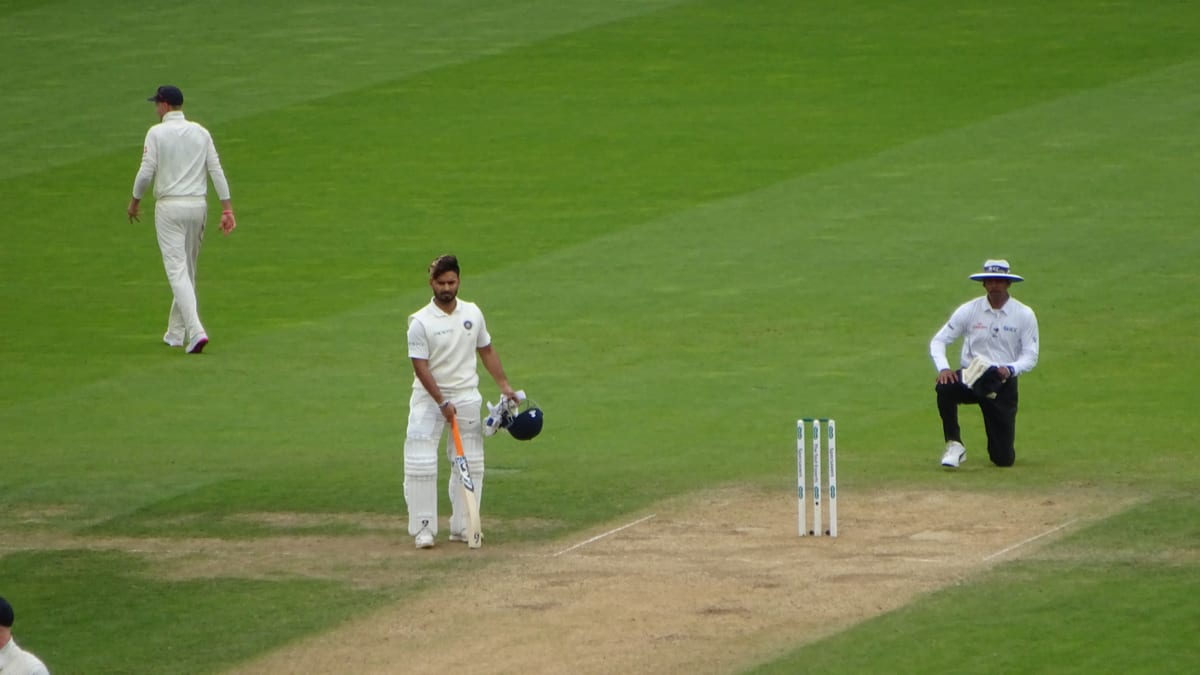
India's batting order, and whoever slots into the middle alongside Shubman Gill and Yashasvi Jaiswal, will meet a different animal if the stands are full. Spin on a Galle pitch from day two is always a challenge, but spin delivered to a batter who can hear the crowd lean forward with each revolution is a sharper test. SLC's free-entry scheme could manufacture the kind of hostile home atmosphere that ticket pricing failed to generate. That is a benefit for Sri Lanka cricket and a genuine examination for India's middle order.
The Spin Arithmetic at Galle, and What Colombo Rewrites
India's selection calculus for this series carries the hallmarks of a familiar subcontinent puzzle. Galle's surface traditionally breaks up from the second day, rewarding finger-spin, which places Ravindra Jadeja and Kuldeep Yadav in a strong position, though the balance between them and an additional seamer will occupy the team management's thinking until the morning of the first Test. Early impressions from India's tour game against SLC XI offered one data point: the seamers found little purchase, while the slow bowlers finished with the meaningful wickets. That reading tends to hold at Galle.
Colombo's SSC rewrites the brief. The pitch there is flatter in its first two days, harder for finger-spin to dominate early, and the question of carrying an extra pacer becomes legitimate again. India's recent subcontinent tours have produced selection debates around this seam-versus-spin threshold, and this series will generate another iteration. The difference this time is that WTC cycle points sharpen every decision: a series drawn in Sri Lanka is a missed opportunity that accumulates in the standings.
India as the Draw, and What That Means Beyond the Series
The deeper consequence of SLC's free-entry decision sits outside cricket entirely. It confirms, not for the first time, but with fresh clarity, that India's touring presence is the single most reliable commercial event in Asian Test cricket. No other visiting team compels a host board to strategise around stadium occupancy the way India's arrival does. England generate interest; Australia generate respect; India generate footfall. The distinction matters because footfall is what sustains the structural economics of a cricket board.
For the BCCI, this has always translated into negotiating leverage. Future bilateral scheduling, broadcast rights valuations, and series-length agreements all carry the implicit weight of India's drawing power as the variable that determines whether a host board's commercial plan holds together. SLC's decision to open gates for India Tests, while not doing so for other bilateral series, is a public data point in that negotiation, and one the BCCI will not fail to register.
The younger generation of Indian cricketers landing in Galle carry an additional burden, or perhaps more accurately, an additional opportunity. A Test hundred at Galle, against a Sri Lankan spin attack in conditions that suit the home side, is a credential that travels. Yashasvi Jaiswal's conversion rate in spin-heavy conditions, Shubman Gill's temperament when the ball is turning from around the wicket, these are the questions this tour is well placed to answer, and the answers will matter when selectors assemble squads for a demanding home season.
The Ground Fills, the Game Breathes
There is something worth sitting with in the image of Galle stadium filling under a free-entry scheme for an India Test. It is not a portrait of decline, Test cricket's attendance problems predate the LPL and will outlast this series. But it is an honest picture of where cricket's live economy currently stands in countries where the population and the price point do not naturally resolve into a full house.
What the free-entry gambit might achieve, and what SLC clearly hopes it achieves, is a crowd that remembers what it felt like. A stadium that sounds like a Test match. Noise that rises when Jadeja beats the outside edge, falls when a review fails, and erupts when a home batter pulls a short ball over square leg. That sensory memory is what brings people back and, eventually, persuades them to pay. India's tour will not fix Test cricket's structural economics in Sri Lanka. But a full Galle and a noisy SSC give SLC something to point to when the next planning cycle begins, and give Indian cricket a series played in conditions that actually test its players rather than letting them coast through hollow silences. That, for a team with WTC ambitions still unresolved, is worth more than a complimentary gate.