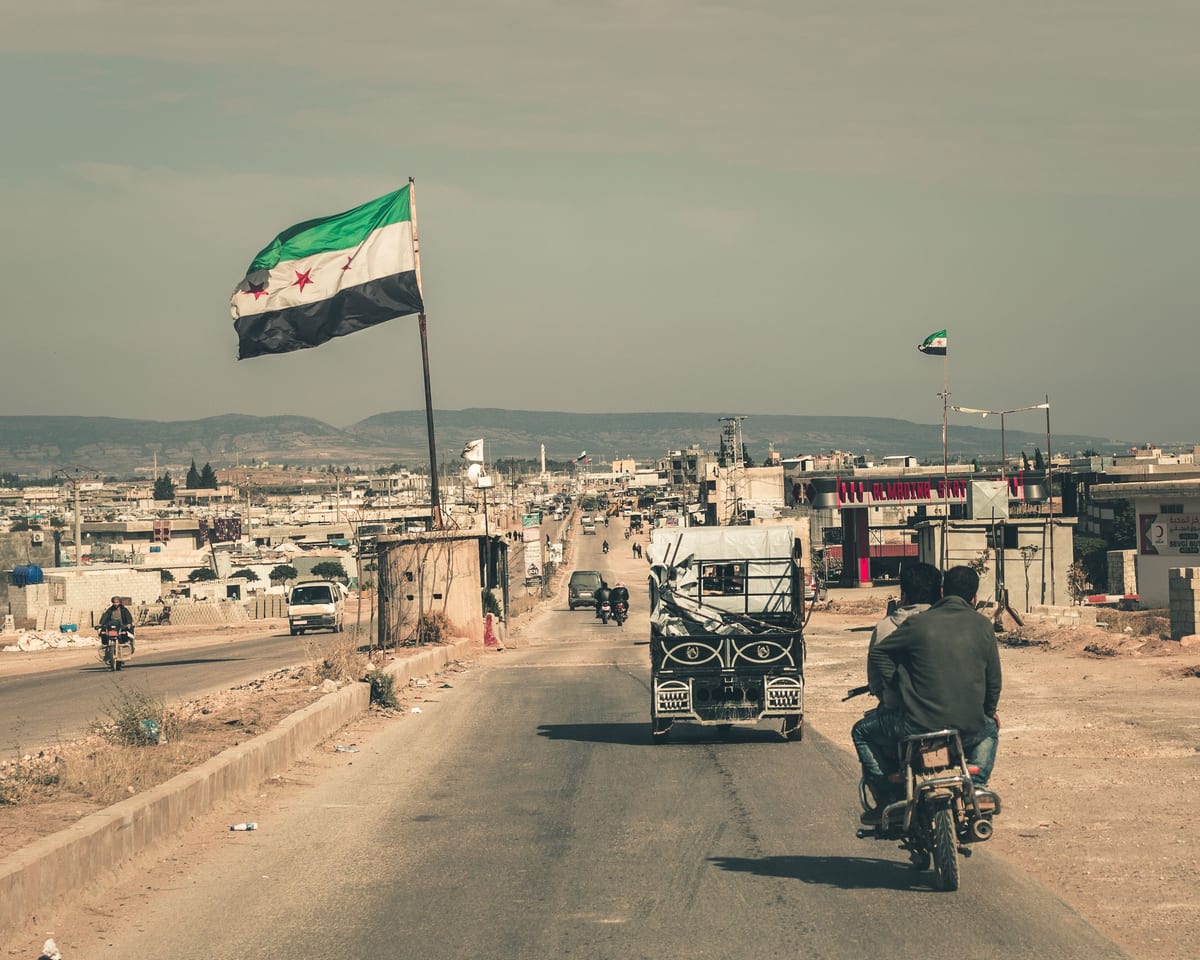

The image is mundane enough to be almost comic — a train delayed because the tracks bent in the heat — until you understand what it actually signals. Across Europe this week, transport officials are managing the consequences of a crushing heatwave that is warping rail infrastructure, buckling asphalt, and straining road and rail networks that were engineered for a climate that no longer reliably exists. A UN report released Tuesday made clear this is not an anomaly to be managed through the current summer. It is a preview of conditions that will grow more severe across Europe, Central Asia, and North America in the decades ahead.
Europe has spent decades positioning itself as the architect of global climate ambition — setting targets, publishing roadmaps, lecturing developing nations about the urgency of decarbonisation. What the summer of 2026 is demonstrating is that ambition and adaptation are not the same thing. You can lead the world in climate rhetoric and still watch your rail network soften in June.
What the UN Report Actually Says
The UN warning describes a trajectory of worsening extreme weather across the Northern Hemisphere's temperate zones. Transport systems are acutely exposed — infrastructure designed and built for twentieth-century temperature ranges now faces conditions those engineers never modelled. Rail tracks buckle when ambient temperatures exceed design thresholds. Asphalt roads develop ruts and surface failures. Overhead power lines sag, tightening clearances and triggering safety shutdowns. None of these failures are dramatic. All of them compound.
Transport infrastructure carries an embedded climatic assumption — that the range of temperatures it will encounter across its operational lifetime is roughly knowable at the time of construction. That assumption is breaking down. The cost of that breakdown falls unevenly: wealthy systems can retrofit, recalibrate, and absorb delays. Supply chains downstream absorb the rest.
The Trade Disruption That Doesn't Make Headlines
Europe is one of India's largest trading partners, with bilateral trade running at a scale that makes European logistics a genuine variable in Indian export calculations. Indian exporters — in pharmaceuticals, textiles, engineering goods, chemicals — typically rely on European inland rail and road networks for onward distribution once goods clear major ports. When those networks slow, freight costs rise and delivery windows stretch. Neither consequence shows up dramatically in a single quarter; both erode margins steadily.
The more consequential disruption may be structural rather than seasonal. If European summers grow routinely severe over the coming decade — as the UN report suggests they will — the assumption that European logistics infrastructure is a reliable endpoint for Indian export chains deserves reexamination. This is precisely the argument that analysts at the Takshashila Institution have been developing around the India-Middle East-Europe Economic Corridor: that IMEC's strategic value lies not only in reducing transit time but in diversifying the points at which Indian goods enter European markets, reducing dependence on inland logistics networks that are now visibly climate-exposed. A heatwave that stalls trains in central Europe is, in that reading, not just a weather event but an argument for infrastructure redundancy.
The Diplomatic Geometry
India's position at climate forums has rested on a foundational equity argument: the nations which industrialised earliest bear the greatest historical responsibility for cumulative emissions and therefore the greatest obligation to finance adaptation globally — not merely within their own borders. That argument has been met, over two decades of UNFCCC negotiations, with a variety of responses from European delegations, ranging from genuine engagement to procedural deflection.
What this summer's European infrastructure crisis does — and what the UN report crystallises — is close the rhetorical gap between Northern Hemisphere climate policy and Northern Hemisphere climate vulnerability. European governments can no longer argue that adaptation finance is charity extended from climate-stable donors to climate-vulnerable recipients. Their own transport ministries are managing heat emergencies. Their own infrastructure planners are facing the retrofit costs that come with a changing baseline. The argument that adaptation is someone else's problem becomes physically untenable when German and French rail operators issue speed restrictions on lines that are literally too hot to run at normal velocity.
India has consistently argued, through its Nationally Determined Contributions under the Paris Agreement and through its National Action Plan on Climate Change, that climate vulnerability is a shared condition requiring shared financing mechanisms. The Centre for Policy Research's Navroz Dubash has made this case with particular force at UNFCCC forums — that Northern Hemisphere failures demonstrate that adaptation demand is global and that finance structures must reflect that reality. The European summer of 2026 delivers that evidence in a form that is difficult to reframe as exaggeration.
India's Own Infrastructure and the Lesson No Planner Should Miss
There is an uncomfortable mirror running in the other direction. Indian Railways operates one of the world's largest rail networks — a network that traverses the Indo-Gangetic plain, Rajasthan, and Maharashtra, regions where summer temperatures already exceed the thresholds at which European rail engineers are now declaring emergencies. Track buckling in extreme heat is not a European novelty; it is a documented problem across Indian rail infrastructure, particularly on lines that have not been upgraded to handle intensifying summer conditions.
The European crisis is, in this sense, a stress-test result from a laboratory that India cannot afford to treat as foreign. The physics are identical. The scale in India is larger. And the consequences of rail network failures in India — given the volume of freight and passenger traffic the network carries — are proportionally more severe. European infrastructure failures validate the case that the Observer Research Foundation's Lydia Powell has articulated domestically: India's own rail and road systems carry structural heat-stress vulnerabilities that require accelerated audit and investment, not eventual attention. The difference between India and Europe in this equation is not that India is more prepared. It is that India has less financial margin to absorb the cost of unpreparedness.
The Ministry of Railways and NITI Aayog face a concrete question that the European summer makes sharper: at what pace are heat-resilience investments being built into track replacement and signalling upgrade cycles, particularly in the corridors that handle the heaviest freight loads through the hottest months? Framing this as an adaptation problem for the future is the wrong frame. The future, as European transport officials discovered this week, has a way of arriving as the present.
Converting Vulnerability Into Strategic Capital
The most productive reading of the European crisis, from New Delhi's vantage point, is neither schadenfreude nor alarm, but strategic clarity. India enters the next cycle of UNFCCC negotiations with a body of empirical evidence — drawn not from climate models but from the operational failures of wealthy-nation infrastructure — that strengthens the equity-based case for scaled adaptation finance. The argument that only the Global South faces structural climate exposure has been refuted this summer not by Indian diplomats but by European train schedules.
At the same time, India's own experience managing heat stress across a vast and heterogeneous infrastructure network — imperfectly, at scale, under fiscal constraints that European transport ministries do not face — positions it as a credible voice in shaping what climate-resilient infrastructure looks like for middle-income economies. That expertise, converted into technical cooperation with Global South partners facing similar vulnerabilities, transforms a shared liability into a soft-power asset that India's long-term positioning as a civilisational partner to the developing world requires.
The tracks bending in Europe this summer are a data point. The question is what India does with the data — in Geneva, in its own rail planning cycles, and in the corridors being built to connect it to a continent that is discovering, with some difficulty, that the climate transition it championed was always going to cost something to manage at home.